




Definition and Scope of a Project Management Service Level Agreement
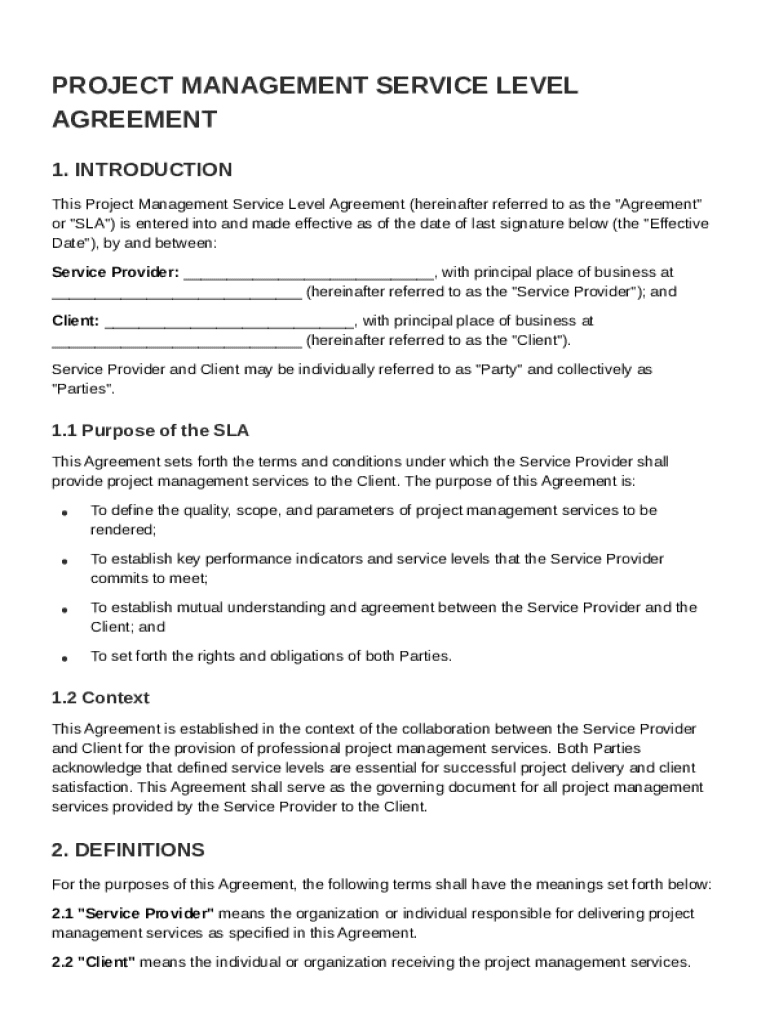
A Project Management Service Level Agreement (SLA) is a crucial document that sets forth the terms and conditions under which a service provider delivers project management services to a client. This template helps define the scope of services, ensuring both parties have a clear understanding of what is expected. It typically includes specifications on service delivery, performance metrics, and timelines. By delineating these elements, an SLA minimizes misunderstandings and ensures the project runs smoothly.
- Performance Metrics: These are essential for assessing whether the service provider meets the agreed-upon standards. Metrics may include delivery timelines, adherence to budgets, quality of deliverables, and more.
- Roles and Responsibilities: Clearly defined roles ensure each party knows their obligations. This also aids in accountability and efficient project execution.
Key Components of the Template
A comprehensive Project Management SLA template includes several essential components. Each component is designed to provide clarity and set expectations between the client and the service provider.
- Service Description: Details the specific services the provider will offer, such as project planning, resource allocation, or risk management.
- Reporting Structures: Outlines how communication will occur throughout the project and establishes regular intervals for updates and reports.
- Escalation Procedures: Provides a roadmap for addressing any issues that arise, ensuring that they are resolved quickly and effectively.
Steps to Customize the Project Management SLA Template
Completing a Project Management SLA involves several critical steps. Tailoring the document to the specific needs of a project ensures it provides maximum value.
- Identify the Project Scope: Clearly outline the project goals, objectives, and the specific services that will be provided.
- Draft Performance Metrics: Establish how service delivery will be measured. This might include metrics like timeline adherence and quality of output.
- Define Communication Protocols: Set up how and when regular updates will be disseminated to all stakeholders involved.
How to Use the Project Management SLA Template
Using the Project Management SLA template effectively requires a step-by-step approach. Following these steps will ensure the SLA is both comprehensive and enforceable.
- Start with a Template: Utilize a pre-existing template that includes all essential sections to ensure no critical elements are overlooked.
- Tailor the Content: Modify sections to meet the specific needs of the project, such as adding additional performance metrics or unique escalation procedures.
- Review and Revise: Regularly review the SLA with all involved parties to make sure it remains relevant and meets evolving project needs.
Legal Considerations in a Project Management SLA
Project managers must pay attention to legal considerations to ensure compliance and avoid potential disputes.
- Regulatory Compliance: Each SLA must adhere to local, national, and industry-specific regulations.
- Mutual Obligations: The agreement must clearly spell out the obligations of both parties in a way that protects their respective interests.
- Dispute Resolution Clauses: These clauses are crucial for handling disagreements without legal escalation, utilizing arbitration or mediation.
Benefits of Using a Project Management SLA Template
Utilizing a Project Management SLA template offers numerous benefits for managing projects more effectively.
- Clear Expectations: Ensures all parties have a mutual understanding of the services provided, thereby reducing confusion.
- Enhanced Accountability: Establishes clear responsibilities, making it easier to hold parties accountable for non-performance.
- Improved Communication: Regular reporting and structured communication protocols ensure transparency and keep all stakeholders informed.
Roles of Stakeholders in a Project Management SLA
Different stakeholders play various roles in the success of a Project Management SLA. Understanding these roles is vital for project efficiency.
Service Provider Responsibilities
- Service Delivery: Comply with the SLA terms and meet predefined performance metrics.
- Reporting: Provide regular updates and reports according to the protocols established in the SLA.
Client Obligations
- Resource Provisioning: Supply necessary resources, including information and access to systems as required.
- Timely Feedback: Offer prompt feedback on service delivery issues to facilitate rapid resolution.
Examples and Case Studies
Real-world examples and case studies illustrate the application and benefits of a Project Management SLA.
- IT Project Implementation: An IT company used an SLA to manage expectations while upgrading client systems, which helped in completing the project without delays.
- Marketing Campaign Management: A marketing firm and its client outlined deliverables and scope using an SLA, ensuring both parties were aligned on campaign goals and metrics.
Variations and Alternatives
While the standard Project Management SLA template serves most projects, variations or alternatives may be needed depending on the specific industry or project requirements.
- Agile Project Management: Some organizations prefer Agile SLAs, which allow for iterative development and are adaptable to changing project needs.
- Dynamic SLAs: These include provisions for periodic reviews and adjustments, accommodating projects with evolving scopes or new challenges.
State-Specific Considerations
While the Project Management SLA mostly follows a standard format, certain state-specific legal requirements may necessitate customizations.
- Employment Laws: States may have specific legal requirements affecting contract workers or specific industries which should be considered.
- Data Protection Regulations: Ensure SLAs comply with state-level data protection laws, especially in states with stringent privacy requirements like California.