






Definition and Meaning
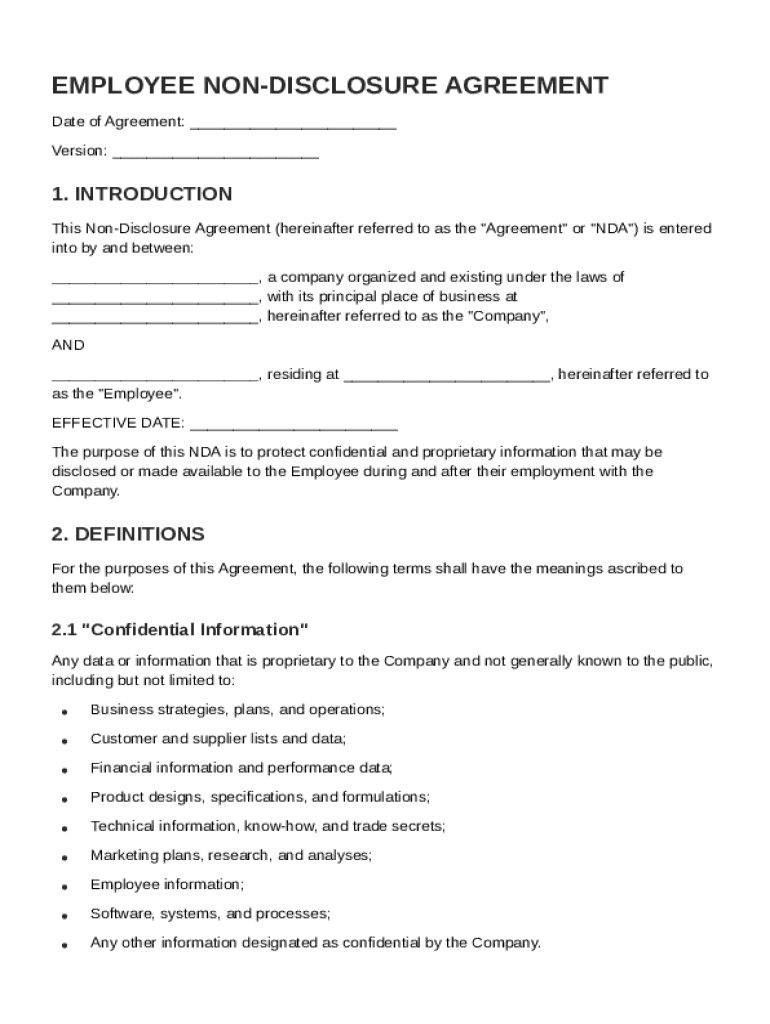
An Employee Non-Disclosure Agreement (NDA) Template is a legal document designed to protect a company's confidential information shared with an employee. This agreement ensures that sensitive data, unique ideas, and proprietary information disclosed during employment are safeguarded. It includes definitions of what constitutes confidential information, detailing the sorts of data that the employee must protect. These details are critical in preventing unauthorized sharing of business insights, innovations, and future plans which can potentially be harmful to the business if leaked. This template serves as a formal mutual understanding between an employer and an employee about the importance of maintaining confidentiality.
How to Use the Employee Non-Disclosure Agreement Template
Using the Employee NDA Template involves a few structured steps. First, the employer customizes the template to fit the specific needs of the company, tailoring it to reflect the type of confidential information pertinent to their operations. The employee then reviews the document to ensure understanding of their obligations. This process typically involves a review of all clauses and definitions regarding confidential information and prohibited actions. The final step is the signing process, where both parties—employer and employee—acknowledge their commitment to the terms outlined. This execution formalizes the agreement, often requiring retention of a signed copy for company records.
Steps to Complete the Employee Non-Disclosure Agreement Template
-
Review the Template: Both parties, the employer, and the employee, need to go through the entire document meticulously to understand the obligations and terms.
-
Customize Details: Adjust sections of the template to reflect specific information relevant to the organization, including names, roles, and particular proprietary data.
-
Describe Confidential Information: Clearly define what is considered confidential, which may include product designs, business strategies, customer lists, and financial data.
-
Outline Employee Obligations: Specify the actions the employee must take to protect information, such as not sharing passwords or discussing sensitive topics in public.
-
Signatures: Finally, both the employer and employee sign the document in the presence of a witness, making the agreement legally binding.
Key Elements of the Employee Non-Disclosure Agreement Template
-
Definitions and Scope: Clearly lays out the types of information considered confidential, providing comprehensive definitions to avoid ambiguity.
-
Responsibilities and Obligations: Details the employee's responsibility to protect sensitive information and outlines the consequences of failing to do so.
-
Duration of Confidentiality: Specifies the time period during which confidentiality must be maintained, typically extending beyond the employment term.
-
Exemptions: Includes scenarios where disclosure may be permissible, such as court orders, statutory obligations, or specific employer permission.
-
Return of Materials: Requires the employee to return or destroy confidential materials upon termination or conclusion of employment.
Legal Use of the Employee Non-Disclosure Agreement Template
The legal application of an Employee NDA Template is rooted in contract law. It sets enforceable obligations for the employee to maintain confidentiality during and after employment. In the event of a breach, legal remedies may include injunctions, damages, or specific performance directives. This template forms a protective measure for companies to safeguard their intellectual property and proprietary information legally. It effectively mitigates risks related to information leaks that can lead to competitive loss or reputational damage.
State-Specific Rules for the Employee Non-Disclosure Agreement Template
While the general structure of an NDA is similar across the United States, it is important to consider state-specific laws that may affect its enforceability. For example, some states have limitations on non-compete clauses which can impact confidentiality agreements. Employers need to ensure that the NDA aligns with state regulations regarding employment contracts. Consulting with legal professionals familiar with regional laws can aid in tailoring the document accordingly to avoid unintentional legal conflicts.
Digital vs. Paper Version
The choice between digital and paper versions of the Employee NDA Template often depends on corporate policy and logistical practicality. Digital versions provide ease of use and storage, facilitating electronic signatures, rapid distribution, and updates with digital tools like DocHub. However, some organizations may prefer physical copies for added security or tradition, ensuring that all parties have tangible evidence of their agreement. Each method must comply with electronic signature laws like the ESIGN Act to ensure legality and binding status.
Versions or Alternatives to the Employee Non-Disclosure Agreement Template
The Employee NDA Template can vary in format depending on specific business needs. There might be more generic versions for broader use or specialized versions tailored to specific roles like technical, sales, or executive employees with access to critical strategic data. In some cases, organizations use combined agreements incorporating non-compete clauses or intellectual property clauses to provide comprehensive protection in a single document. It's vital for companies to evaluate their unique requirements and choose or adapt a version that provides optimal coverage.