






Definition and Meaning
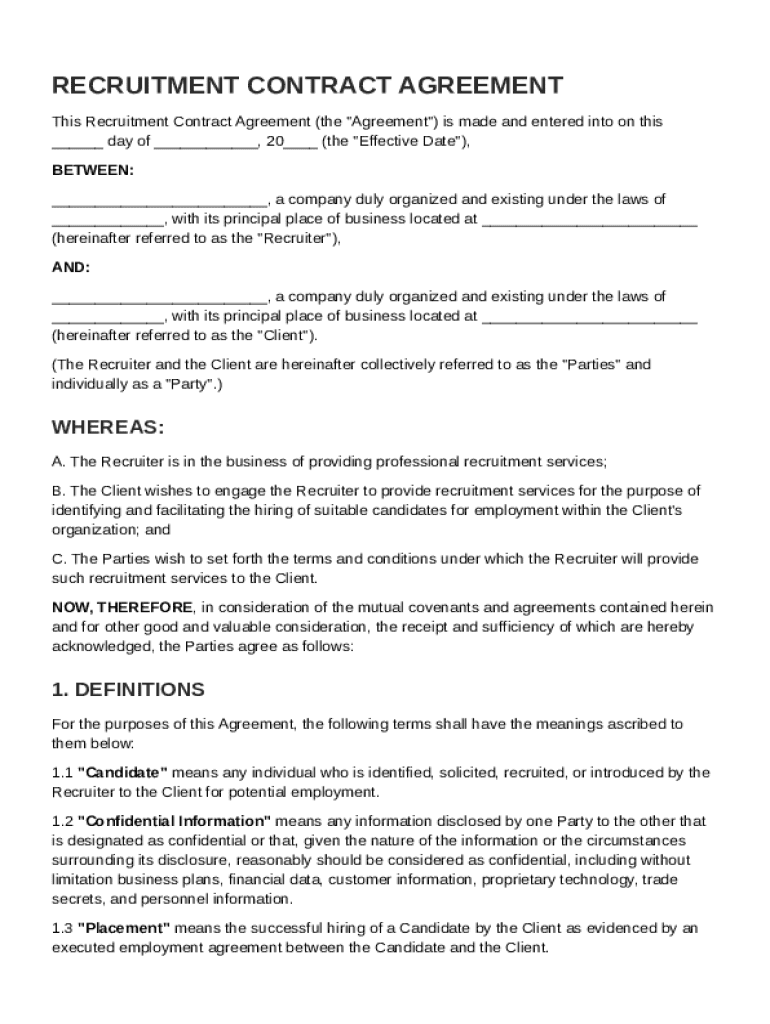
A Recruitment Contract Template serves as a foundational agreement between a Recruiter and a Client, outlining the terms and conditions for recruitment services. This document clearly defines the roles and responsibilities of both parties to ensure a smooth recruitment process. The template helps in specifying the services offered by the recruiter, fees involved, and expected outcomes. By having these elements in writing, both parties can avoid misunderstandings and ensure their rights are protected throughout their partnership.
Key Elements of the Recruitment Contract Template
Describing the Scope of Services
The scope of services section details the specific recruitment tasks the recruiter will undertake for the client. It typically includes job postings, candidate screenings, and interview arrangements. This section ensures that both parties have a clear understanding of the recruiter's responsibilities, eliminating potential conflicts over assumed duties.
Fees and Payment Terms
Fees and payment terms are pivotal in establishing a transparent financial agreement. This section of the contract outlines the recruiter's compensation structure, which can be a flat fee, a percentage of the candidate’s salary, or another mutually agreed-upon arrangement. Payment terms also specify the timeline and method of payment, providing clarity and preventing future disputes over financial obligations.
Confidentiality and Data Protection
Confidentiality and data protection clauses are crucial for maintaining trust and compliance with privacy laws. The contract should outline how sensitive information—such as candidate resumes and client business practices—will be protected. This section can include provisions for data encryption, handling procedures, and the consequences of a breach, ensuring both parties’ sensitive data remains secure.
Steps to Complete the Recruitment Contract Template
-
Gather Necessary Information: Collect all required information from both the recruiter and the client, including contact details, service descriptions, and payment agreements.
-
Customize the Template: Adjust the template to fit the specific needs of the recruitment agreement. This may involve adding specific terms or modifying existing ones to align with the negotiated conditions.
-
Review Legal Terms: Ensure that all legal terms are precise and comply with relevant U.S. laws, potentially with the assistance of a legal professional.
-
Complete the Contract: Fill in all sections of the template, making sure each party's rights and responsibilities are clearly stated.
-
Confirm Consent: Before signing, both parties should review the contract thoroughly to confirm that all agreed terms are accurately represented.
-
Secure Signatures: Use an electronic signing tool, like DocHub, to collect legally binding signatures from all parties involved.
Legal Use of the Recruitment Contract Template
The Recruitment Contract Template must comply with U.S. labor laws and contract regulations. It should explicitly define the legal obligations of the recruiter and client to ensure enforceability. This includes compliance with anti-discrimination laws and regulations related to fair labor practices. Failure to adhere to these legal standards can lead to unenforceable contracts or legal disputes, underscoring the importance of drafting the contract with legal oversight.
Who Typically Uses the Recruitment Contract Template


Recruiting Agencies
Recruiting agencies frequently use these templates to formalize agreements with clients seeking to fill specific employment roles. The template facilitates a clear understanding of the services provided and expectations between parties.
Corporate Human Resources Departments
HR departments may use the template to engage external recruitment firms, ensuring consistency and clarity in external hiring processes. This helps internal HR teams manage and monitor recruitment activities without ambiguities.
Important Terms Related to Recruitment Contract Template
-
Recruiter: The individual or agency responsible for providing recruitment services as specified in the contract.
-
Client: The organization or individual receiving recruitment services.
-
Fee Structure: The agreed-upon payment arrangement for the recruiter's services, which might include a retainer, percentage, or performance-based system.
-
Confidential Information: Any data that either party wishes to keep private and that is marked within the contract as confidential.
Examples of Using the Recruitment Contract Template
Consider a scenario where a tech startup needs to hire several developers. They engage a recruitment agency using the Recruitment Contract Template. The contract specifies a fee of 20% of the first-year salary for each successful hire, outlines confidentiality terms about proprietary technologies, and establishes a timeline for the recruitment process. This clear framework helps both the startup and the recruiter operate efficiently, minimizing disruptions and ensuring a smooth hiring process.
State-by-State Differences
While the general structure of a Recruitment Contract Template remains consistent across the U.S., state laws can introduce variations. For example, states like California have specific requirements regarding non-compete clauses, and any attempt to include such provisions must comply with local laws. Understanding these regional differences is vital to tailoring the contract appropriately, ensuring it carries legal weight in the specific state of operation.
Software Compatibility
DocHub's platform enhances the management of Recruitment Contract Templates by supporting a wide range of file formats, including PDF, DOC, and more. Users can easily import documents from cloud storage services and make necessary edits without converting the file into a different format. This compatibility streamlines contractual editing and signing processes, supporting a seamless workflow from document preparation to execution.