






Definition & Meaning
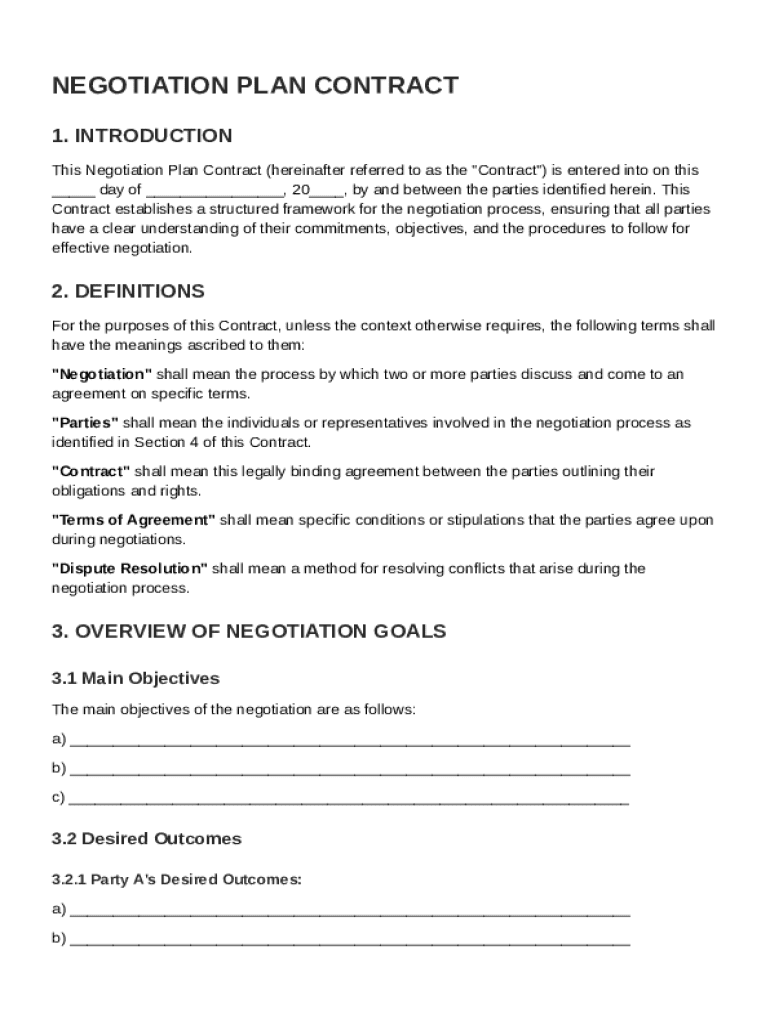
The Negotiation Plan Contract is a strategic framework designed to facilitate negotiations between two or more parties. It outlines commitments, objectives, and procedures pertinent to the negotiation process, ensuring clarity and organization. Key elements of the template include definitions of essential terms, negotiation goals, role assignments, communication strategies, conflict resolution methods, confidentiality agreements, and criteria for agreement approval. This structured approach serves to establish a common understanding and systematic process throughout the negotiation phase, thus enhancing the potential for reaching mutually beneficial outcomes.
Key Elements of the Negotiation Plan Negotiation Contract Template
The template includes several critical components aimed at guiding users through a structured negotiation process. Notable elements are:
- Definitions of Key Terms: Clear explanations of terms to avoid misunderstandings.
- Negotiation Objectives: Specific goals each party aims to achieve.
- Roles and Responsibilities: Detailed descriptions of each participant's duties throughout the process.
- Communication Strategies: Established methods of communication to maintain clear and effective dialogue.
- Conflict Resolution Methods: Predefined strategies to address disagreements that may arise.
- Confidentiality Agreements: Provisions to ensure sensitive information is protected.
- Criteria for Final Agreement Approval: Standards that the final document must meet for acceptance.
These components work collectively to create a comprehensive framework that supports effective negotiation.
Steps to Complete the Negotiation Plan Negotiation Contract Template
- Define the Objective and Scope: Clearly outline what you aim to achieve through the negotiation.
- Identify Parties Involved: List all parties participating and specify their roles.
- Detail Communication Methods: Establish how and when communication will take place.
- Outline Resolution Tactics: Determine how potential conflicts will be addressed.
- Establish Terms and Confidentiality: Define all critical terms and outline confidentiality agreements to protect sensitive information.
- Set Approval Criteria: Specify the standards required for final agreement acceptance.
- Review and Finalize: Ensure all sections are thoroughly reviewed for accuracy and completeness before implementation.
How to Use the Negotiation Plan Negotiation Contract Template
To effectively utilize this template:
- Customize the Template: Adjust the pre-filled sections to align with your specific negotiation context.
- Collaborate with Participants: Ensure all involved parties review and contribute to the template contents.
- Utilize Interactive Features: If handled digitally, incorporate fillable fields to facilitate input and updates throughout the negotiation process.
- Maintain Version Control: Regular updates should be tracked to prevent discrepancies or outdated information.
These steps ensure the template acts as a comprehensive guide for conducting well-organized negotiations.
Important Terms Related to Negotiation Plan Negotiation Contract Template
When working with the Negotiation Plan Contract Template, familiarity with the following terms is crucial:
- BATNA (Best Alternative to a Negotiated Agreement): A party's backup plan if negotiations fail.
- ZOPA (Zone of Possible Agreement): The range within which an agreement is satisfactory to both parties.
- Mutual Gains: Outcomes that are beneficial for all involved parties.
- Win-Win Solution: An agreement that is advantageous to all sides.
Understanding these terms helps in crafting agreements that are strategically beneficial.
Legal Use of the Negotiation Plan Negotiation Contract Template
The template serves as a legal document, binding parties to the negotiated terms once signed. It conforms to U.S. legal standards, ensuring that agreements reached are enforceable. Specific considerations include:
- Compliance with State Laws: Adjustments may be required to align with local jurisdictional requirements.
- Documentation of Signatures: Ensure electronic signatures comply with the ESIGN Act for legality.
- Confidentiality Enforcement: Ensure confidentiality clauses are comprehensive to protect sensitive data.
Legal considerations are paramount to uphold the integrity of the negotiated agreement.
Who Typically Uses the Negotiation Plan Negotiation Contract Template
This template is highly versatile and used by:
- Business Professionals: Engaging in partnerships, mergers, or supplier agreements.
- Project Managers: Coordinating multiple stakeholders' input into a project agreement.
- Legal Teams: Drafting settlements or other legal agreements.
- Non-Profit Organizations: Establishing collaborative efforts or partnerships with other organizations.
These entities leverage the template for its structured approach to managing negotiations.


Examples of Using the Negotiation Plan Negotiation Contract Template
Practical scenarios where the template is utilized include:
- Business Acquisitions: Specifying terms for purchasing another company.
- Supplier Contracts: Defining the terms of supply chain agreements, including pricing and delivery expectations.
- Construction Projects: Outlining responsibilities, timelines, and financial agreements among contractors and clients.
- Financial Settlements: Negotiating terms of payment and other financial reconciliations between parties.
Real-world examples demonstrate the template's application in diverse contexts to achieve structured and successful negotiations.