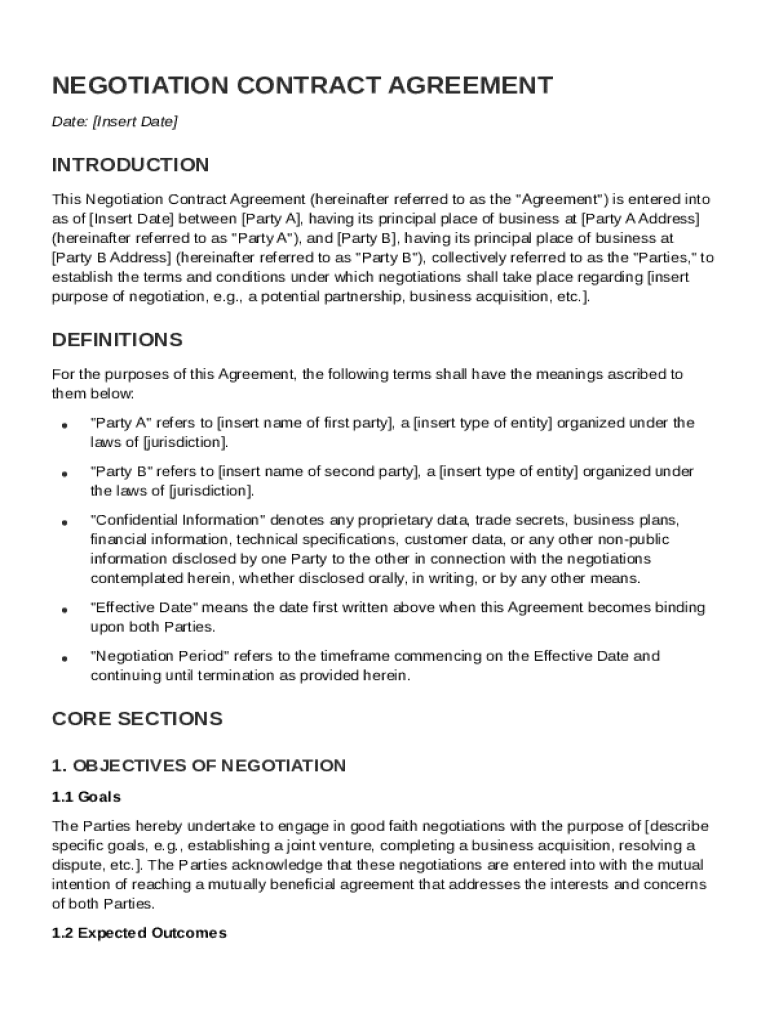







Definition & Meaning
The Negotiation Contract Template serves as a foundational document outlining the terms and conditions under which parties agree to negotiate a business deal or partnership. This template provides a structured format to clearly delineate the responsibilities, objectives, and processes involved in negotiations. It often includes key terms such as definitions, the purpose of negotiations, confidentiality agreements, and termination clauses. This template ensures that all parties are aware of their obligations and the expectations from the negotiation process, thereby facilitating smoother and more effective discussions.
How to Use the Negotiation Contract Template
To effectively use the Negotiation Contract Template, begin by thoroughly reviewing each section to understand the guidelines and stipulations associated with your negotiation process. Customize the template to fit your specific scenario by filling in the necessary details such as party names, negotiation objectives, and confidentiality terms.
- Identify Parties Involved: Clearly list the names and roles of all entities involved.
- Define Objectives: State the negotiation goals and intended outcomes.
- Outline Responsibilities: Assign tasks and responsibilities to each party.
- Set Confidentiality Terms: Specify the rules around how confidential information will be protected.
- Incorporate Dispute Resolution: Include a clause detailing how potential disputes will be handled.
- Review and Approval: Once filled out, have all parties review the document and provide their approval through signatures.
Key Elements of the Negotiation Contract Template
Understanding the essential components of the Negotiation Contract Template is crucial for efficient negotiations. Key elements include:
- Party Information: Names and details of all parties involved.
- Definitions: Specified terminology used in the agreement to ensure clarity.
- Objective of Negotiation: A clear statement about the purpose of negotiation.
- Confidentiality Obligations: Terms that protect sensitive information.
- Dispute Resolution Process: Mechanisms for resolving potential conflicts.
- Termination Clauses: Conditions under which the agreement can be terminated.
- Good Faith Negotiations: Assurance that all parties will negotiate honestly with the aim of mutual benefit.
Steps to Complete the Negotiation Contract Template
Completing the Negotiation Contract Template involves a series of detailed steps to ensure all aspects of the negotiation are covered:
- Collect Information: Gather all necessary details about the parties and negotiation objectives.
- Customize Terms: Modify the template to reflect specific needs and goals of the negotiation.
- Review Legal Aspects: Ensure that all legal terminologies and clauses are included and compliant.
- Negotiate Terms: Discuss and agree upon the terms to be included in the contract.
- Finalize Document: Review the completed document thoroughly; make necessary adjustments.
- Signatures: Obtain signatures from all parties to validate the agreement.
Legal Use of the Negotiation Contract Template
Utilizing the Negotiation Contract Template legally requires adherence to specific legal standards and practices. This document seeks to formalize negotiations, providing a framework that helps avoid misunderstandings and potential legal disputes. It includes clauses on confidentiality and dispute resolution, ensuring both compliance with U.S.-centric legal standards, such as the ESIGN Act for electronic signatures, and other relevant laws. Understanding state-specific legal requirements is vital, as variations might exist based on jurisdiction.
Who Typically Uses the Negotiation Contract Template
The Negotiation Contract Template is typically used by:
- Businesses: Companies engaging in mergers, acquisitions, partnerships, or joint ventures.
- Legal Professionals: Lawyers who draft or review negotiation contracts for their clients.
- Consultants: Advisors who facilitate negotiation processes between parties.
- Non-Profits: Organizations working on collaborative efforts with various stakeholders.
- Individual Contractors: Freelance professionals entering negotiations with new clients.


Important Terms Related to Negotiation Contract Template
Several important terms are associated with the Negotiation Contract Template:
- Good Faith: The expectation that parties will negotiate honestly and fairly.
- Confidentiality: Protecting sensitive information shared during negotiations.
- Dispute Resolution: The process outlined to resolve any disagreements.
- Termination Clause: Provisions that specify how and when negotiations can be halted.
- Mutual Benefit: The goal to achieve beneficial outcomes for all parties involved.
Examples of Using the Negotiation Contract Template
Examples help illustrate practical applications of the template:
- Merger Negotiations: Two companies use the template to outline terms for merging their operations.
- Partnership Agreement: Businesses draft a negotiation contract to formalize a new partnership.
- Supplier Agreements: A supplier and retailer negotiate terms for a long-term supply deal.
- Joint Venture: Two firms plan to collaborate on a project and use the template to set the terms of their cooperation.
State-Specific Rules for the Negotiation Contract Template
Understanding state-specific variations is crucial when using a Negotiation Contract Template:
- Jurisdiction Differences: Certain states may have unique requirements for contractual clauses.
- Electronic Signature Acceptance: Varies by state but must comply with the ESIGN Act where electronic processing is relevant.
- Confidentiality Guidelines: Some states mandate additional confidentiality measures.