




01. Edit your borang maklumat pekerja online
Type text, add images, blackout confidential details, add comments, highlights and more.

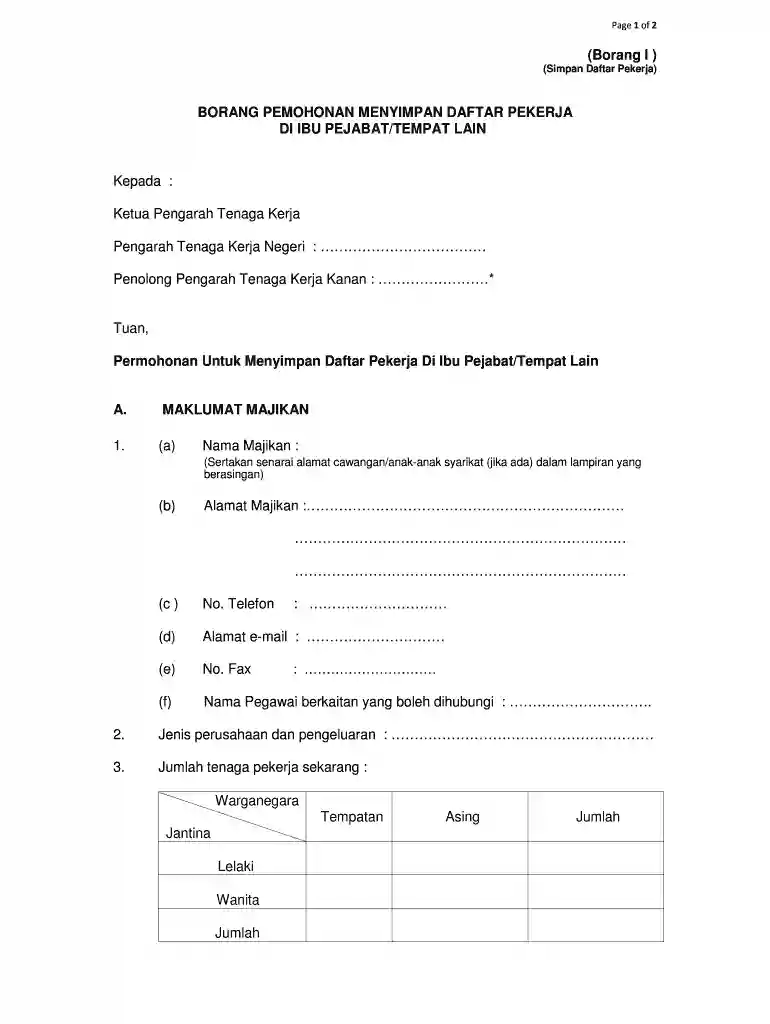
Type text, add images, blackout confidential details, add comments, highlights and more.

Draw your signature, type it, upload its image, or use your mobile device as a signature pad.

Send contoh borang maklumat pekerja via email, link, or fax. You can also download it, export it or print it out.
The "borang maklumat pekerja word" serves as a foundational document for employers to collect essential information about their employees. This form is crucial for maintaining accurate records and complying with legal obligations. It often includes sections designated for both employer and employee information, allowing for a comprehensive overview of the employment relationship.
Employer Information: This section typically requires the employer's name, address, contact details, and sometimes an identification number. Accurate information is essential for validation and regulatory compliance.
Employee Details: It captures critical information regarding the employee, such as full name, address, date of birth, social security number, and contact details. Ensuring accuracy in this section is vital for payroll and tax purposes.
Job Information: Employers usually ask for job title, department, start date, and employment type (e.g., full-time, part-time, contractual). This helps in organizing records within the company's human resources system.
Declaration Statement: Many forms include a declaration where the employer affirms that the provided information is accurate. This not only establishes accountability but also serves as a reference point in case of disputes.
Gather Necessary Documentation: Before starting, compile essential documents such as identification forms, previous employee records, and tax information. This streamlines the completion process.
Fill in Sections Carefully: Begin with the employer information and proceed to the employee details. Make sure each section is complete and legible. This helps prevent misunderstandings later.
Review for Accuracy: Once completed, review the form for common errors such as misspellings or omitted details. Verify all information against supporting documents to ensure accuracy.
Secure Signatures: If the form requires signatures from both the employer and employee, ensure this is done before storing or submitting the document. Signatures often verify that both parties agree to the information presented.
Digital Storage: Using a document management system, such as DocHub, can help organize and protect employee records digitally. This promotes easier access and enhanced security compared to physical storage.
Regular Updates: Schedule periodic reviews of employee information to ensure data remains current, especially for changes in job title, contact information, or personal circumstances.
Compliance with Regulations: Stay informed about relevant labor laws and regulations pertaining to employee records. Compliance minimizes legal risks and promotes trust among staff.
New Hire Documentation: The form is commonly filled out when onboarding new employees as part of their employment verification process.
Annual Review: Employers may require employees to update their information annually, ensuring that records reflect any changes in employment status or personal information.
Tax Reporting: The details from this form can be critical for preparing tax documents, ensuring that correct information is submitted to the IRS and state authorities.
There are alternative formats to the borang maklumat pekerja word, such as:
PDF Versions: Often used for electronic signing as they provide a more secure, uneditable format.
Excel Templates: Useful for bulk data entry and organization, allowing employers to manage multiple records efficiently.
Digital Forms: Integrating forms into HR software facilitates real-time updates and easy sharing among relevant parties.
By understanding the significance and proper handling of the "borang maklumat pekerja word," employers can streamline their HR processes, maintain compliance, and foster a transparent workplace atmosphere.
Microsoft Word doesn’t have signing tools to generate valid eSignatures and enforceable forms. Luckily, DocHub is an online eSignature-compliant editor that works with various document formats, including .doc files. Log in to your account and import the Word version of your contoh borang maklumat pekerja swasta from your device and cloud, or URL - our editor will automatically convert it into an editable PDF. Make all necessary modifications in your document and click Sign to generate your own legally-binding electronic signature. There are four signing options from which to choose.
With DocHub, you have several convenient ways to edit your borang maklumat pekerja word online. You can drag and drop the form and edit it directly at the DocHub site or use our browser extension to fill out your form immediately. Additionally, you can edit your PDF on your smartphone, as DocHub is compatible with all the available mobile platforms.
At DocHub, your data security is our priority. We follow HIPAA, SOC2, GDPR, and other standards, so you can work on your documents with confidence.
Penyebar maklumat dapat memantau penyebaran maklumat dalam masa nyata, seperti jumlah bacaan, suka, komen, siaran semula, dll., Dan kemudian menganalisis.
Borang Pengesahan Status Tesis Judul : Sistem Maklumat Penilaian Keselamatan Dan Kesihatan Pekerjaan (Osha) Sektor Pembinaan. Profile image of Nadya Ahmad NadyaRead more


