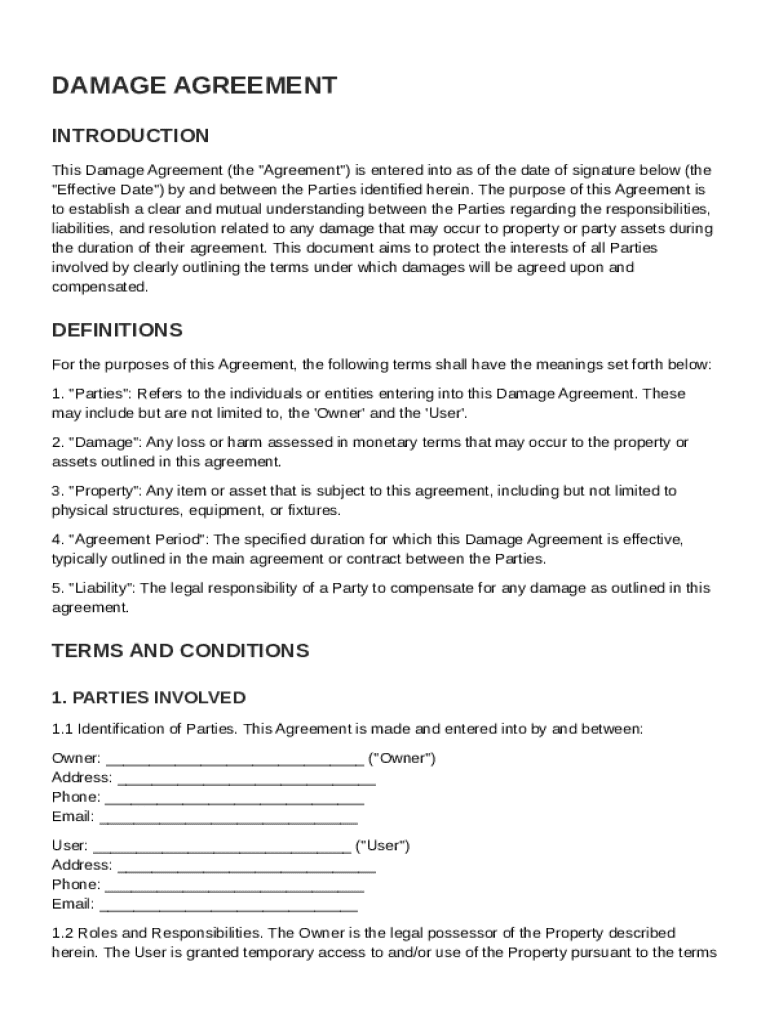







Definition & Meaning
A Damage Agreement Template is a formal document designed to outline the responsibilities and liabilities of the parties involved concerning property damage. It serves a critical function by defining key terms, specifying the types of damage that are covered and excluded, and assigning liability for damages incurred while the property is in the user's possession. This document ensures that all parties are clear on the procedures for reporting damage, compensation, and any potential disputes that may arise. Additionally, it includes various terms such as dispute resolution and termination conditions to provide clarity and enforceability. By having a structured format, the template helps to minimize misunderstandings and legal conflicts.
Key Elements of the Damage Agreement Template
The Damage Agreement Template is comprised of several essential components that detail the obligations and expectations for all parties involved. These elements include:
- Scope of Coverage: Specifies the types of damages covered under the agreement.
- Exclusions: Lists the types of damages that are not covered.
- Liability Assignment: Determines which party is responsible for damages during the possession period.
- Reporting Procedures: Outlines how and when damages should be reported.
- Compensation Framework: Details how repairs or replacements will be handled and financed.
- Dispute Resolution: Provides methods for resolving disagreements over damages.
- Termination Conditions: Explains the conditions under which the agreement can be terminated.
Each component ensures that all aspects of property damage are addressed comprehensively, safeguarding the interests of both the property owner and the user.
How to Use the Damage Agreement Template
Utilizing the Damage Agreement Template effectively involves a series of steps to ensure all facets are covered and agreed upon by all parties. Here's how to proceed:
- Review the Agreement: Both parties should thoroughly review the document to understand its contents.
- Fill in Details: Input specific information such as property details, parties involved, and applicable dates.
- Discuss Liability: Clearly define who is responsible for what types of damage.
- Agree on Procedures: Establish mutual understanding on reporting damage and resolving disputes.
- Include Signatures: Ensure that all parties sign the agreement, making it legally binding.
This process ensures that the document is tailored to the specific needs of the transaction and provides a clear and enforceable record of responsibilities and expectations.
Important Terms Related to Damage Agreement Template
A number of specific terms are commonly included within the Damage Agreement Template in order to provide precise clarity on various issues. Understanding these terms is crucial for all parties involved:
- Indemnification: Refers to the compensation for harm or loss covered under the agreement.
- Arbitration: A method for resolving disputes without going to court.
- Force Majeure: A clause that frees parties from liability in case of extreme, unforeseeable events.
- Breach of Contract: Occurs when one party fails to comply with the terms of the agreement.
- Waiver: The voluntary relinquishment of a known right, often documented to confirm agreement.
By familiarizing themselves with these terms, parties can better navigate the complexities of a Damage Agreement.
Steps to Complete the Damage Agreement Template
Completing the Damage Agreement Template involves several steps to ensure accuracy and agreement among parties:
- Gather Necessary Information: Collect all relevant details pertaining to the property and involved parties.
- Fill Out Basic Details: Enter names, addresses, and dates into the appropriate fields of the template.
- Detail Damages and Liability: Accurately describe the scope of damage coverage and liability responsibilities.
- Finalize Reporting and Compensation Terms: Agree and document procedures for damage reporting and compensation mechanisms.
- Review and Edit: Conduct a thorough check for accuracy and comprehensiveness.
- Acquire Signatures: Ensure all parties sign to formalize the agreement.
Following these steps ensures that the template is filled out comprehensively and serves as a complete record of the agreement.
Legal Use of the Damage Agreement Template
The Damage Agreement Template is a legally binding document and must be used in accordance with legal standards to ensure its enforceability. Here are key legal considerations:
- Compliance with Jurisdiction: Ensure the document aligns with the legal standards of the applicable jurisdiction.
- Clarity and Precision: Use clear language to avoid ambiguity and potential legal challenges.
- Signatory Authorization: Confirm that all signatories have the legal authority to enter into the agreement.
- Confidentiality Clauses: Incorporate confidentiality terms if sensitive information is involved.
By adhering to these legal guidelines, the template can effectively function as a protective legal instrument for all parties involved.
Who Typically Uses the Damage Agreement Template
This template is widely used across various sectors to manage liabilities and responsibilities related to property usage and potential damage. Common users include:
- Property Owners: To protect assets when leased or rented.
- Tenants/Lessee: To clearly understand obligations and protect deposits.
- Business Entities: Especially in leasing arrangements to manage commercial assets.
- Equipment Rental Companies: To outline damage liabilities with renters.
Utilizing this template ensures that all parties are protected under a clearly defined legal framework.


State-Specific Rules for the Damage Agreement Template
Different states may have specific laws and regulations governing the use and enforcement of damage agreements. Key considerations include:
- State Laws: Verify that the agreement complies with state-specific legal requirements.
- Jurisdiction Clauses: Specify which state's laws will govern the agreement.
- Insurance Requirements: Be aware of any state-mandated insurance requirements related to damages.
- Statutory Limits: Understand any state-imposed limits on liability for certain types of damages.
Consulting with a legal expert familiar with state-specific regulations ensures the agreement is valid and enforceable across jurisdictions.