





Definition & Purpose of the Film Production Company Contract Template
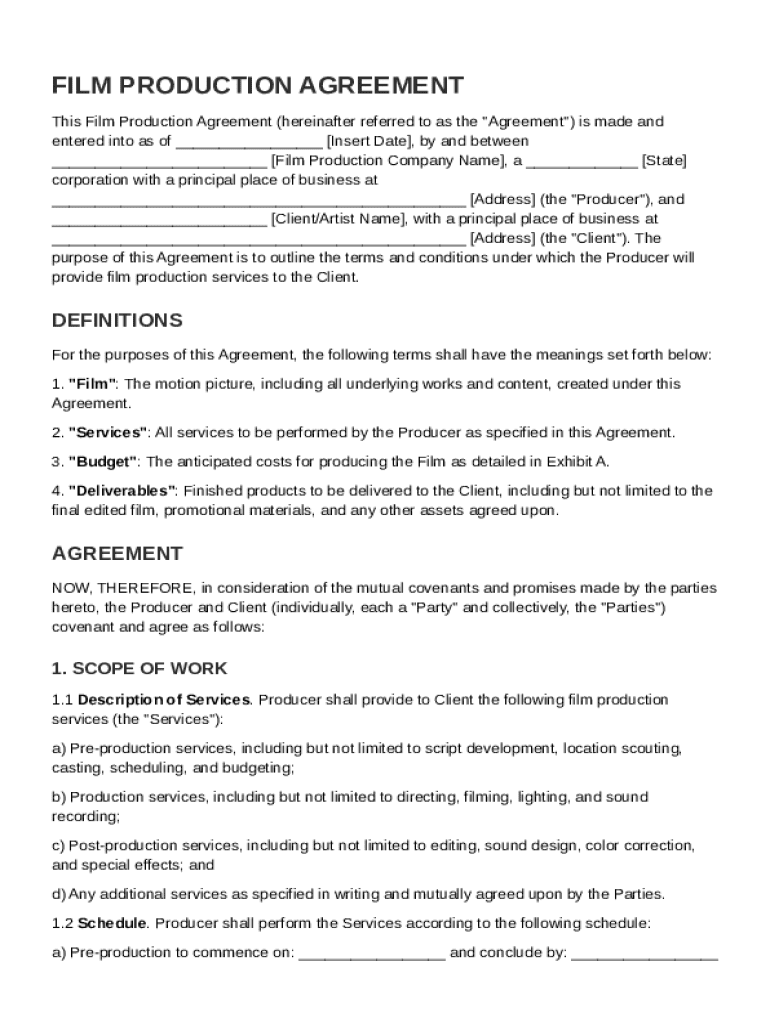
The Film Production Company Contract Template serves as a comprehensive agreement outlining the terms and conditions between a film production company and its client for the provision of film production services. This template ensures that all parties involved have a clear understanding of their roles, responsibilities, and expectations throughout the production process. This contract aims to protect both the producer's and client's interests by detailing crucial elements such as project scope, payment terms, and intellectual property rights.
Key Components Included
- Scope of Work: Clearly defines the tasks and responsibilities of the production company and the client, ensuring a mutual understanding of what the project entails.
- Payment Terms: Specifies the agreed-upon payment structure, including milestones, deposit requirements, and conditions for final payments.
- Rights and Ownership: Details the ownership of the film and any associated rights, guaranteeing that the client understands what they are entitled to upon project completion.
- Warranties and Indemnifications: Provides legal assurance for quality and compliance with standards, while indemnifying either party in the case of disputes.
How to Use the Film Production Company Contract Template
To effectively utilize the Film Production Company Contract Template, both parties must carefully review and agree upon each clause. This process typically involves several steps to ensure that all terms are fair and suitable for the specific project.
Step-by-Step Guide
- Initial Review: Commence with a preliminary review of the entire document to understand its layout and scope.
- Customization: Modify sections to reflect the specifics of the project, such as timelines, budgeting, and deliverables.
- Consultation: Engage legal counsel or a contract specialist to ensure all modifications uphold legal standards and adequately benefit both parties.
- Negotiation: Discuss and negotiate any clauses that may require adjustments before finalizing the contract.
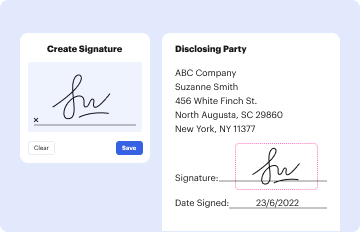
- Final Approval and Signing: After revisions and negotiations, both parties should formally approve and sign the contract to make it binding.
Why You Need a Film Production Company Contract Template
Utilizing a Film Production Company Contract Template is vital to prevent misunderstandings and reinforce legal protections for all parties involved.
Benefits of a Well-Structured Contract
- Legal Protection: Offers a formal arrangement that can be enforced in a court of law if disputes arise.
- Risk Management: Reduces the risk of financial losses by clearly defining payment terms and conditions.
- Clarity: Avoids ambiguity in client expectations, leading to smoother project execution.
- Professionalism: Presents a professional image to clients, reinforcing trust and reliability in your business operations.
Key Elements of the Film Production Company Contract Template
Every Film Production Company Contract Template should contain key components to fully protect and clarify the agreement between the producer and the client.
Primary Sections to Include
- Definitions: Clear explanations of terms used within the contract to prevent misinterpretations.
- Confidentiality Agreement: Outlines the responsibility of both parties to maintain confidentiality concerning proprietary or sensitive information.
- Termination Clause: Details conditions under which the agreement can be dissolved, and the respective obligations of each party in such cases.
- Dispute Resolution: Establishes procedures for resolving disagreements, including mediation or arbitration options.
Who Typically Uses the Film Production Company Contract Template
This template is most commonly used by individuals and entities involved in the production of films, but its utility extends beyond this primary audience.


Common Users Include
- Production Companies: Use the template to define project terms with clients, ensuring all requirements are met.
- Clients/Investors: Ensure that their investment or project contributions are protected and that they receive the final product as agreed upon.
- Legal Professionals: Assist in drafting, reviewing, and negotiating contracts on behalf of clients or production companies.
- Freelancers and Contractors: Individuals providing services to production companies may also make use of adapted sections of this template for their work agreements.

Legal Use of the Film Production Company Contract Template
It's crucial that the Film Production Company Contract Template is not only thorough but also legally binding and compliant with applicable laws.
Legal Considerations
- Compliance with State Laws: Ensure the contract aligns with specific state regulations where the production activity takes place.
- ESIGN Act Adherence: Verify that any electronic signatures used in the contract comply with the Electronic Signatures in Global and National Commerce Act.
- Modification and Amendments: Include procedures for how the contract can be amended, ensuring any changes are recorded and signed by involved parties.
Examples of Using the Film Production Company Contract Template
Real-world scenarios illustrate the practical application of the Film Production Company Contract Template, highlighting its versatility and utility.
Practical Examples
- A Los Angeles-based independent film company utilizes the template to secure an agreement for a new short film, specifying delivery timelines, payment schedules, and rights to any music used within the production.
- A documentary production agency in New York adapts the template to outline expectations, roles, and payment structures for a multi-part series, ensuring clarity and consistency across episodes.
- A freelance cinematographer uses elements from the template to establish a contract with a foreign film production company, adjusting clauses to address travel and equipment provisions.
State-Specific Rules for the Film Production Company Contract Template
Understanding how state regulations can affect the Film Production Company Contract Template is essential for legal compliance.
Variations and Adaptations
- California: Requires specific language around employee classification due to strict labor laws regarding independent contractors and freelancers.
- New York: Must consider state privacy laws when drafting confidentiality clauses.
- Texas: Offers flexibility but suggests consulting a local attorney to make sure the template aligns with specific business operational requirements within the state.