
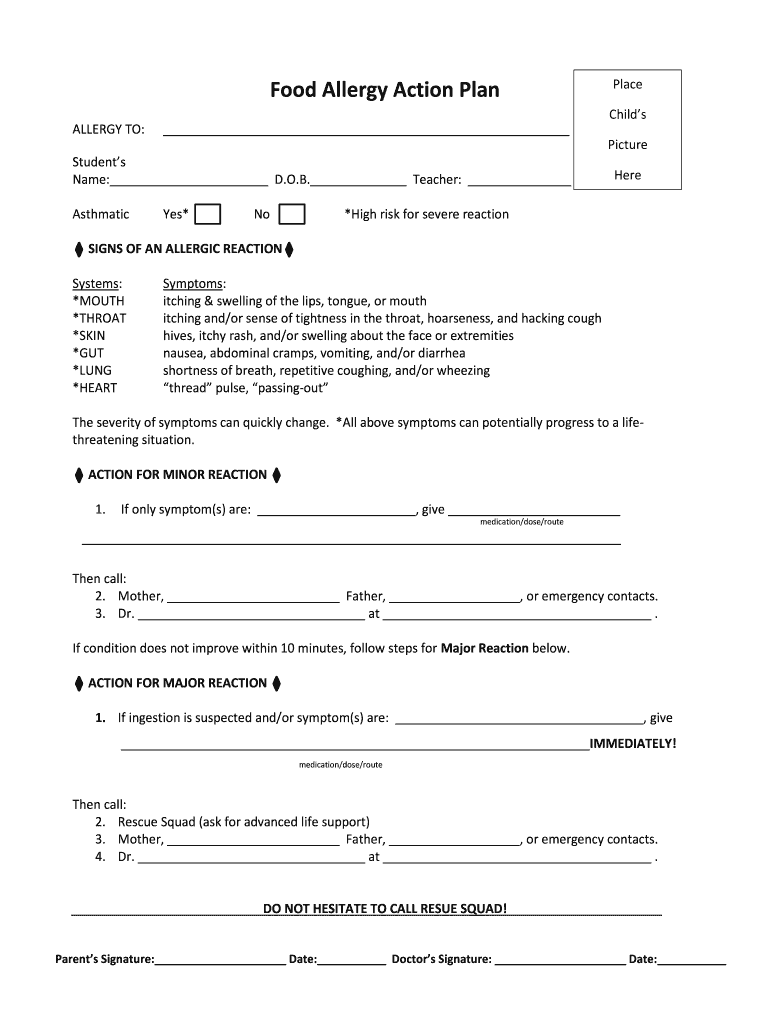







Definition and Purpose of the Food Allergy Action Plan
The Food Allergy Action Plan is a vital document that outlines procedures and protocols for managing food allergies, particularly for individuals with heightened risk, such as children. This plan is structured to ensure that caregivers, educators, and medical personnel respond swiftly and effectively in the event of an allergic reaction.
- Key Objectives:
- Clearly defines the specific allergens to avoid.
- Provides steps for recognizing symptoms of an allergic reaction.
- Outlines immediate actions to take during an allergic reaction, including medication administration and emergency contacts.
Understanding the Food Allergy Action Plan is critical for minimizing risk and ensuring safety in environments such as schools, daycares, or other community settings where food is served.
How to Use the Food Allergy Action Plan Effectively
Utilizing the Food Allergy Action Plan involves thorough comprehension and collaboration among parents, caregivers, and staff. Each party plays a significant role in ensuring compliance and readiness.
- Steps to Utilize the Plan:
- Education and Training:
- Educate all personnel about the specifics of the plan, including allergens, symptoms, and necessary actions.
- Distribution of Copies:
- Ensure that copies of the Food Allergy Action Plan are available to all relevant parties, including teachers, kitchen staff, and emergency responders.
- Regular Review and Updates:
- Conduct regular reviews of the plan to ensure that it remains current, particularly if new allergies emerge or as the individual’s circumstances change.
- Education and Training:
This collaborative approach fosters an environment of safety and awareness, reducing the risk of accidental exposure.
Key Elements of the Food Allergy Action Plan
The Food Allergy Action Plan incorporates several essential elements that collaboratively ensure proper management of food allergies.
- Essential Components:
- Allergy Information:
- List specific food allergies and any cross-reactive allergens.
- Symptoms Identification:
- Describe mild and severe allergic reactions, providing clear signs and symptoms for identification.
- Emergency Procedure:
- Outline the immediate steps to take in the case of an allergic reaction, including the administration of medications like epinephrine.
- Emergency Contacts:
- Provide a list of essential contacts, including primary caregivers and medical professionals, to ensure rapid communication during emergencies.
- Allergy Information:
Including these elements in the Food Allergy Action Plan enhances the preparedness and response capability during allergic incidents.
Steps to Complete the Food Allergy Action Plan
Completing the Food Allergy Action Plan requires careful attention to detail to ensure accuracy and comprehensiveness.
- Completion Steps:
- Gather Relevant Information:
- Collect medical history and information about allergens from healthcare providers.
- Fill Out Plan Sections:
- Input specific allergens, treatment protocols, and emergency contacts into the designated sections of the plan.
- Obtain Signatures:
- Ensure that the plan is signed by parents, guardians, and, if necessary, healthcare providers to validate the information and commitment to the plan.
- Distribute Copies:
- Make multiple copies of the finalized plan and distribute them to all involved parties.
- Gather Relevant Information:
Correctly completing this document enables clear guidelines for managing food allergies effectively.
Important Terms Related to the Food Allergy Action Plan
Understanding specific terminology associated with the Food Allergy Action Plan is essential for effective implementation and communication.
- Key Terms:
- Anaphylaxis:
- A severe, potentially life-threatening allergic reaction that requires immediate medical intervention.
- Epinephrine Auto-Injector:
- A device used to deliver a dose of epinephrine to treat anaphylactic reactions.
- Cross-Contamination:
- The process by which a product, food, or surface that is safe becomes contaminated with allergens, posing a risk to individuals with allergies.
- Allergen:
- Any substance that can trigger an allergic reaction in susceptible individuals.
- Anaphylaxis:
Familiarity with these terms allows all stakeholders to communicate effectively regarding food allergy management.
State-Specific Rules for the Food Allergy Action Plan
Different states in the U.S. may have unique regulations and requirements regarding the Food Allergy Action Plan. Understanding these can help ensure compliance and safety.
- General Considerations:
- State Regulations:
- Some states mandate that schools maintain updated food allergy plans, while others may require specific training for staff.
- Documentation Requirements:
- Reviewing local laws regarding documentation can clarify what is necessary to keep on file for schools and child-care facilities.
- State Regulations:
By adapting to these state-specific rules, institutions can better serve individuals with food allergies, fostering an inclusive and safe environment.
Example Use Cases for the Food Allergy Action Plan
Practical application of the Food Allergy Action Plan can significantly impact individual safety and health outcomes.
- Case Scenarios:
- School Setting:
- A child with a severe peanut allergy participates in a school lunch program. The Food Allergy Action Plan is implemented, alerting staff to avoid any peanut products and ensuring that epinephrine is readily accessible.
- Childcare Facility:
- A daycare provider utilizes a Food Allergy Action Plan to strictly inform all caregivers about a child’s dairy allergy. By following the plan, the staff confidently manages meal preparations and supervises snacks to prevent accidental exposure.
- School Setting:
Such real-world applications demonstrate the critical importance of the Food Allergy Action Plan in mitigating risks associated with food allergies.




