






Definition and Meaning
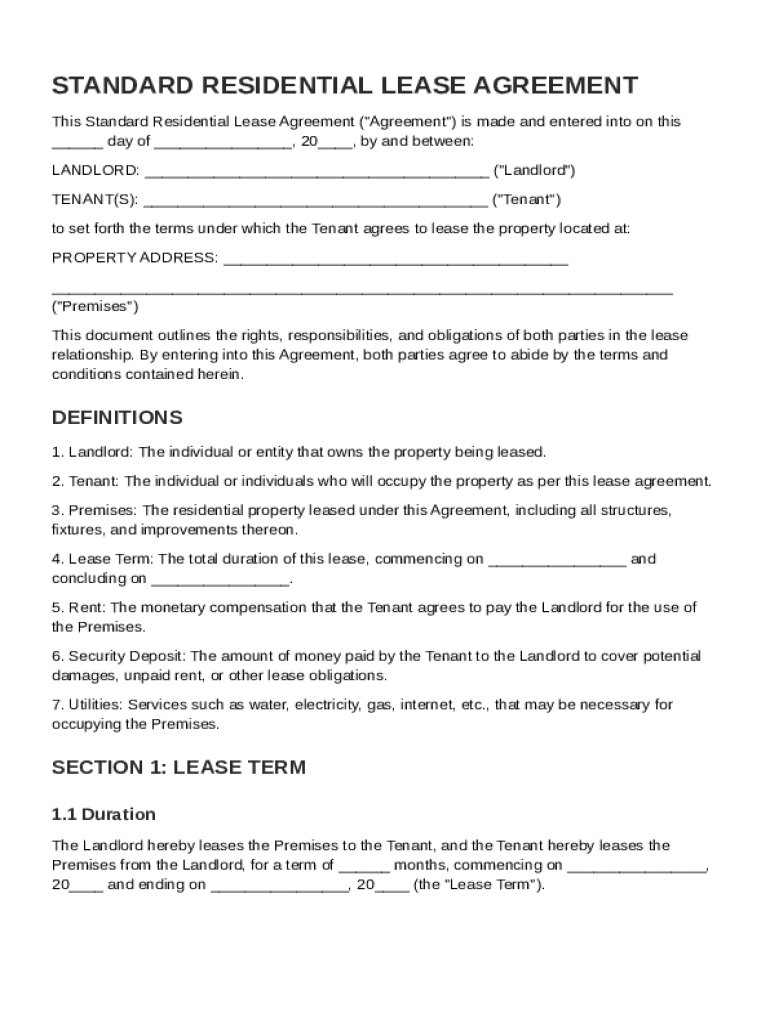
A Standard Residential Lease Agreement is a legally binding contract that defines the relationship between a landlord and a tenant, specifying the terms and conditions for renting residential property. This template includes essential components such as the identification of the landlord and tenant, a description of the premises, the duration of the lease, rent payment structure, and other relevant terms. This agreement ensures both parties are clear on their obligations, reducing potential disputes.
Key Components of a Lease Agreement
- Identification of Parties: Clearly names the landlord and tenant involved in the lease.
- Description of Premises: Details the property being rented, including address and any specific portions included in the lease.
- Lease Term: Specifies the duration of the lease, including the start and end dates.
Importance of Clarity
- Legal Protection: The agreement outlines responsibilities and rights, shielding both parties legally.
- Dispute Resolution: Acts as a reference point in the event of disagreements regarding duties or terms.
Key Elements of the Standard Residential Lease Agreement Template
The template includes several crucial elements to ensure comprehensive coverage of the rental terms.
Rent Payment Structure
- Amount: Specifies the monthly rent amount agreed upon.
- Method: Identifies accepted payment methods, whether by check, bank transfer, or another method.
- Payment Schedule: Outlines when rent is due, often the first day of each month.
Security Deposit
- Amount: Typically equivalent to one or two months' rent, held to cover potential damages.
- Conditions for Return: Details under which conditions all or part of the deposit will be returned at the lease's end.
Important Terms Related to the Standard Residential Lease Agreement Template
Understanding the terminology used is crucial for both parties to fully comprehend their commitments.
Tenant and Landlord Responsibilities
- Landlord: Maintains the property, ensures it is habitable, and makes necessary repairs.
- Tenant: Pays rent timely and maintains the premises in good condition, reporting any major issues promptly.
Maintenance and Repair Obligations
- Common Areas: Landlord maintains shared spaces in multi-unit buildings.
- Damage Responsibility: Tenants are typically responsible for damages they or their guests cause.
Steps to Complete the Standard Residential Lease Agreement Template
Filling out the template correctly is essential to ensure it meets all legal and personal requirements.
- Read Entire Document: Ensure understanding of all sections and terms.
- Fill in Identifying Information: Enter details for both landlord and tenant.
- Specify Lease Terms: Include duration, rent amount, and payment details.
- Include Additional Clauses: Add any specific agreements, such as pet policies.
- Review and Sign: Both parties should review the completed agreement thoroughly before signing.
Legal Use of the Standard Residential Lease Agreement Template
The template serves a legal function to document rental terms that are enforceable by law.
Compliance with State Laws
- State Variations: Ensure the template aligns with the specific legal requirements of the state where the property is located, as landlord-tenant laws vary.
Enforceability
- Signatures: Secures the agreement as legally binding, supporting legal standing in disputes.
State-Specific Rules for the Standard Residential Lease Agreement Template
Due to varying state laws, certain components of the lease may need adjustment.
Security Deposits
- Limits and Regulations: Some states cap the maximum deposit or require deposits be held in an interest-bearing account.
Notice Requirements
- Termination: Different states mandate specific notice periods to terminate or renew leases.
Examples of Using the Standard Residential Lease Agreement Template
A Standard Residential Lease Agreement is versatile and can be used in various situations.
Renting to Individuals
- Single Tenant: Used when a property is rented to a single individual, clearly defining their responsibilities.
Multi-Tenant Scenarios
- Shared Occupancies: Employed when multiple tenants share a property, with each tenant’s obligations clearly delineated.
Versions or Alternatives to the Standard Residential Lease Agreement Template
While the standard version is widely used, alternatives and customizations may be necessary.
Customized Leases
- Specific Tenancy: Tailored agreements can be created for specific tenancy types, such as college student housing.
Digital Templates
- Online Platforms: Various legal software services may offer customizable lease templates, accommodating unique landlord or tenant needs.
These sections provide a comprehensive overview of the Standard Residential Lease Agreement Template, covering essential aspects, legal considerations, and practical applications to ensure the effective management of rental relationships.