
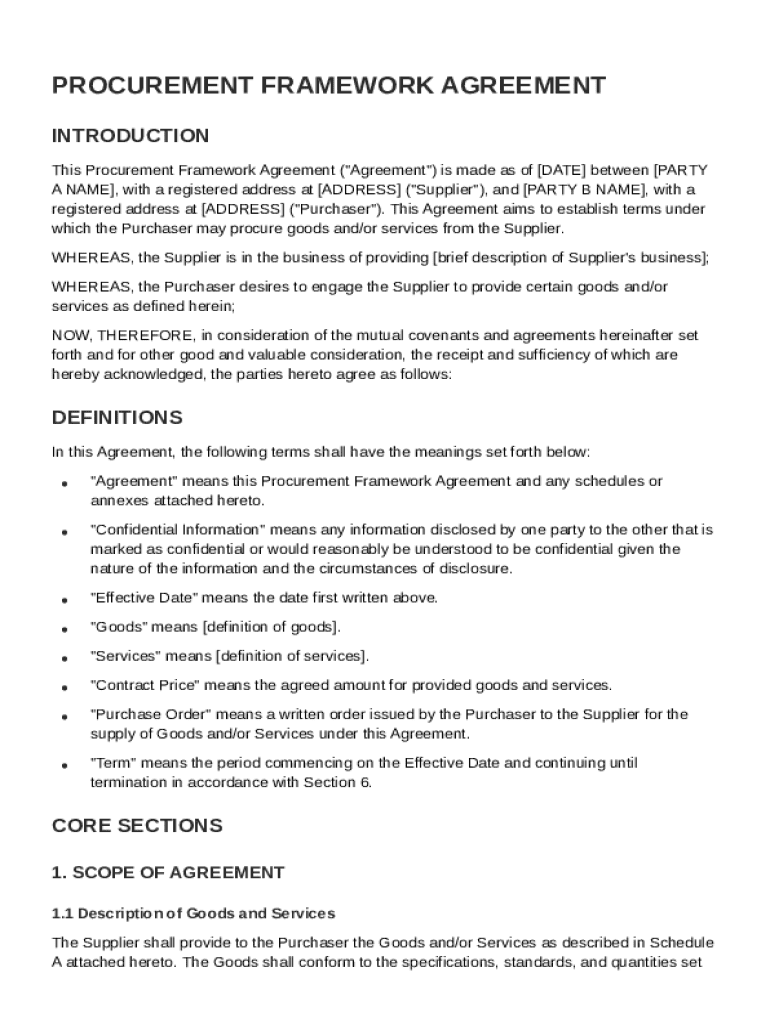







Definition and Meaning
The Procurement Framework Agreement Template serves as a foundational document for establishing the terms of procurement between a supplier and a purchaser. It functions as a legally binding agreement that details various aspects of the procurement process, including the obligations of both parties, pricing, performance metrics, and other key elements. This template provides clarity and sets expectations, ensuring both parties understand their roles and responsibilities in the procurement process.
Key Components
- Definitions and Terminology: Clearly outlines the specific terms and language used within the agreement to prevent ambiguity.
- Obligations: Specifies the duties and responsibilities of both the supplier and purchaser.
- Pricing and Payment: Details the agreed prices for products or services and the payment terms.
- Performance Metrics: Sets the standards by which the supplier's performance will be evaluated.
Practical Use
Businesses use this template to streamline the procurement process, mitigate risks, and foster transparent communication between involved parties. By setting definitive terms, organizations can prevent disputes and ensure a smooth transaction.
Steps to Complete the Procurement Framework Agreement Template
Completing the Procurement Framework Agreement Template involves specific steps to ensure all essential information is included and accurate.
Step-by-Step Process
- Input Party Information: Enter the details of both the supplier and purchaser, including names, addresses, and contact information.
- Define Goods or Services: Clearly specify the products or services to be procured.
- Establish Terms: Outline the pricing, payment schedule, and delivery terms.
- Set Performance Metrics: Define how the supplier’s performance will be measured.
- Include Legal Clauses: Add clauses related to termination, confidentiality, and dispute resolution.
- Review and Finalize: Ensure all sections are completed accurately and review for any legal compliance issues.
Common Errors
- Omitting critical terms that define delivery dates or payment windows.
- Failing to include both parties' signatures, rendering the agreement unenforceable.
Legal Use of the Procurement Framework Agreement Template
This template must be used in accordance with U.S. laws to ensure it is legally binding and enforceable.
Compliance Requirements
- Adhering to State Laws: Understand and integrate state-specific laws that may impact contract enforceability.
- Confidentiality Clauses: Include clauses to legally safeguard sensitive information shared between parties.
- Indemnification: Address potential liabilities and specify indemnification responsibilities.
Typical Legal Challenges
- Misinterpretation of clauses, especially those related to pricing and termination.
- Disagreements on performance metrics, which can lead to disputes.
Key Elements of the Procurement Framework Agreement Template
The core components of a Procurement Framework Agreement should be meticulously documented to avoid future conflicts.
Essential Clauses
- Change Management: Procedures for handling modifications to the agreement.
- Compliance and Legal Requirements: Compliance with federal and state laws.
- Termination Conditions: Circumstances under which the agreement can be terminated by either party.
Additional Considerations
- Including a detailed scope of work can prevent scope creep.
- Establishing a clear communication plan for dispute resolution processes.
Who Typically Uses the Procurement Framework Agreement Template
Various business entities can benefit from using this template to formalize their procurement processes.


Common Users
- Corporations: Often utilize these agreements to manage complex supply chains.
- Government Agencies: Use them to ensure transparency and fairness in vendor relationships.
- Small Businesses: Employ templates to streamline procurement without the expense of legal drafting.

Benefits for Different Business Types
- Startups: Gain clarity in vendor relationships as they scale operations.
- Non-Profits: Ensure that procurement aligns with budgetary constraints and stakeholder expectations.
Examples of Using the Procurement Framework Agreement Template
Real-world applications of these agreements demonstrate their utility across several industries.
Case Studies
- Manufacturing: A company streamlined its raw material procurement, reducing delays by 15%.
- Technology: An IT firm used the template to establish clear service delivery timelines, improving client satisfaction.
- Healthcare: A hospital network improved supplier relations, ensuring a steady supply of necessary equipment.
Scenarios
- Long-term contracts where specificity in delivery and pricing terms is crucial.
- Multinational deals requiring local compliance embedded within the agreement clauses.
State-Specific Rules for the Procurement Framework Agreement Template
While the template provides a general framework, certain states may have additional requirements.
Variations by State
- California: May require specific language related to labor compliance.
- New York: Includes additional clauses for electronic signatures under state law.
Adapting the Template
Understand the legislative nuances, particularly with respect to dispute resolution and termination clauses, which can vary significantly between states.
Business Types That Benefit Most from Procurement Framework Agreement Template
Different industries find specific advantages in utilizing a Procurement Framework Agreement.
High-Volume Sectors
- Retail: Manages numerous vendor contracts efficiently.
- Construction: Standardizes equipment and subcontractor procurement.
Specialized Industries
- Pharmaceuticals: Benefits from clear regulatory and compliance mandates.
- Agriculture: Aids in maintaining a steady supply chain for perishable goods.
Understanding these eight to thirteen simplified yet thorough explanations of the Procurement Framework Agreement Template ensures that organizations can efficiently manage their procurement processes while mitigating risks and enhancing vendor relationships.




