
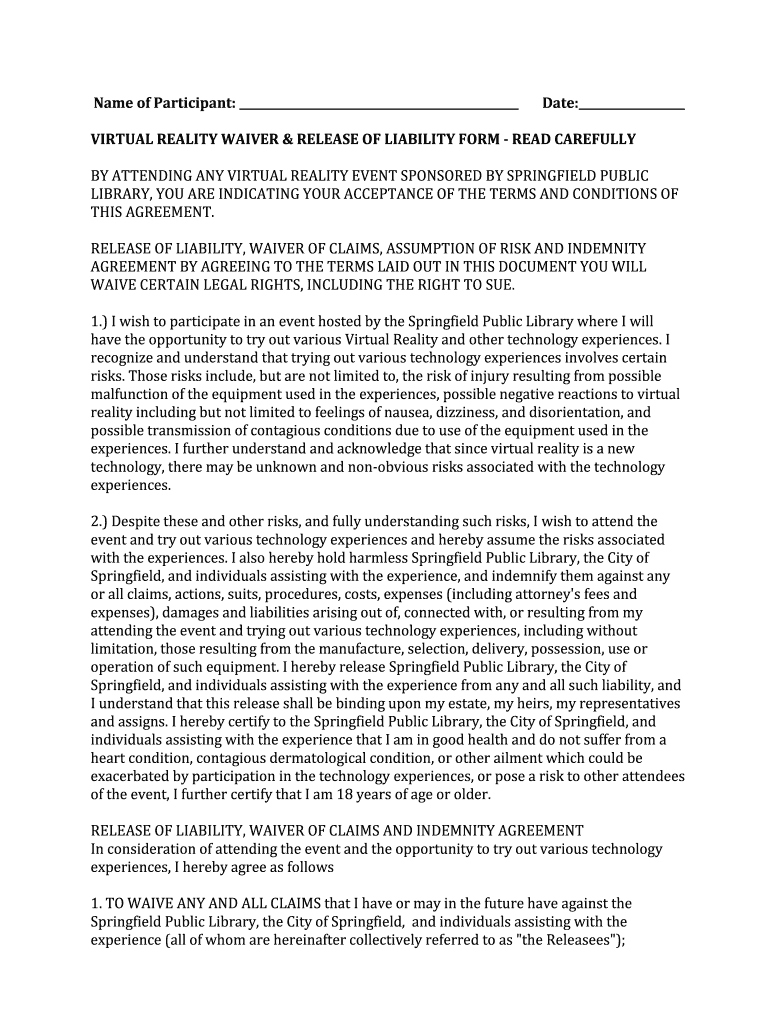







Definition and Meaning of a VR Waiver
A VR waiver, or Virtual Reality Waiver, is a legal document designed to protect organizations from liability when participants engage in virtual reality activities. It outlines potential risks associated with VR experiences, requiring participants to acknowledge these risks and waive their rights to sue for injuries or damages incurred during participation. The waiver is important for organizations hosting VR events, as it ensures informed consent from participants regarding the nature of the VR experience.
- Acknowledgment of Risks: Participants must understand that engaging in virtual reality may involve physical and psychological risks, including motion sickness, falls, or other injuries.
- Release of Liability: The waiver typically includes a clause that releases the organizing entity from any future claims for injuries or damages, essentially protecting the entity from lawsuits related to the VR activity.
Participants are generally required to sign the VR waiver before they can engage in the VR experience, which signifies their acceptance of the terms laid out in the document.
Key Elements of a VR Waiver
A comprehensive VR waiver includes several essential components to ensure clarity and legal validity:
- Identification of Parties: The waiver should clearly identify the organization providing the VR experience and the participant engaging in the activity.
- Description of Activities: It should provide a precise description of the VR activities involved, so participants understand what they are agreeing to.
- Informed Consent: The waiver must articulate the risks associated with participating in these activities, reinforcing that the participant is aware of the potential dangers.
- Restrictions for Minors: Whether for a minor or an adult, the waiver must include guidelines about parental consent for individuals under the legal age.
- Signatory Section: A space for participants to provide their signature, acknowledging their understanding and acceptance of the terms.
These components create a robust structure for the waiver, protecting both the participant and the organizing entity.
Steps to Create and Distribute a VR Waiver
Creating and distributing a VR waiver involves multiple steps to ensure it is comprehensive and legally binding.
-
Drafting the Waiver: Begin by drafting the document to include all the key elements discussed above. It’s advisable to consult with legal counsel to ensure compliance with local laws.
-
Including Signature and Date Lines: Provide designated areas for signatures and dates, confirming that participants personally affirm their understanding.
-
Distribution Methods: Decide whether the waiver will be distributed in physical format or electronically. An electronic format can be advantageous for ease of use and storage.
-
Collecting Signatures: If distributing electronically, utilize a platform that allows for secure electronic signatures. Ensure all participants complete the waiver before starting the VR experience.
-
Record Keeping: Maintain records of all signed waivers for legal protection. This could involve storing signed documents in a secure database or filing system for future reference.
Each of these steps plays a critical role in solidifying the waiver’s effectiveness in safeguarding your organization while ensuring participant safety.
Legal Use of a VR Waiver
The legal validity of a VR waiver is contingent on several factors that must be effectively addressed to uphold its enforceability in a court of law:
-
Clear Language: The waiver must be written in clear, understandable terms. Jargon or complex language can undermine its enforceability, as participants should easily comprehend what they are signing.
-
Conspicuous Presentation: The document should be highlighted or formatted to draw attention to the waiver sections, ensuring participants are aware of the rights they are relinquishing.
-
Compliance with Local Laws: Different states have varying regulations regarding liability waivers. It’s crucial to ensure that the waiver complies with local legal standards, including consideration for specific waiver laws that may affect its enforceability.
-
Voluntary Agreement: Participants must sign the waiver voluntarily, with no coercion. This means presenting the waiver in a non-pressure situation where participants can make an informed decision.
Upholding these legal standards enhances the possibility of the waiver being accepted in case of a dispute.
Examples of When a VR Waiver is Necessary
Various scenarios illustrate the necessity of a VR waiver in protecting organizations:
-
Public Events: Hosting VR events at a public fair or exhibition where many participants may engage with the technology.
-
Educational Settings: Schools or universities conducting VR workshops or classes involving physical interactions with virtual environments.
-
Corporate Training: Companies using VR simulations for employee training, where physical movement may be required, potentially leading to injuries.
Each of these examples highlights the potential risks involved, underscoring the importance of having a signed VR waiver to mitigate liability.
Importance of Collecting VR Waivers
Collecting signed VR waivers is a crucial step in the risk management process for organizations.
-
Liability Protection: A properly signed waiver can serve as a defense in legal proceedings, demonstrating that the organization took necessary precautions to inform participants of risks.
-
Documentation of Informed Consent: Having records of signed waivers confirms that participants were adequately informed and voluntarily accepted the risks associated with the VR experience.
-
Risk Awareness: By requiring participants to acknowledge the waiver, organizations can foster a culture of awareness regarding safety and risks, ensuring a more responsible approach to VR activity.
Organizational diligence in collecting and managing waivers not only provides legal protection but also enhances participant safety and trust throughout the VR experience.




