Definition and Purpose of the Homebuilder Contract Template
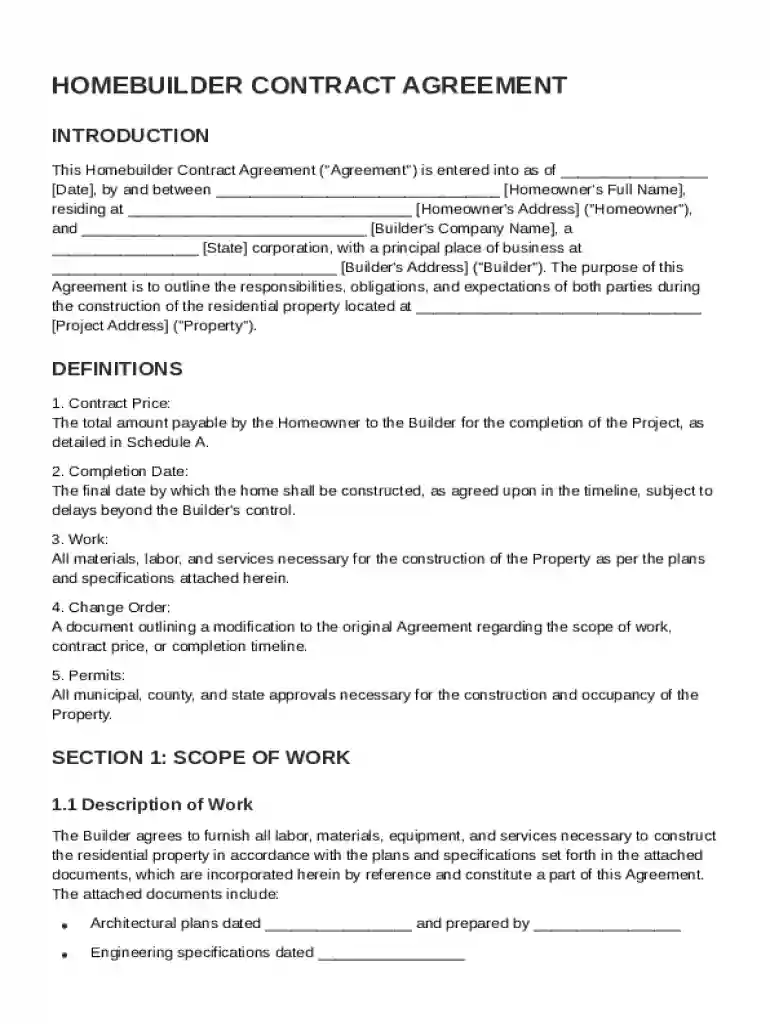
The Homebuilder Contract Template is a structured document utilized to outline the terms and conditions of a construction agreement between a homeowner and a builder. This template serves as a critical tool to define the scope of work, establish the contract price, and delineate the payment schedule. Additionally, it outlines responsibilities of both parties, provides methods for handling change orders, and ensures compliance with relevant laws. By clearly stating the terms, the template aims to promote transparency and mutual understanding, preventing potential disputes during the construction of a residential property.
Key Elements of the Homebuilder Contract Template
The Homebuilder Contract Template includes several essential components that are crucial for a successful agreement. Important elements include:
- Scope of Work: Detailed descriptions of the construction tasks, materials to be used, and any specific requirements from the homeowner.
- Payment Terms: Includes the total contract price, deposit requirements, and the payment schedule linked to project milestones.
- Project Timeline: Specifies start and completion dates, along with penalties or bonuses for delays or early completion.
- Change Order Procedures: Outlines how amendments to the initial contract terms, such as design changes, will be managed, including documentation and approval processes.
- Warranties: Details any guarantees provided by the builder regarding the quality of work or materials used.
Steps to Complete the Homebuilder Contract Template
Completing the Homebuilder Contract Template involves several methodical steps to ensure accuracy and thoroughness:
- Gather Necessary Information: Before filling out the template, collect all relevant details such as the homeowner's and builder's information, project details, and any specific requests or conditions.
- Define Project Scope: Clearly articulate the extent of the work, specifying tasks, materials, and expectations to avoid ambiguities.
- Establish Payment and Timing Terms: Outline the financial and scheduling commitments, ensuring all parties agree to the terms.
- Incorporate Legal Clauses: Add any legal provisions necessary for compliance with state and federal regulations.
- Review and Sign: Once completed, both parties should carefully review the entire document to ensure accuracy and completeness before signing.
Who Typically Uses the Homebuilder Contract Template
This template is commonly used by various stakeholders involved in residential construction projects, including:

- Homeowners: Individuals or families looking to build, remodel, or expand their residences.
- Builders/Contractors: Professionals hired to execute the construction work, including general contractors and subcontractors.
- Legal Advisors: Attorneys or legal consultants who provide guidance on contract formulation and compliance.
- Project Managers: Individuals responsible for overseeing the project's progress and ensuring alignment with the agreed terms.
Legal Use of the Homebuilder Contract Template
Ensuring the Homebuilder Contract Template is legally compliant is crucial to avoid disputes and litigation. The contract should adhere to these legal considerations:
- Compliance with State Laws: Ensure the contract complies with the specific building codes, licensing requirements, and legal regulations of the state where the construction is taking place.
- Dispute Resolution: Include clauses on how disputes will be resolved, such as through mediation or arbitration.
- Termination Clauses: Outline the conditions under which the contract can be terminated by either party, including notice periods and any penalties.
State-Specific Rules for the Homebuilder Contract Template
Each state may have unique requirements and regulations affecting the Homebuilder Contract Template. Key state-specific considerations include:
- Licensing Requirements: States may require builders and contractors to have specific licenses to legally perform construction work.
- Insurance Policies: Include necessary insurance coverage, such as general liability and workers' compensation, which may vary by state.
- Local Building Codes: Ensure compliance with local building codes that dictate construction standards and safety regulations.
Practical Examples of Using the Homebuilder Contract Template
The Homebuilder Contract Template can be applied to various scenarios:
- Custom Home Builds: When constructing a new custom home, this template outlines all necessary details, ensuring mutual understanding between the homeowner and builder.
- Renovations: For extensive home renovations, it ensures every aspect of the remodel is documented, from room design to material selections.
- Additions: When adding structures like garages or additional rooms, the template defines scope, timeline, and cost to streamline project execution.
Software Compatibility and Document Management
Utilizing the Homebuilder Contract Template often involves digital tools for enhanced efficiency:
- DocHub Platform: Accommodates various document formats such as PDF, DOC, and TXT, allowing flexibility in managing and sharing contracts.
- Security Features: Utilize advanced security measures like SSL encryption and authentication protocols to protect sensitive contract data.
- Integration with Cloud Services: Optimize workflow through integration with services like Google Drive and Dropbox for document storage and management across platforms.
These sections provide comprehensive insights into the Homebuilder Contract Template, offering valuable information for effective contract management in residential construction projects.