




01. Edit your form online
Type text, add images, blackout confidential details, add comments, highlights and more.

Type text, add images, blackout confidential details, add comments, highlights and more.

Draw your signature, type it, upload its image, or use your mobile device as a signature pad.

Send it via email, link, or fax. You can also download it, export it or print it out.
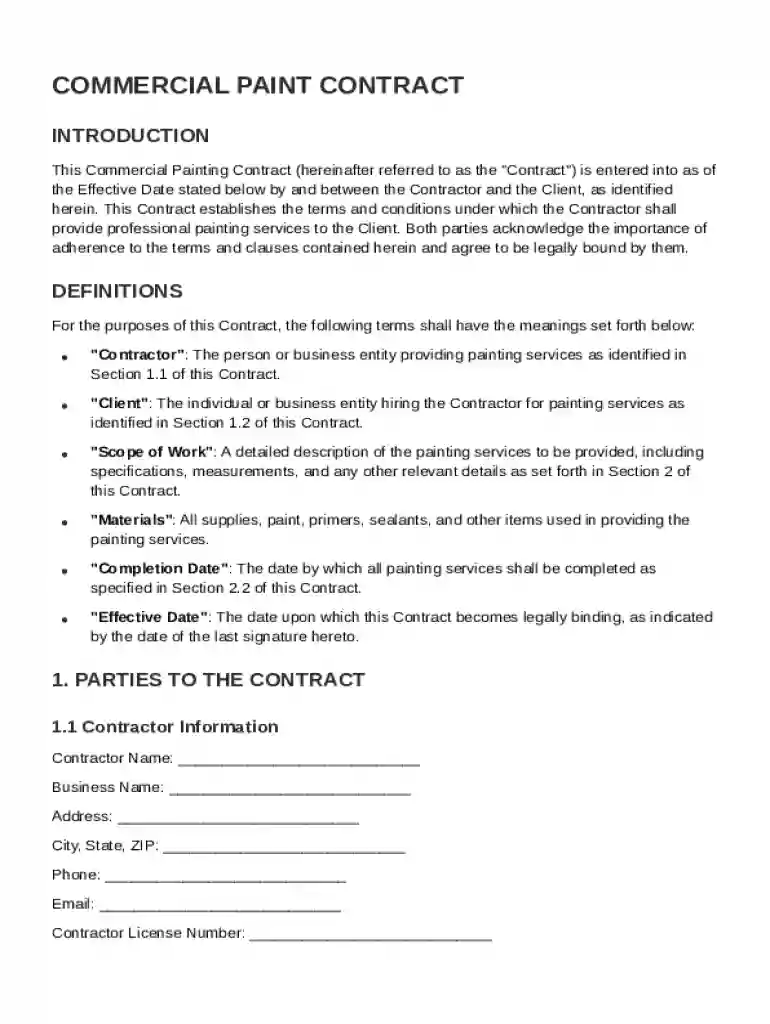
The Commercial Paint Contract Template serves as a formal agreement between a painting contractor and a client seeking professional painting services. This document outlines all critical terms necessary for the completion of a commercial painting project, ensuring both parties are legally protected and have mutual understanding throughout the process. The core components include the scope of work, payment terms, and responsibilities for materials. It also highlights important details like warranties, insurance requirements, and resolution procedures for any potential disputes.
The main purpose of this template is to provide a clear framework that prevents misunderstandings and aligns expectations. By detailing specific conditions and obligations, the template assists in managing the project efficiently and minimizes risks.
To effectively use the Commercial Paint Contract Template, start by reviewing the pre-filled sections to understand the general terms and conditions. The next step involves customizing the details according to your specific project requirements. This means accurately detailing the scope of work, including areas to be painted, materials to be used, and any special instructions or conditions.
Collaboration features available in DocHub allow for multiple stakeholders to review and edit the contract before finalization. An important aspect is capturing signatures from all parties involved, which DocHub facilitates with legally binding electronic signature capabilities.
The contractual elements are essential for ensuring clarity and mutual agreement. Key sections include:
These elements are critical in maintaining a strong contractual backbone, allowing for a seamless communication line between client and contractor.
The template complies with U.S. legal standards, making it a reliable tool for formalizing business agreements in the painting industry. Legal use involves including necessary clauses that adhere to state-specific requirements, as some states might have unique regulations on contracting and consumer protection.
Using this template helps mitigate legal risks and uphold professional standards, providing peace of mind to both contractor and client.
Completing the template involves several key steps to ensure it is thorough and accurate. Here’s a succinct overview:
By meticulously following these steps, you can produce a precise and legally binding commercial paint contract.
This template is typically used by professional painting contractors and commercial property owners or managers. It's valuable in any situation requiring a formal agreement for painting services in commercial settings, such as office buildings, retail spaces, or industrial facilities.
Each user benefits from the structured format, which ensures that all project aspects are comprehensively covered.


Understanding the terminology within the contract is crucial. Here are some of the important terms:
Familiarizing oneself with these terms helps navigate the contract effectively and ensures all parties share a common understanding.
Certain states have specific requirements and consumer protection laws related to construction and service agreements. While the Commercial Paint Contract Template is designed to meet general standards, users must consider additional clauses for compliance in particular jurisdictions.
Adequately tailoring the template to adhere to these rules ensures legality and functional applicability in various states.
At DocHub, your data security is our priority. We follow HIPAA, SOC2, GDPR, and other standards, so you can work on your documents with confidence.


This contract is between the Board of Regents of the University System of Georgia and a design professional for CM/GC projects, and is the entire contract.
Feb 21, 2024 The Borough of Chambersburg is accepting sealed bids for the Line Painting Project on Borough Streets and State Routes.
viii) Tender drawings ix) Standard formats like Bank Guarantee and Articles of Agreement etc. The approved draft Tender Document is to be kept in safe custody.


