






Key Elements of the Tuition Reimbursement Payback Agreement Template
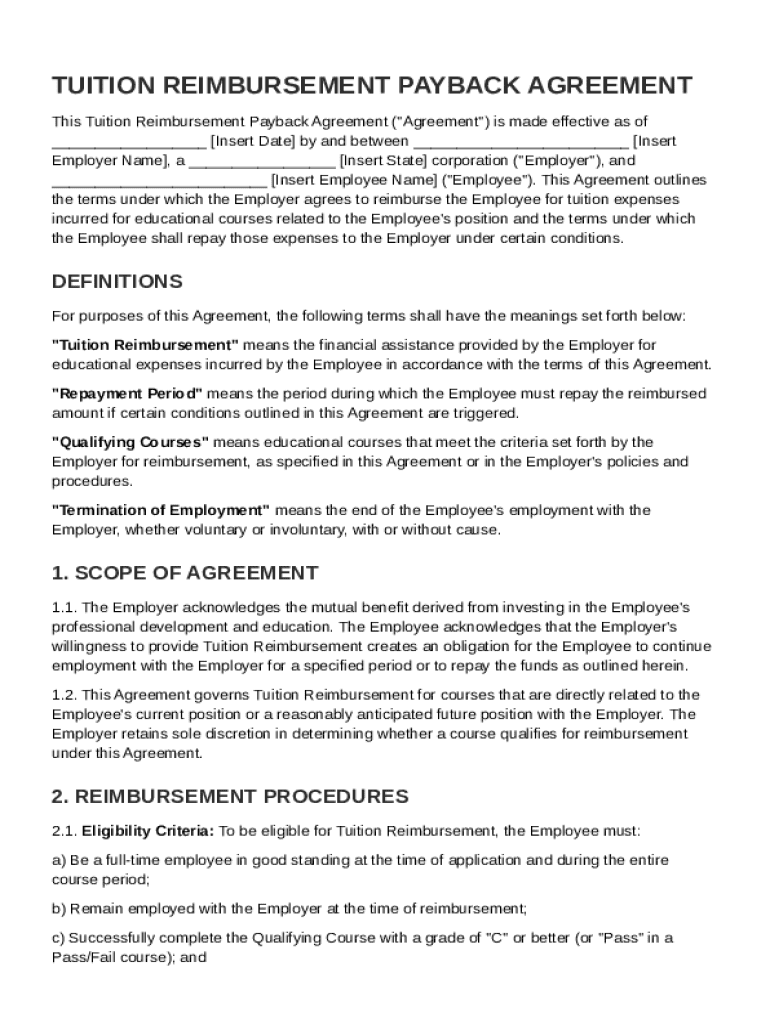
The Tuition Reimbursement Payback Agreement Template serves as a foundational document outlining the specifics of how an employer reimburses educational expenses for employees, including terms of repayment. Core elements encompass eligibility criteria, reimbursement procedures, and conditions under which repayment is required.
Eligibility Criteria
Eligibility criteria detail the requirements employees must meet to qualify for tuition reimbursement. This may include:
- Employment duration, specifying a minimum period an employee must have worked before becoming eligible.
- Job performance standards, requiring consistent satisfactory performance evaluation scores.
- Course relevance, ensuring the educational pursuits directly enhance job-related skills or knowledge.


Reimbursement Procedures
Reimbursement procedures outline the process employees must follow to receive funds for their educational expenses. Steps often include:
- Submitting a reimbursement request form with detailed course information.
- Providing proof of expense, such as receipts or invoices.
- Meeting specified grade benchmarks, like a minimum grade to qualify.
- Adhering to submission deadlines for timely processing.
Repayment Conditions
Repayment conditions define scenarios under which employees are obligated to repay the reimbursed amount. Common conditions include:
- Voluntary resignation from the company within a certain period post-reimbursement.
- Failure to complete the course or achieve the required grade.
- Misrepresentation of expense claims.
Steps to Complete the Tuition Reimbursement Payback Agreement Template
Successfully completing the Tuition Reimbursement Payback Agreement Template involves careful attention to detail and adherence to company policies. Follow these steps for comprehensive completion:
- Review Eligibility Requirements: Ensure you meet all eligibility criteria before proceeding.
- Gather Necessary Information: Collect all supporting documents, including receipts, grade transcripts, and course descriptions.
- Fill Out Personal Details: Enter your personal and employment-related information accurately to avoid processing delays.
- Detail Course Information: Provide thorough details about the educational program, such as the institution's name, course titles, and duration.
- Acknowledge Repayment Terms: Carefully read and acknowledge the repayment conditions to ensure compliance and avoid surprises.
- Submit the Form: Follow the submission guidelines, which may include electronic submission via an internal portal or physical submission to HR.
Important Terms Related to the Tuition Reimbursement Payback Agreement Template
Understanding the specific terminology within the Tuition Reimbursement Payback Agreement Template is crucial for clear comprehension and compliance.
Agreement Parties
- Employer: Entity offering tuition reimbursement.
- Employee: Individual seeking educational expense reimbursement.
Financial Terms
- Reimbursement Cap: The maximum monetary amount the employer agrees to reimburse within a specified timeframe.
- Pro-Rated Repayment: A repayment calculation method based on the time of service post-reimbursement before termination.
Legal Framework
- Repayment Clause: A legally binding section specifying the conditions under which the employee must return the reimbursed value.
Legal Use of the Tuition Reimbursement Payback Agreement Template
The legal enforceability of the Tuition Reimbursement Payback Agreement is governed by both statutory laws and the specific terms outlined within the document. Key legal insights include:
Contractual Obligation
The agreement represents a legal contract between employer and employee, which:
- Obligates the employer to reimburse specific educational expenses.
- Binds the employee to adhere to the repayment terms under predefined conditions.
Compliance with Employment Law
- Non-Discrimination: The agreement must comply with equal employment opportunity statutes, ensuring non-discriminatory access to benefits.
- Fair Labor Standards: Ensures that the agreement aligns with labor laws regarding employee benefits.
Examples of Using the Tuition Reimbursement Payback Agreement Template
The practical application of this template can be seen in various business scenarios, providing flexibility for different organizational contexts.
Case Study: Corporate Training Programs
A tech company offers tuition reimbursements to employees enrolled in software development courses. The agreement requires a two-year post-training commitment, promoting skill advancement while retaining talent.
Scenario: Healthcare Sector Upskilling
A hospital utilizes the agreement to encourage nurses to pursue advanced certifications. It outlines specific repayment terms if nurses leave within a year after certification.
How to Use the Tuition Reimbursement Payback Agreement Template
Employers and employees should use the agreement template as a guideline for managing educational reimbursements effectively.
For Employers
- Customize the template to include company-specific terms and conditions.
- Communicate policy details and the importance of the agreement during onboarding.
For Employees
- Carefully review the agreement’s terms before signing.
- Maintain records of all education-related expenses for reimbursement processing.
State-Specific Rules for the Tuition Reimbursement Payback Agreement Template
Understanding state-specific regulations is critical, as these can influence how the tuition reimbursement agreement is structured and enforced.
Variations Across Jurisdictions
- Some states may impose specific limits on enforceability of repayment clauses, particularly in regard to the timeframe and percentage reclaimed.
- Local employment laws may affect how educational reimbursement is treated within the framework of employee benefits, impacting tax implications and employer obligations.
Why Should You Use the Tuition Reimbursement Payback Agreement Template
Utilizing this template provides structured documentation of employer-employee agreements regarding educational reimbursements, promoting transparency and mutual accountability.
Benefits for Employers
- Facilitates employee development aligned with organizational goals.
- Enhances employee retention by investing in their professional growth.
Benefits for Employees
- Fosters career advancement opportunities through academic enhancement.
- Provides clarity on financial responsibilities related to educational reimbursements.