




Definition and Purpose of the Structure Contract Template
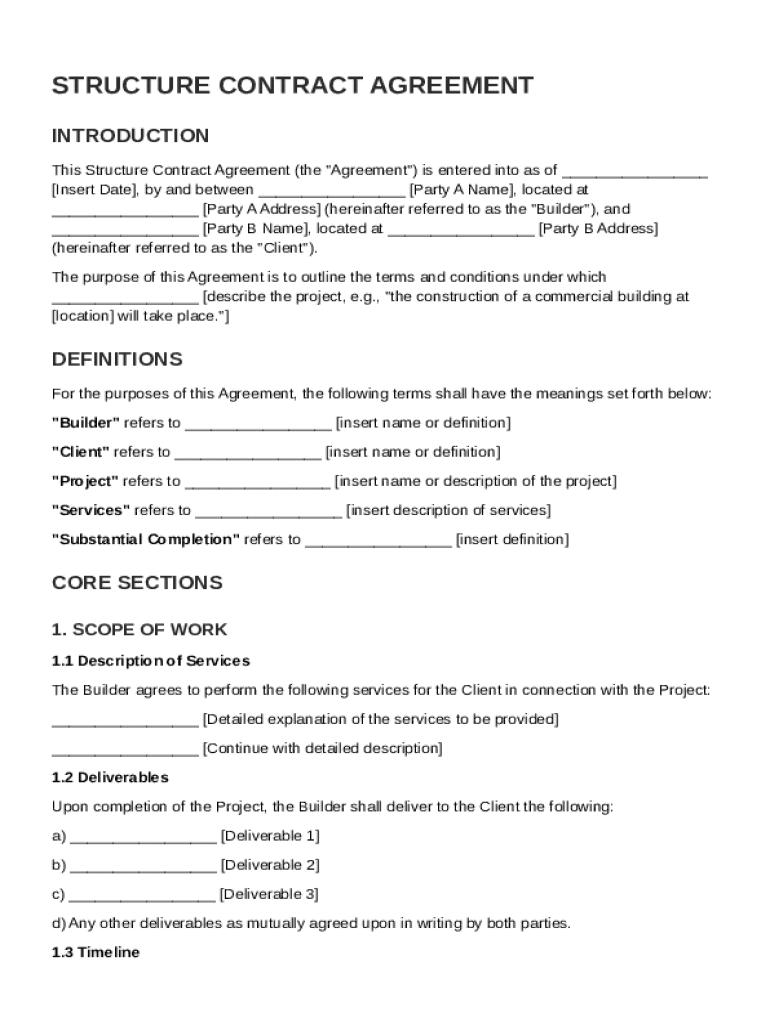
The Structure Contract Template is a comprehensive document utilized to outline the terms and conditions of a construction project between a builder and a client. This legal agreement includes all necessary provisions to define the rights and duties of the involved parties, aiming to ensure a clear understanding of the project's execution. Sections typically covered in this template are the scope of work, payment terms, parties’ responsibilities, change orders, dispute resolution, termination clauses, and miscellaneous provisions. Its primary function is to minimize risks and misunderstandings by detailing all aspects of the contractual relationship.
How to Use the Structure Contract Template
Utilizing the Structure Contract Template effectively requires a sequential approach to ensure all contract aspects are properly filled out and understood by all parties. Begin by customizing the template with specifics about the project scope, timelines, and budgets. Carefully detail each section to reflect mutual agreements on work expectations and payment schedules. The change orders section should explicitly cover how potential adjustments during the construction process will be handled. Before finalization, both parties should review and agree on all terms, making use of collaboration tools if necessary to achieve consensus.
Step-by-Step Completion Process
- Identify Parties: Clearly state the names and contact details of the builder and the client.
- Define Scope: Elaborate on the project scope, objectives, and deliverables.
- Set Payment Terms: Detail payment structures, milestones, and schedules.
- Clarify Responsibilities: Outline responsibilities and obligations of both parties.
- Include Change Orders: Specify procedures to manage project changes.
- Dispute Resolution: Agree on methods for resolving potential disputes.
- Signatures: Ensure all parties sign the document, validating the agreement.
Key Elements of the Structure Contract Template
The Structure Contract Template comprises several critical components that collectively provide a comprehensive framework for the project. These elements are essential in defining the operational, financial, and legal aspects of the contract.
- Scope of Work: Detailed description of the work to be performed, including materials and resources needed.
- Payment Terms: Specifies amount, mode, and conditions of payment.
- Responsibilities: Defines duties, responsibilities, and expectations of each party.
- Change Orders: Procedures for handling changes or modifications during the project.
- Dispute Resolution: Methods and steps for resolving disputes and conflicts.
- Termination Clauses: Conditions under which the contract can be terminated by either party.
Legal Use and Compliance
The template is crafted to be legally binding, ensuring compliance with construction laws and regulations, particularly within a U.S. context. It aligns with relevant construction industry standards, guaranteeing that all elements are enforceable under U.S. law. It is vital for both parties to be aware of any state-specific legal nuances that might affect the agreement, ensuring the contract's enforceability across jurisdictions.
Legal Terms & Considerations
- Indemnification: Protects parties against losses and damages.
- Force Majeure: Accounts for unforeseen events that prevent contract performance.
- Warranty Provisions: Includes guarantees related to the quality of work done.
Important Terms Related to Structure Contract Template
A comprehensive understanding of key terms is imperative for appropriately interpreting the Structure Contract Template. Familiarity with these terms ensures that all parties have a consistent understanding of the contract's implications.
- Subcontractor: A secondary party tasked with completing a portion of the work.
- Lien: A legal right against assets which may be used as collateral.
- Retainer: A fee paid upfront to secure services and ensure commitment.
Who Typically Uses the Structure Contract Template
The Structure Contract Template is predominantly used by professionals within the construction industry, including general contractors, architects, and project managers. It is also instrumental for clients engaging in construction projects to establish a clear, formal understanding with their builders. Typical users include:
- Construction Firms: For outlining project agreements with clients.
- Architectural Companies: To detail design and construction oversight duties.
- Real Estate Developers: Involved in new construction or significant renovations.


Digital vs. Paper Version of the Structure Contract Template
The decision to use a digital or paper version of the Structure Contract Template can impact efficiency in contract management. Digital versions offer numerous benefits, such as ease of modification, distribution, and storage.
Advantages of Digital Templates
- Ease of Editing: Simplifies making adjustments before finalizing agreements.
- Collaboration: Facilitates real-time feedback and updates among parties.
- Document Security: Offers enhanced security features like encryption and authentication.
Paper versions, while traditional, may be preferred in contexts where digital access is limited or where handwritten signatures are required for validation.
Software Compatibility and Integration
The Structure Contract Template is compatible with various software solutions that aid in creating, modifying, and managing contracts digitally. Notably, platforms like DocHub facilitate seamless document editing, signing, and sharing across multiple devices. This integration supports enhanced workflow efficiency by allowing users to easily collaborate and update contract details.
Compatible Software Solutions
- DocHub: Provides tools for editing and signing documents online.
- Google Workspace: Offers integration for importing and exporting contracts.
- PDF Readers: Useful for viewing, filling, and uploading contract details.
Versions or Alternatives to the Structure Contract Template
While the Structure Contract Template is a robust document, there are variations and alternatives tailored for different project types or specific state requirements. Alternative templates can cater to diverse needs such as residential versus commercial projects or those requiring specialized legal provisions.
Examples of Alternatives
- Standard Building Contracts: For general construction projects.
- Design-Build Contracts: Combines design and construction phases in one agreement.
- Subcontractor Agreements: Specific to agreements with secondary contractors.