
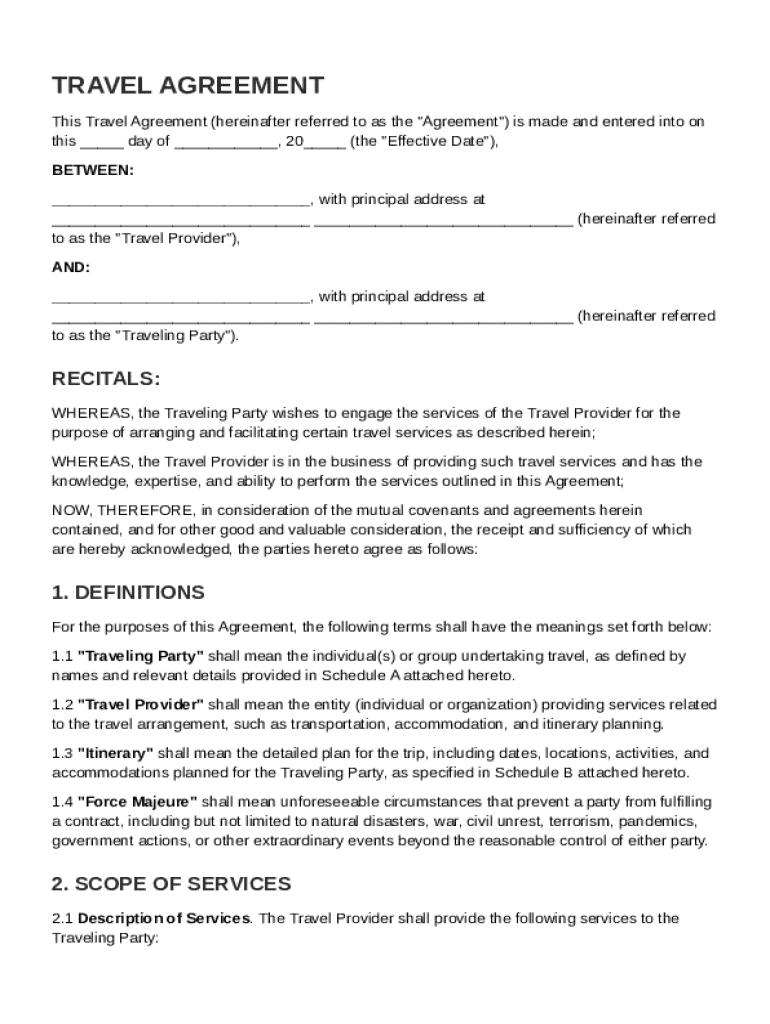







Definition and Meaning
A Travel Agreement Template serves as a contractual document between a Travel Provider and a Traveling Party, outlining the terms and conditions under which travel services are provided. This structured agreement ensures that both parties have a clear understanding of their responsibilities and the scope of services offered. Key components often include definitions of terminologies used in the agreement, which help clarify roles, responsibilities, and expectations.
Key Components
- Scope of Services: Details the specific travel services being provided, such as transportation, accommodations, and any additional amenities.
- Responsibilities: Outlines each party’s obligations, such as payment terms for the traveler and service fulfillment by the provider.
- Liability Limitations: Specifies the extent of responsibility each party holds in case of service disruptions or unforeseen events.
How to Use the Travel Agreement Template
Using the Travel Agreement Template effectively requires a systematic approach to ensure all necessary details are captured accurately. The template serves as a comprehensive guide to outline terms and stipulations in a structured manner.
Step-by-Step Instructions
- Customize the Template: Begin by inserting the names and contact details of the Travel Provider and the Traveling Party.
- Define Services: Clearly articulate the services included, such as travel bookings, insurance, and other related activities.
- Set Terms: Establish terms related to payment schedules, cancellation policies, and legal jurisdictions.
- Review and Finalize: Both parties should carefully review the document to confirm all details are correct before signing.
Key Elements of the Travel Agreement Template
The Travel Agreement Template encompasses several critical elements designed to ensure clarity and security for both the Travel Provider and the Traveling Party. These elements function collectively to safeguard the interests of both parties.
Detailed Elements
- Payment and Fees: Specifies the payment structure, including any deposits required, due dates, and acceptable payment methods.
- Cancellation and Changes: Outlines the procedures and conditions under which changes or cancellations can occur, including any associated penalties.
- Force Majeure: Covers situations such as natural disasters or other emergencies that might impact travel plans beyond either party’s control.
Legally Binding Nature
The Travel Agreement Template’s legally binding nature ensures that both parties are accountable to the terms specified. This is critical in safeguarding against disputes and ensuring compliance with local and federal travel regulations.
Legal Provisions
- Governing Law: Specifies the jurisdiction under which any legal matters will be resolved.
- Dispute Resolution: Details the steps for resolving any disagreements that may arise during the contractual period, often including mediation or arbitration clauses.
Important Terms Related to the Travel Agreement Template
Understanding the terminology used in a Travel Agreement Template is crucial for ensuring clarity and avoiding misunderstandings. These terms lay the groundwork for legal and operational precision.
Common Terms
- Travel Documentation: Refers to the necessary identification and legal documents required for travel, such as passports and visas.
- Force Majeure: A clause that relieves parties from fulfilling contractual obligations due to extraordinary events.
- Indemnification Clause: Protects each party from liability in the case of damages or claims arising from the other party’s actions.
State-Specific Rules for the Travel Agreement Template
Travel agreements may be subject to specific state regulations, which can influence how the document is structured and enforced. Being aware of these can ensure compliance and protect both parties legally.
Considerations
- State Laws: Different states may have unique consumer protection laws affecting cancellation policies or refund rights.
- Disclosure Requirements: Some states might require additional disclosures or information to be provided within the agreement.
- Licenses and Permits: Depending on the state, specific licenses might be necessary for operating as a travel provider.
Common Use Cases for the Travel Agreement Template
The Travel Agreement Template is widely used across various scenarios where travel services are being provided. Understanding these use cases can help tailor the agreement to fit specific business models and client needs.
Examples
- Corporate Travel: Companies engaging with travel agencies for employee travel can use this template to outline detailed travel itineraries and payment terms.
- Package Tours: Tourist agencies offering tours use the template to specify travel routes, accommodations, and pricing details.
- Event Travel: Used for arranging group travel for events, this template ensures clarity on transportation, lodging, and scheduling.
Differences Between Digital and Paper Versions
Choosing between a digital and a paper version of the Travel Agreement Template can impact ease of use, security, and accessibility. Both methods offer distinct benefits and limitations.
Digital Version
- Accessibility: Easily accessed and modified via online platforms, facilitating real-time updates and edits.
- Security: Offers digital security measures such as encryption and password protection.
- Eco-Friendly: Reduces paper usage and supports green initiatives.
Paper Version
- Tangibility: Provides a physical copy that can be filed and referenced without technological dependencies.
- Acceptance: Some clients or regions may still prefer or require paper agreements for legal or traditional reasons.




