




Definition and Meaning
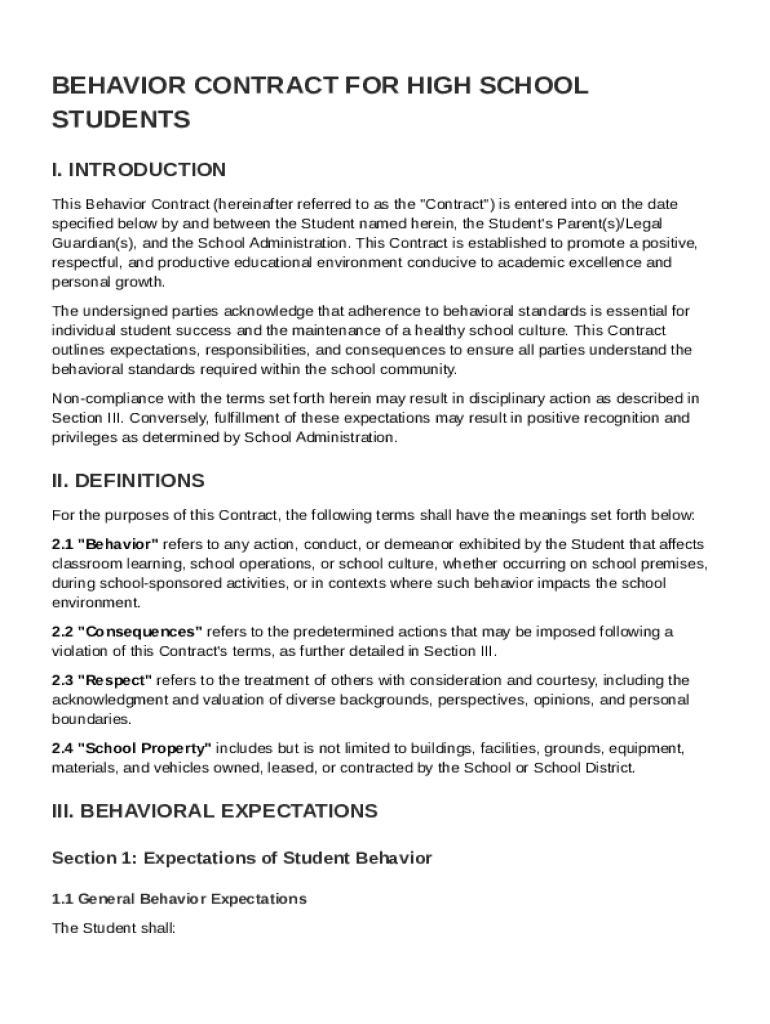
A Behavior Contract for High School Students is a formal agreement that involves students, their parents or guardians, and school administration. This contract is designed to foster a positive educational environment by clearly outlining behavioral expectations, responsibilities, and consequences for non-compliance. The primary goal of this agreement is to promote respect and accountability within the school community. It specifies acceptable and unacceptable behaviors in various school settings and details minor and major violations with corresponding consequences. It also includes a review process to ensure ongoing dialogue about behavioral standards.
How to Use the Behavior for High School Students Contract Template
Using the Behavior for High School Students Contract Template involves several easy steps to ensure it serves its purpose effectively:
-
Customization: Begin by tailoring the template to reflect the specific needs and rules of the school or educational institution. Adjust any generic language to suit the particular behavioral expectations and policies in place.
-
Completion: Fill out the contract with detailed information pertinent to both the student and the school. Ensure all fields are appropriately completed.
-
Review Process: Allow all signing parties to review the document to understand its contents and implications. This step is crucial for clarifying any doubts and ensuring everyone is aware of their responsibilities and the consequences of non-compliance.
-
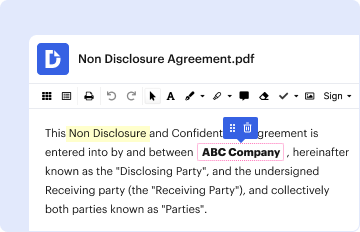
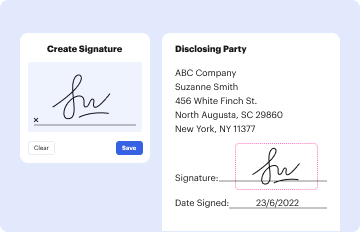
Signing: Use DocHub’s electronic signature feature to collect signatures from the student, their parent or guardian, and a representative from the school administration. This process makes the contract legally binding and easily trackable.
-
Document Management: Store the signed contract securely, ensuring it is accessible to authorized parties if needed for future reference or dispute resolutions.
Key Elements of the Behavior for High School Students Contract Template
The contract comprises several essential components aimed at fostering an accountable school atmosphere:
- Behavioral Expectations: Clear stipulations on acceptable and unacceptable behaviors in different school contexts, such as classrooms, hallways, and extracurricular activities.
- Responsibilities: Duties and obligations of the student that contribute to maintaining a positive school environment.
- Consequences for Violations: Detailed descriptions of minor and major behavioral infractions, with associated disciplinary actions and repercussions.
- Review Process: A framework for ongoing assessment and dialogue regarding the contract and the student’s behavior.
- Signatures: Areas designated for signatures of all parties involved, signifying their understanding and agreement to comply with the contract terms.
Steps to Complete the Behavior for High School Students Contract Template
To complete the Behavior for High School Students Contract Template, follow these detailed steps:
-
Download and Open the Template: Obtain the template from a trusted source, such as the school's official portal or document management site like DocHub.
-
Enter Student Information: Provide the student’s full name, grade, and relevant identification numbers.
-
Define Conduct Parameters: Complete sections specifying behavioral norms and rules that the student is expected to follow.
-
Outline Responsibilities: Clearly articulate the student’s responsibilities and the support mechanisms available from the school.
-
Specify Consequences: Fill in details about the consequences for breaking the established rules, ensuring they align with school policies.
-
Confirm Review Routines: Add information about the schedule and process for reviewing the student’s adherence to the contract.
-
Sign and Date: Ensure all parties involved sign and date the contract, affirming their commitment to uphold its terms.
Who Typically Uses the Behavior for High School Students Contract Template
Several parties are primarily involved in using this contract template:
-
Students: The primary subjects of the contract, responsible for adhering to the outlined behaviors and responsibilities.
-
Parents or Guardians: Participants who endorse the terms on behalf of the student, agreeing to support the student’s adherence and understanding of the contract.
-
School Administrators: Representatives of the educational institution who enforce the contract terms and provide support to ensure compliance.
-
Teachers and Counselors: Stakeholders who may contribute to developing and monitoring the behavioral expectations and the ongoing evaluation process.


Legal Use of the Behavior for High School Students Contract Template
Legal aspects of the contract are significant in ensuring compliance and accountability:
-
Legally Binding Agreement: The contract serves as a legal instrument that binds all parties to the agreed terms, supported by the enforceability of signatures.
-
Compliance with Educational Policies: Aligns with state and federal educational guidelines and codes of conduct to ensure its legality.
-
Conflict Resolution: Provides a clear basis for resolving disputes related to behavioral discrepancies or misunderstandings.
-
Documentation: Serves as an official record that can be referenced in disciplinary proceedings or evaluations of a student’s conduct.
Important Terms Related to the Behavior for High School Students Contract Template
Understanding specific terms is crucial for all involved parties:
- Non-Compliance: Failure to adhere to the behavioral expectations outlined and agreed upon in the contract.
- Accountability: The responsibility of the student, and sometimes the parents, to answer for non-compliance with the contract terms.
- Review Process: A systematic way to evaluate compliance and make necessary adjustments to the contract.
- Major and Minor Violations: Specific categories of behavioral infractions that determine the severity of consequences.
State-Specific Rules for the Behavior for High School Students Contract Template
State regulations often dictate specific content or formats for these contracts:
- Local Educational Laws: Requirements for including certain provisions, such as special education accommodations or anti-bullying clauses.
- Standards of Conduct: Variability in behavioral expectations based on state education department guidelines.
- Consent and Agreement: Different age-related norms for acknowledgment by minors, which may require parental co-signatures in some states.
Examples of Using the Behavior for High School Students Contract Template
Real-world scenarios can illustrate the templates’ practical use:
-
Case Study of Improved Behavior: A typical example where a behavior contract turned an underperforming student into a model student through clear guidance and consistent evaluation.
-
Team Collaboration: Instances where a contract facilitated collaboration among teachers, parents, and students, working together to achieve behavioral improvement goals.
-
Effective Conflict Reduction: Examples where behavior contracts significantly reduced the incidence of classroom disruptions and fostered a more focused learning environment.