
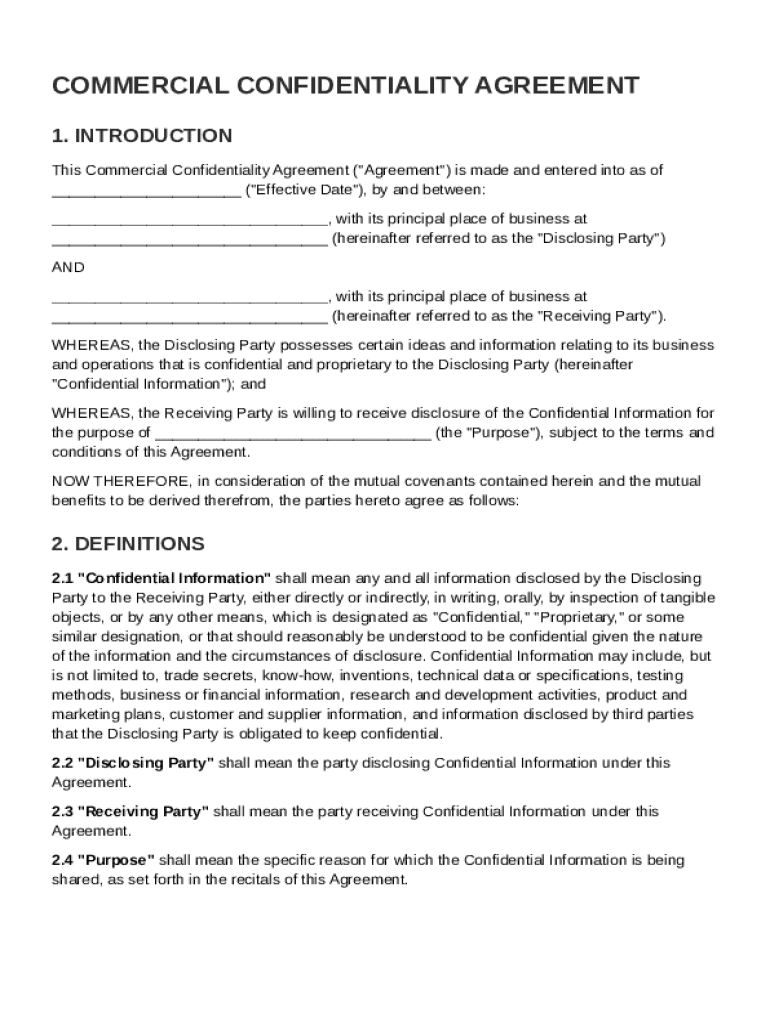







Definition and Purpose
The Commercial Confidentiality Agreement Template serves as a legal framework to protect sensitive information shared between entities. It is designed to define the roles of the Disclosing Party, who provides the confidential information, and the Receiving Party, who is obligated to protect it. The agreement outlines what constitutes ‘Confidential Information’ and sets forth the terms under which it can be used and disclosed.
Key Components
- Confidential Information: Clearly identifies what information is considered confidential.
- Obligations: Details the Receiving Party’s responsibilities in safeguarding the information.
- Usage Limits: Specifies permissible uses of the information.
- Ownership: Establishes the Disclosing Party's rights to the information.
How to Use the Commercial Confidentiality Agreement Template
Using this template involves several steps that ensure both parties understand their obligations and rights. This agreement should be tailored to reflect the specific nature of the confidential information being shared.
Steps to Use
- Identify Parties: Clearly list the Disclosing and Receiving Parties.
- Define Information: Specify what information is considered confidential.
- Set Terms: Outline the duration of confidentiality and any usage restrictions.
- Sign Agreement: Both parties should review and sign the agreement to make it legally binding.
Steps to Complete the Template
Completing the Commercial Confidentiality Agreement Template requires attention to detail to ensure all legal and practical elements are covered.
Detailed Instructions
- Fill Out Basic Details: Enter the names and contact information of all involved parties.
- Description of Information: Provide a thorough description of the confidential information.
- Outline Obligations: Clearly state the obligations of the Receiving Party regarding the protection and permitted use of the information.
- Dispute Resolution: Specify the method for resolving disputes related to the agreement.
- Signatures: Ensure that the document is signed and dated by representatives from both parties.
Key Elements of the Commercial Confidentiality Agreement Template
Several critical components form the backbone of the agreement, ensuring its effectiveness in protecting confidential information.
Core Elements
- Information Definition: Clear definition of what is deemed confidential.
- Protection Obligations: Rules on how the Receiving Party must protect this information.
- Disclosure Conditions: Conditions under which the information can be shared with third parties.
- Duration: Length of time the information must remain confidential, often lasting indefinitely or until certain conditions are met.
Legal Use of the Commercial Confidentiality Agreement Template
This agreement is a legally binding document subject to state and federal laws. It is used to protect proprietary and sensitive information shared during business dealings.
Legal Considerations
- Compliance: Must comply with applicable federal and state laws.
- Enforcement: Can be enforced in court if a breach occurs, with potential penalties for non-compliance.
- Exclusions: Publicly available or independently developed information is not protected under the agreement.
Important Terms Related to the Template
Understanding the terminology used in the Commercial Confidentiality Agreement is crucial for effectively applying its provisions.
Glossary
- Disclosing Party: Entity sharing the confidential information.
- Receiving Party: Entity obligated to protect the confidential information.
- Confidential Information: Data or knowledge considered sensitive and proprietary.
- Breach: Unauthorized disclosure or misuse of the confidential information.
Who Typically Uses the Commercial Confidentiality Agreement Template
This template is common among various businesses and industries that frequently handle sensitive information.


Common Users
- Businesses: Companies engaged in partnerships or mergers.
- Startups: Entities protecting innovative technologies or ideas.
- Consultants and Contractors: Individuals offering specialized services that involve access to proprietary information.

State-Specific Rules for the Commercial Confidentiality Agreement Template
While the template provides a general framework, specific state laws can influence the terms and enforcement of the agreement.
Variations by State
- Statute of Limitations: Time limits for bringing legal action vary by state.
- Enforcement Mechanisms: Certain states have unique rules regarding the enforcement of these agreements.
- Public Policy Considerations: States may have different views on clauses that restrain trade or employment opportunities.
Versions or Alternatives to the Commercial Confidentiality Agreement Template
There are variations and alternatives to this template, each with features tailored to specific needs or legal environments.
Common Alternatives
- Mutual Non-Disclosure Agreements: Used when both parties exchange confidential information.
- Unilateral Confidentiality Agreements: Designed for scenarios where only one party discloses confidential information.
- Industry-Specific Models: Specialized versions for industries like technology or healthcare, addressing unique data sensitivities.
By comprehensively addressing these aspects, the Commercial Confidentiality Agreement Template becomes an invaluable tool for safeguarding critical business information.




