




01. Edit your form online
Type text, add images, blackout confidential details, add comments, highlights and more.

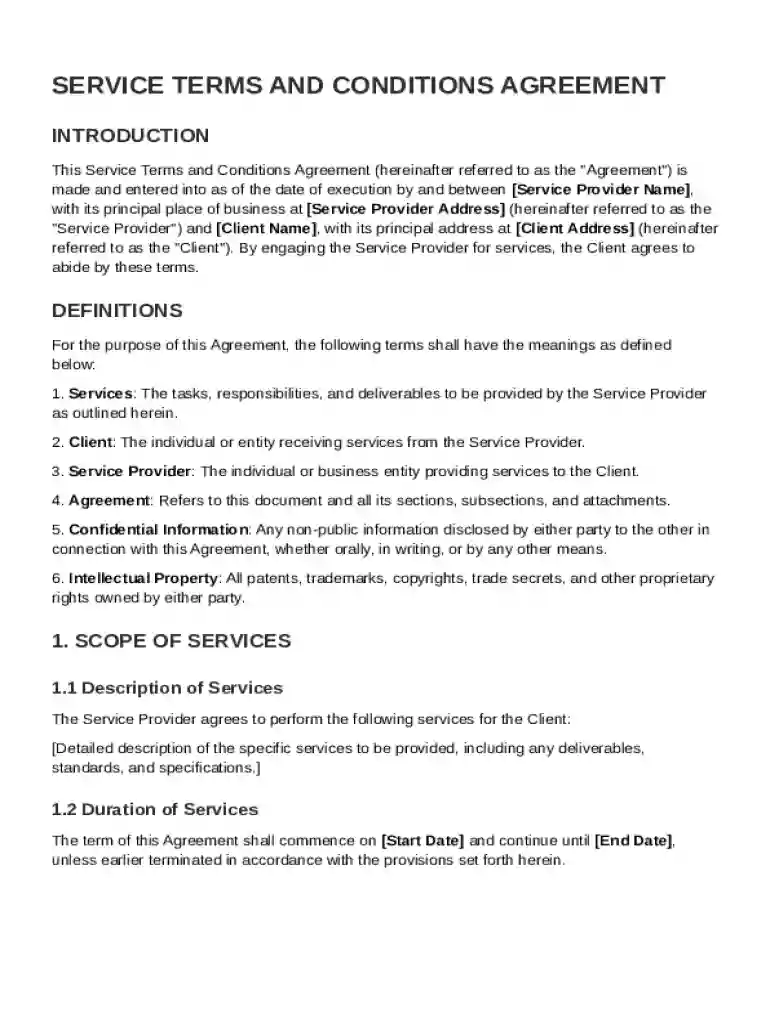
Type text, add images, blackout confidential details, add comments, highlights and more.

Draw your signature, type it, upload its image, or use your mobile device as a signature pad.

Send it via email, link, or fax. You can also download it, export it or print it out.
The "Service Terms and Conditions Agreement Template" serves as a foundational contract between a service provider and a client. It delineates the structure, obligations, and rights of each party involved in the service transaction. This agreement ensures a mutual understanding is established, providing a framework for expectations, compliance, and accountability throughout the service duration. In essence, it protects both entities by clarifying important components such as payment terms, duration of service, and confidentiality, among others.
Understanding the critical components within the Service Terms and Conditions Agreement Template is essential for drafting a comprehensive and legally-sound document. This segment explores each main element and its significance.
Definitions of Key Terms: Provides clarity by defining recurring terms throughout the document, reducing potential misunderstandings.
Scope and Duration of Services: Defines the specific services offered and the timeframe for their completion, setting clear boundaries and expectations.
Payment Terms: Specifies the payment schedule, method, and any penalties or interest on late payments, ensuring financial transparency.
Responsibilities of Both Parties: Outlines the duties and obligations of both the service provider and client, which aids in accountability.
Confidentiality Obligations: Protects sensitive information exchanged between parties, critical for safeguarding proprietary and personal data.
Termination Rights: Details conditions under which either party can terminate the agreement, promoting fair exit strategies.
Limitation of Liability: Limits the extent to which one party can hold the other legally liable, reducing risk exposure.
Dispute Resolution: Describes preferred methods for resolving disagreements, such as mediation or arbitration, without resorting to litigation.
Completing this template involves a step-by-step approach to ensure accurate and comprehensive coverage of all necessary elements.
Gather Necessary Information: Compile basic details about the service provider and client, along with an overview of the services to be provided.
Define the Scope of Services: Clearly articulate what services will be delivered, including any deliverables, deadlines, and resources required.
Establish Payment Terms: Agree on compensation details, specifying amounts, due dates, and methods of payment.
Outline Responsibilities: Draft sections detailing the roles and obligations of each party, ensuring responsibilities align with the scope of services.
Include Confidentiality Clauses: Insert provisions for protecting sensitive information exchanged during the business relationship.
Set Termination Conditions: Define scenarios or breaches that could justify ending the agreement, maintaining fairness for both parties.
Review Legal Protections: Examine clauses related to liabilities, indemnities, and applicable dispute resolution mechanisms.
Finalize and Sign: Once all sections are completed and agreed upon, both parties should sign to affirm their commitment to the terms documented.
The legal implementation of this template is paramount for compliance with U.S. laws regarding contractual agreements. This section explores its enforceability and legal significance.
Illustrating real-world applications, these examples showcase the template’s versatility across various service industries.
By exploring these examples, users can better understand how to tailor the template to suit specific professional needs.
A thorough understanding of contractual terminology assists both parties in comprehending the nuances of the agreement.
Given the geographical focus, various states might have unique requirements or constraints concerning service contracts. This section discusses considerations relevant to different U.S. jurisdictions.
While this template serves a broad applicability, certain business structures may find it particularly advantageous.
These groups benefit from the clear expectations and protections afforded by a well-structured service terms and conditions agreement.
At DocHub, your data security is our priority. We follow HIPAA, SOC2, GDPR, and other standards, so you can work on your documents with confidence.



GENERAL. 1.1. Applicability. These Standard Terms and Conditions contain general provisions that apply to all retail business Products and Services that a
Used for procurement of services from an independent contractor individual. Templates and Forms Contract Service Agreements Contract Templates and Forms
This Agreement contains all of the agreements of the Parties with respect to any matter covered or mentioned in this Agreement and no prior agreements shall be.


