



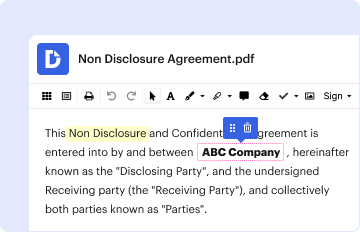
01. Edit your irs form w 2g 2021 online
Type text, add images, blackout confidential details, add comments, highlights and more.

Type text, add images, blackout confidential details, add comments, highlights and more.
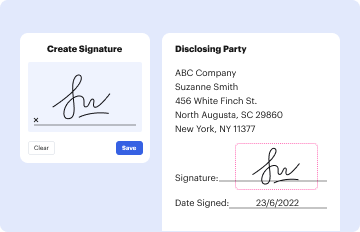
Draw your signature, type it, upload its image, or use your mobile device as a signature pad.

Send form w2g 2021 via email, link, or fax. You can also download it, export it or print it out.
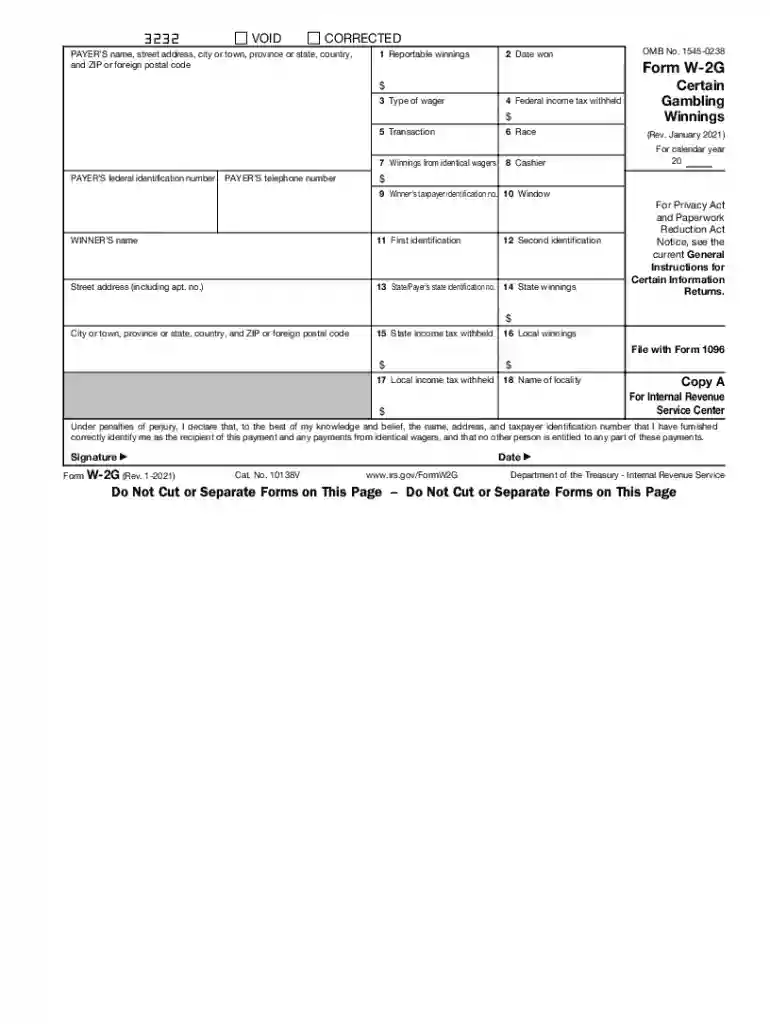
Form W-2G, often referred to as a "W-2G," is a document used in the United States to report gambling winnings to the Internal Revenue Service (IRS). This form is specifically designed for reporting certain types of gambling income, such as winnings from lotteries, horse racing, and casinos. By issuing this form, payers inform both the gambler and the IRS about the precise amount of money won, thus highlighting the importance of accurate tax reporting and compliance with federal regulations.
To use Form W-2G appropriately, recipients should first ensure that all information reported on the form is accurate, including personal details and amounts won. The form outlines specific instructions on how gambling winnings should be included in annual tax filings. For individuals receiving a W-2G, it's essential to consolidate it with other income streams on a personal tax return. Pay special attention to the sections on federal and state taxes withheld, as this will affect your total tax liability.
Form W-2G is typically provided to winners by the gambling establishment where the earnings were acquired. It does not need to be requested separately if winnings exceed the IRS threshold for mandatory reporting. However, in some cases, individuals might need to contact the payer directly to verify personal details or obtain a duplicate if the original is lost or not received. The payer is responsible for sending copies to both the IRS and recipient by January 31 of the subsequent year.
The IRS provides comprehensive guidelines on when a W-2G must be issued, primarily based on the amount and type of gambling income. For instance, winnings over a certain limit require federal taxes to be automatically withheld. The guidelines also specify that both the winner and the IRS should receive a copy of the form, which helps facilitate proper tax reporting and compliance.
Failure to report gambling winnings accurately or non-receipt of a W-2G can lead to penalties, which vary based on the discrepancy's severity. These may include fines and additional interest on overdue taxes. It highlights the importance of maintaining accurate records and reviewing all received forms for correctness. Non-compliance can also trigger an IRS audit, which can be both time-consuming and financially costly.
Gambling institutions must issue Form W-2G to winners and file it with the IRS by January 31 of the year following the winnings. This deadline ensures that individuals have adequate time to include the form details in their annual tax return filings, typically due in April. Staying aware of these deadlines is crucial to avoid late filing penalties.
Different taxpayer scenarios can affect how Form W-2G is utilized. For example, a self-employed individual may have varying reporting requirements compared to a salaried employee. Additionally, nonresident aliens and individuals who frequently gamble professionally may have distinct complexities in their tax filings involving W-2Gs.
By thoroughly understanding each block of content like key elements, filing deadlines, and compliance rules, taxpayers can ensure their gambling winnings are accurately reported, minimizing the risk of penalties or audits.


We've got more versions of the irs form w 2g 2021 form. Select the right irs form w 2g 2021 version from the list and start editing it straight away!
| Versions | Form popularity | Fillable & printable |
|---|---|---|
| 2026 | 4.5 Satisfied (60 Votes) | |
| 2023 | 4.3 Satisfied (53 Votes) | |
| 2021 | 4.9 Satisfied (40 Votes) | |
| 2020 | 4.4 Satisfied (230 Votes) | |
| 2019 | 4.2 Satisfied (114 Votes) | |
| 2018 | 4.4 Satisfied (74 Votes) | |
| 2017 | 4.4 Satisfied (631 Votes) | |
| 2016 | 4.4 Satisfied (579 Votes) | |
| 2015 | 4.4 Satisfied (250 Votes) | |
| 2015 | 4.1 Satisfied (53 Votes) | |
| 2014 | 4.2 Satisfied (74 Votes) | |
| 2013 | 4 Satisfied (38 Votes) | |
| 2012 | 4 Satisfied (49 Votes) | |
| 2011 | 4.2 Satisfied (71 Votes) | |
| 2010 | 4.2 Satisfied (36 Votes) |
At DocHub, your data security is our priority. We follow HIPAA, SOC2, GDPR, and other standards, so you can work on your documents with confidence.
May 2, 2017 Do not use these forms to report wages subject to U.S. income tax withholding. Instead, use Form W-2 to show U.S. income tax withheld. TreatmentRead more
Nov 24, 2025 Report this income on your federal tax return. If this form shows federal income tax withheld in box 4, attach this copy to your return.Read more
Instructions for forms 1099, 1098, 5498, and W-2G (including instructions for forms 1099-A, 1099-B, 1099-DIV, 1099-G, 1099-INT, 1099-MISC, 1099-OID, 1099-PATR,Read more


