






Definition and Purpose of the Architectural Service Agreement Template
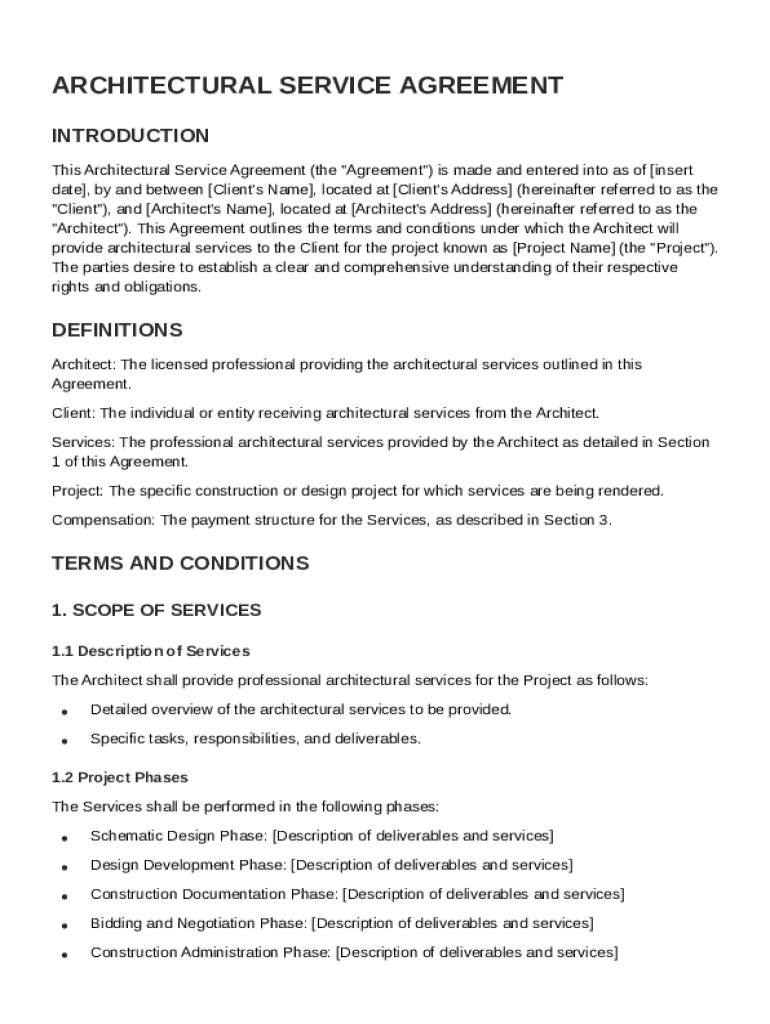
The Architectural Service Agreement Template serves as a legal framework that outlines the terms and conditions between a client and an architect. It is crucial for defining roles, responsibilities, and expectations for both parties involved in a specific architectural project. This document typically includes sections such as scope of services, compensation structure, ownership of documents, and other essential provisions. By clearly specifying these elements, the agreement helps prevent misunderstandings and ensures a smooth working relationship.
Key Components of the Agreement
- Scope of Services: Details the specific architectural services to be provided.
- Compensation Structure: Outlines payment terms, including fees and payment schedules.
- Responsibilities: Defines the duties of both the architect and the client.
- Ownership of Documents: Clarifies rights to designs and drawings produced.
- Indemnification Clauses: Provides protection against certain liabilities.
- Termination Conditions: Specifies circumstances under which the contract can be ended.
- Dispute Resolution: Details processes for resolving disagreements.
How to Use the Architectural Service Agreement Template
Utilizing the template effectively requires a clear understanding of its components and how they align with the specific project needs. Below are steps on using the template:
- Review All Sections: Thoroughly examine each part of the agreement to ensure relevance and completeness.
- Customize Content: Modify fields such as client name, project details, and scope of services to fit the specific needs of the project.
- Include Necessary Amendments: Make any project-specific changes or additions.
- Consult Legal Counsel: Before finalizing, have a legal professional review the document.
- Finalize and Sign: Ensure all parties understand and agree to the terms before signing.
Customization Tips
- Project Details: Include specifics such as project location and timeline.
- Payment Terms: Clearly define how and when payments will be made.
- Additional Services: If any optional services are agreed upon, list them explicitly.
Key Elements of the Architectural Service Agreement Template
Some elements are fundamental to the legal and practical integrity of the agreement. Understanding these elements provides clarity and aids in managing expectations.
Essential Clauses
- Definitions: Establishes specific terms used throughout the contract.
- Client Responsibilities: Lists the tasks and obligations of the client, such as providing necessary information and approvals.
- Architect's Insurance: Outlines required insurance coverage that the architect needs to maintain.
Practical Examples
Consider a scenario where an architect must design a residential building. The agreement will specify design milestones, approval deadlines, and penalties for delays. This clarity helps maintain project timelines and budget compliance.
Steps to Complete the Architectural Service Agreement Template
Completing the template accurately is crucial for its effectiveness. Follow these steps:
- Gather Information: Collect all project-specific details necessary for the agreement.
- Fill Out the Template: Enter information into the relevant sections.
- Verify Accuracy: Ensure that all data is correct and comprehensive.
- Legal Review: Have an attorney review the document for compliance and completeness.
- Make Revisions: Implement any recommended changes.
- Finalize Format: Set the document in its final format and prepare for signatures.
Finalization and Signing Process
After completing and reviewing the document, the architect and client should sign to acknowledge their agreement to the terms. Each party should retain a copy for their records.
State-Specific Rules for the Architectural Service Agreement Template
While the general structure of an architectural service agreement is standardized, certain states within the U.S. may have specific regulations that must be followed. These local laws can influence various agreement sections including:
Regional Considerations
- Licensing Requirements: Ensure the architect holds any state-specific licenses.
- Contractor Regulations: Abide by any local contractor rules or building codes.
- Legal Dispute Resolutions: Utilize state-recognized arbitration methods for dispute resolution.
Example of State Variances
In California, for instance, additional disclosure requirements might be necessary, reflecting the state's unique construction laws. Always verify with a legal expert familiar with state regulations before finalizing the agreement.
Legal Use of the Architectural Service Agreement Template
Ensuring the template's compliance with legal standards is necessary for its validity. This involves understanding the formalities that make it legally binding and actionable in a court of law.
Legal Framework and Compliance
- Adherence to the ESIGN Act: If electronic signatures are used, ensure compliance with the Electronic Signatures in Global and National Commerce Act.
- Understanding of Governing Law: Specify which state's laws will govern the agreement.
- Protection of Intellectual Property: Clearly define rights concerning the ownership of architectural designs.
Important Terms Related to the Architectural Service Agreement Template
Understanding specialized terminology can clarify the agreement process.
Glossary of Terms
- Indemnification: A protective clause where one party agrees to compensate the other for any losses or damages.
- Force Majeure: Conditions under which parties can escape liability due to extraordinary events or circumstances.
- Substantial Completion: The stage in the project when the structure is sufficiently complete for its intended use.
Employing detailed knowledge of these terms helps ensure informed participation in the drafting and execution of the agreement.