





Definition & Meaning
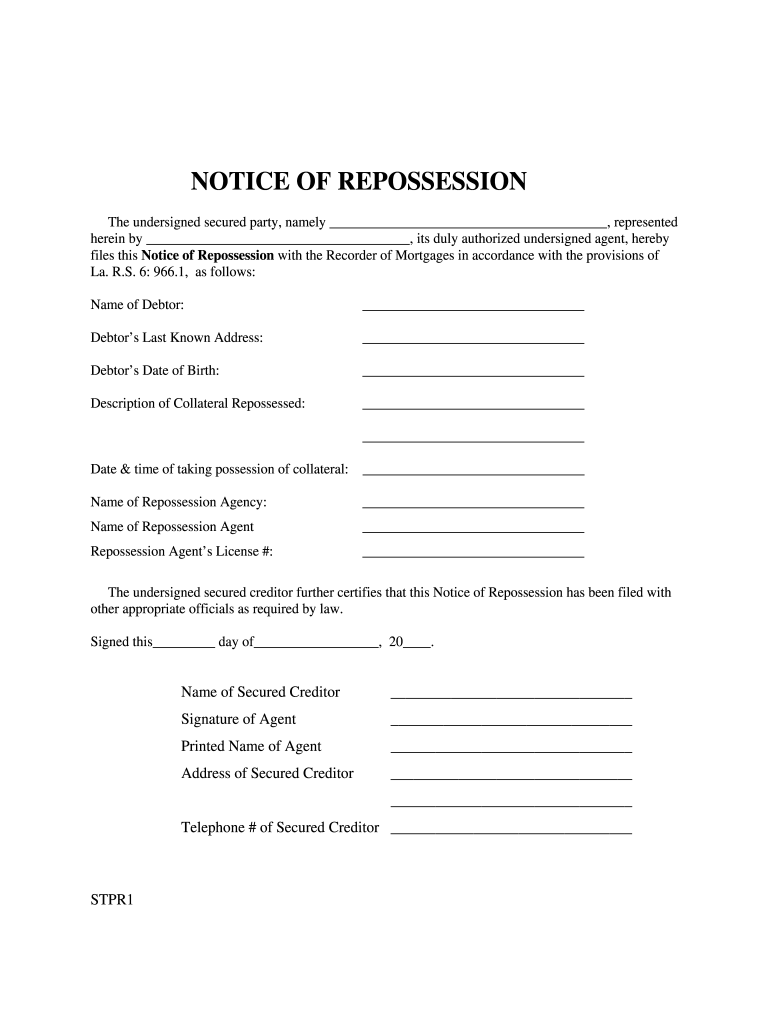
The notice of repossession form is a legal document utilized by secured creditors to inform debtors that a repossession action is taking place regarding collateral used to secure a loan. This notice outlines the specifics of the repossession, including the debtor's details, description of the collateral, and the repossession agency managing the process. It serves both as a notification to the debtor and a formal record that the creditor is exercising their right to reclaim property due to non-payment or breach of loan agreement.
Key Components of the Notice
- Debtor Information: Includes the name, address, and date of birth of the debtor.
- Collateral Description: Details the property being repossessed, such as a vehicle or equipment.
- Repossession Agency: Specifies the agency responsible for carrying out the repossession process.
- Legal Compliance: Confirms that the repossession adheres to state laws governing secured transactions and repossessions.
By providing detailed information, the notice of repossession form ensures transparency during the repossession process, necessary for both debtor and creditor rights.
How to Use the Notice of Repossession Form
Using the notice of repossession form involves completing the document with accurate and comprehensive details pertinent to the repossession action. To effectively utilize the form, follow these steps:
- Gather Essential Information: Collect all necessary details about the debtor, the collateral, and the repossession agency. This information is critical for the form to serve its purpose.
- Complete the Form Accurately: Fill out each section of the form with the collected information. Ensure that no fields are left blank unless permitted and that the information provided is truthful.
- Delivery of the Notice: Provide the notice to the debtor. Depending on state law, this may require sending the notice via certified mail, delivering it in person, or posting it to their residence.
- Maintain Documentation: Keep a copy of the notice for your records. This serves as legal proof that the notice was duly issued to the debtor.
Additional Considerations
The timing and method of delivery may be governed by specific state laws, which dictate how and when a notice of repossession must be given to the debtor. Always refer to relevant legislation to ensure compliance.
Steps to Complete the Notice of Repossession Form
Completing the notice of repossession form correctly is crucial for enforcing a creditor's rights. The following steps guide creditors through the completion process:
-
Input Debtor Information:
- Fill in the debtor's full name.
- Provide the current address and date of birth of the debtor.
-
Describe the Collateral:
- Clearly identify the collateral involved (e.g., type of vehicle, make, model, and VIN if applicable).
- Include identifying details that differentiate it from other similar assets.
-
Detail the Secured Party:
- List the name and address of the creditor or the secured party.
- Include contact information for follow-up inquiries.
-
Specify Repossession Agent:
- Indicate the agency tasked with the repossession and any pertinent contact information.
-
Include Compliance Details:
- Affix a statement affirming compliance with applicable state laws regarding repossession.
- Optional: Provide any relevant case numbers or additional legal references to strengthen your documentation.
Once all sections are filled out correctly, review the document to ensure that all provided information is accurate and complete before sending it to the debtor.
Important Terms Related to the Notice of Repossession Form
Understanding the terminology associated with the notice of repossession form is vital for all parties involved. Here are common terms and definitions relevant to repossession:
- Secured Party: The entity or individual holding a security interest in the collateral.
- Debtor: The individual or entity obligated to repay a loan, which is secured by collateral.
- Collateral: The specific property or asset that secures the loan and is subject to repossession.
- Repossession: The act of reclaiming the collateral when the debtor defaults on their loan obligations.
- Default: A failure to fulfill the terms of the loan agreement, which can trigger repossession rights.
Having a clear grasp of these terms helps in comprehending the repossession process and the rights of each party involved.
Legal Use of the Notice of Repossession Form
The legal framework surrounding the notice of repossession form is essential for ensuring that the repossession process is conducted fairly and within the bounds of the law. The following key components highlight the legal aspects:
-
Compliance with State Laws: Each state has its own laws regulating the repossession process, including the requirement to provide notice to the debtor. It is crucial that creditors are aware of and comply with these regulations to avoid legal repercussions.
-
Notification Requirements: Typically, creditors must provide adequate notice to debtors before repossessing their property. This means sending the notice well in advance of the repossession date to allow the debtor time to address payment issues.
-
Consequences for Non-Compliance: Failing to follow the required legal process can result in legal action against the creditor. This could lead to delays in repossession or the requirement to return the collateral and settle damages.
Importance of Following Legal Protocols
Adhering to legal protocols not only protects the creditor's interests but also safeguards the rights of the debtor. The notice serves as a critical communication tool to ensure that repossessions are handled ethically and legally.
Examples of Using the Notice of Repossession Form
The notice of repossession form can be utilized in various scenarios. Here are a few illustrative examples:
-
Consumer Vehicle Loan: A creditor issues a notice of repossession to a customer who has missed several payments on their car loan. This notice provides all necessary details regarding the vehicle, such as its make, model, and the outstanding balance owed.
-
Equipment Loan for a Small Business: A small business that purchased equipment on credit fails to make timely payments. The secured lender issues a notice of repossession, detailing the specifics of the equipment being reclaimed.
-
Mortgage Default: In situations where a debtor defaults on a mortgage, the lender may use the notice of repossession to inform the homeowner of impending foreclosure actions.
By considering these examples, creditors can effectively understand when and how to use a notice of repossession form in real-life situations.