






Definition and Meaning of an Antenuptial Agreement Template
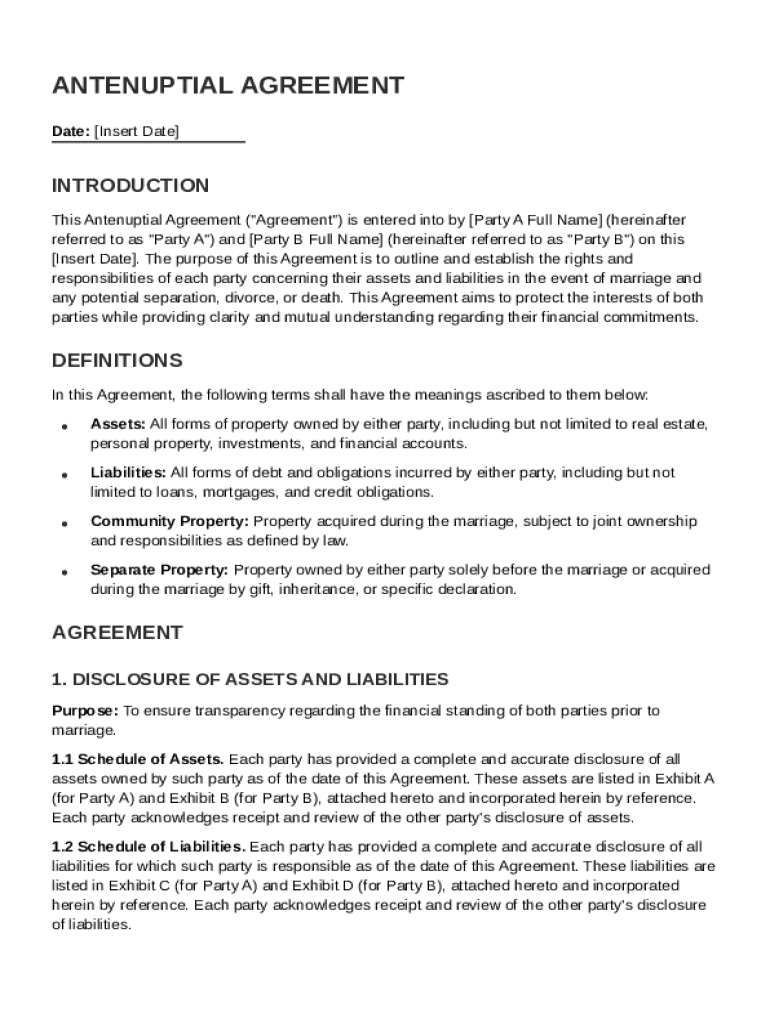
An antenuptial agreement, often referred to as a prenuptial agreement, is a legal document entered into by two individuals before they get married. The agreement sets out the terms and conditions regarding the division of assets, liabilities, and responsibilities, both during the marriage and in the event of its dissolution through separation, divorce, or death. The template for this type of contract provides a structured framework to ensure all necessary provisions are included. It typically covers terms like community property, separate property, spousal support, and financial disclosure. This document aims to protect both parties' interests and prevent future disputes by clarifying financial expectations and commitments.
How to Use the Antenuptial Agreement Template
To effectively utilize an antenuptial agreement template, it is essential to understand its structure and the relevant legal terms included.
- Select a Suitable Template: Begin by choosing a template that aligns with your personal circumstances and state laws.
- Review and Understand: Thoroughly read each section to understand what is being outlined. Key parts include asset division, debt responsibilities, and provisions for potential future scenarios such as divorce or death.
- Customize: Modify the template to reflect your unique situation. This may involve adding or altering clauses to detail specific assets, liabilities, or the omission of certain inheritance rights.
- Seek Legal Advice: Consult with a family attorney to ensure that the customized agreement complies with legal standards and adequately protects both parties' interests.
- Execution: Both parties should review the final document with their legal counsel before signing it. The signing should ideally take place well in advance of the wedding date.
Important Terms Related to the Antenuptial Agreement Template
Understanding the terminology involved in an antenuptial agreement is crucial for ensuring clarity and preventing misunderstandings.
- Assets and Liabilities: Assets refer to properties and resources owned by each party, while liabilities denote the debts or obligations they owe.
- Community Property vs. Separate Property: Community property is jointly owned by both parties, while separate property pertains to assets owned individually before the marriage or acquired through inheritance or gifts during the marriage.
- Spousal Support: Also known as alimony, this is a financial support arrangement agreed upon for one party following a divorce.
- Disclosure of Financial Information: Both parties are required to disclose their financial status, including all assets and liabilities, to ensure transparency.
- Waiver of Inheritance Rights: This clause allows parties to forfeit any claim on the other's estate upon their passing.
Legal Use and Compliance of the Antenuptial Agreement Template
Using an antenuptial agreement template involves adhering to certain legal protocols to remain enforceable.
Validity Requirements
- The agreement must be entered into voluntarily by both parties without any duress or undue influence.
- Full and fair disclosure of all financial data is mandatory for each party.
- It should be executed prior to marriage and ideally with adequate time for consideration and legal consultation.
State-Specific Considerations
- Laws regarding antenuptial agreements vary by state. Some states have unique requirements or interpretations concerning property division and spousal support.
- Certain states enforce community property laws that might affect the provisions included in an antenuptial agreement.
- Using a region-specific template can help ensure compliance with these legal nuances.
Key Elements of the Antenuptial Agreement Template
An effectively crafted antenuptial agreement template should contain several critical elements to ensure comprehensiveness and legal validity.
Financial Disclosure
- Each party should provide a complete list of their assets and liabilities, including bank accounts, investments, real estate, debts, and personal property.
Property Management
- Outlines how property acquired during the marriage will be treated and whether any separate property will remain as such.
Provisions for Divorce
- Specifies how community assets and liabilities will be divided in the event of divorce, including decisions regarding spousal support.
Amendments and Enforcement
- Details the process for making future amendments to the agreement and conditions under which the contract may be rendered null and void.
Examples of Using the Antenuptial Agreement Template
There are various scenarios where an antenuptial agreement might be particularly beneficial.
High-Net-Worth Individuals
- A couple entering marriage with significant individual assets might use the agreement to outline the distribution or protection of these assets.
Business Owners
- Individuals with business interests can protect their ventures by clearly separating them from marital property.
Previous Marriages and Children
- Couples with children from prior relationships can safeguard their children's inheritance rights through specific clauses in the agreement.
State-by-State Differences in Antenuptial Agreement Templates
Understanding the state-specific laws governing antenuptial agreements is critical for ensuring compliance and enforceability.
- California: As a community property state, any property acquired during the marriage is considered community property unless specified otherwise in a valid antenuptial agreement.
- Texas: Also a community property state, Texas has very specific requirements concerning financial disclosures in antenuptial agreements.
- New York: In contrast, New York does not automatically treat acquired property as community property and allows for separate treatment contingent upon the agreement provisions.
These variations highlight the importance of tailoring the antenuptial agreement to fit within the legal context of the respective state, ensuring it meets all local requirements and encompasses all necessary provisions.