
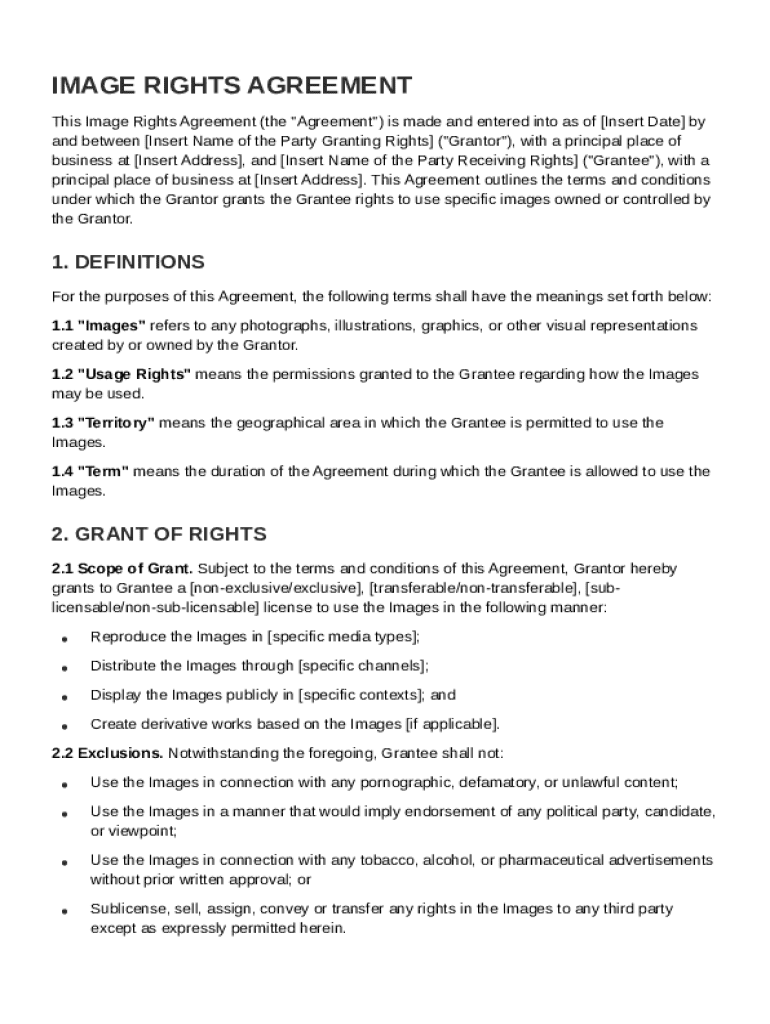







Definition & Meaning
An Image Rights Agreement Template is a legally binding document that outlines the terms under which an individual or organization, known as the Grantor, permits another party, or the Grantee, to use specific images owned by the Grantor. These agreements are crucial in establishing the rights and responsibilities of both parties, ensuring clear communication and understanding regarding image usage. Key elements typically covered include the scope of use, duration of the license, and any restrictions.
Key Components
- Parties Involved: Clearly identifies the Grantor and Grantee, ensuring both parties are explicit in the document.
- Image Description: Precisely defines which images are covered under the agreement, preventing any confusion or unauthorized use.
- Usage Rights: Details how, where, and for how long the images can be used, providing boundaries agreed upon by both parties.
How to Use the Image Rights Agreement Template
Using an Image Rights Agreement Template involves a series of steps to ensure that it is correctly tailored to the specific needs of the parties involved. The process begins with customizing the template to reflect the particular details of the arrangement, ensuring all descriptions and terms are accurate and applicable.
Step-by-Step Usage
- Download the Template: Begin by acquiring the template from a reliable source, ensuring legality and comprehensiveness.
- Fill in the Parties’ Information: Include the full legal names and contact details of both the Grantor and Grantee.
- Specify the Images: Clearly list the images included in the agreement to avoid future disputes over usage.
- Define Usage Terms: Specify all usage rights, restrictions, duration, and any compensation involved.
- Review and Revise: Both parties should review the document to confirm all terms are correctly reflected.
- Execute the Agreement: Finalize by signing the document, ensuring legality through signatures from both parties.
Key Elements of the Image Rights Agreement Template
The Image Rights Agreement Template includes several critical elements that ensure both parties' rights are protected and their responsibilities are clear. These standardized clauses form the backbone of the agreement, providing legal structure and clarity.
Detailed Breakdown
- Scope of Use: Outlines exactly how and where the images can be used, including digital media, print, or any other specified formats.
- Term and Termination: Sets the duration of the agreement and conditions under which it may be terminated before its natural end.
- Compensation and Payments: Clarifies any financial remuneration, making transparent any money owed by the Grantee to the Grantor.
- Attribution Requirements: Details how the Grantor should be credited for the images, which can be crucial for maintaining the Grantor’s brand integrity.
Legal Use of the Image Rights Agreement Template
An Image Rights Agreement must align with legal standards to be considered enforceable. This encompasses adhering to copyright laws and ensuring all terms comply with applicable regulations.
Considerations
- Copyright Compliance: The template ensures that the Grantor holds the proper copyright, reinforcing legal standing.
- Dispute Resolution: Includes provisions for resolving any disagreements, typically through mediation or arbitration.
- Governing Law: Specifies which jurisdiction's laws will apply to the agreement, vital for understanding legal proceedings.
Examples of Using the Image Rights Agreement Template
Real-world applications of the Image Rights Agreement Template demonstrate its utility across various scenarios, from professional photographers to businesses using stock images.
Use Cases
- Professional Photography: Photographers often use these agreements to license images to magazines or websites while retaining certain rights.
- Businesses and Marketing: Companies might use such agreements when purchasing stock images for advertising campaigns, ensuring appropriate use.
- Event Coverage: Media companies covering events agree on image rights with event organizers to distribute pictures in their publications or online content.
Steps to Complete the Image Rights Agreement Template
Completing the Image Rights Agreement Template involves a structured approach to ensure all details are correctly entered and clearly defined.
Completion Process
- Gather Information: Collect all necessary details regarding the images and both parties.
- Template Customization: Adjust the template to include specific information related to the agreement at hand.
- Legal Review: Submit the draft agreement for legal review to ensure compliance with applicable laws.
- Final Discussions: Engage both parties in final discussions to address any potential ambiguities or concerns.
- Signatures and Execution: Finalize the agreement with formal signatures, then distribute copies to all involved parties for records.
Important Terms Related to Image Rights Agreement Template
Understanding the terminology associated with an Image Rights Agreement Template is crucial for parties involved, as it ensures clear interpretation and adherence to the agreement.
Glossary
- Grantor: The individual or entity owning the image rights and granting the usage license.
- Grantee: The party receiving permission to use the images under specified conditions.
- License: The permission granted to the Grantee, detailing scope and duration of use.
- Attribution: Requirements for crediting the Grantor when images are used.
Versions or Alternatives to the Image Rights Agreement Template
While the Image Rights Agreement Template is widely used, there are variations and related forms that might better suit specific circumstances or industries.
Alternatives
- Royalty-Free License: Allows extensive use of images with a one-time fee, often used in stock imagery.
- Creative Commons License: Offers different levels of image sharing rights and can be a flexible option for more open usage.
- Work-for-Hire Agreement: Used when the Grantee commissions images, and ownership is transferred fully upon completion.
These alternatives provide flexibility, allowing parties to select a format that best suits their precise legal and business needs.




