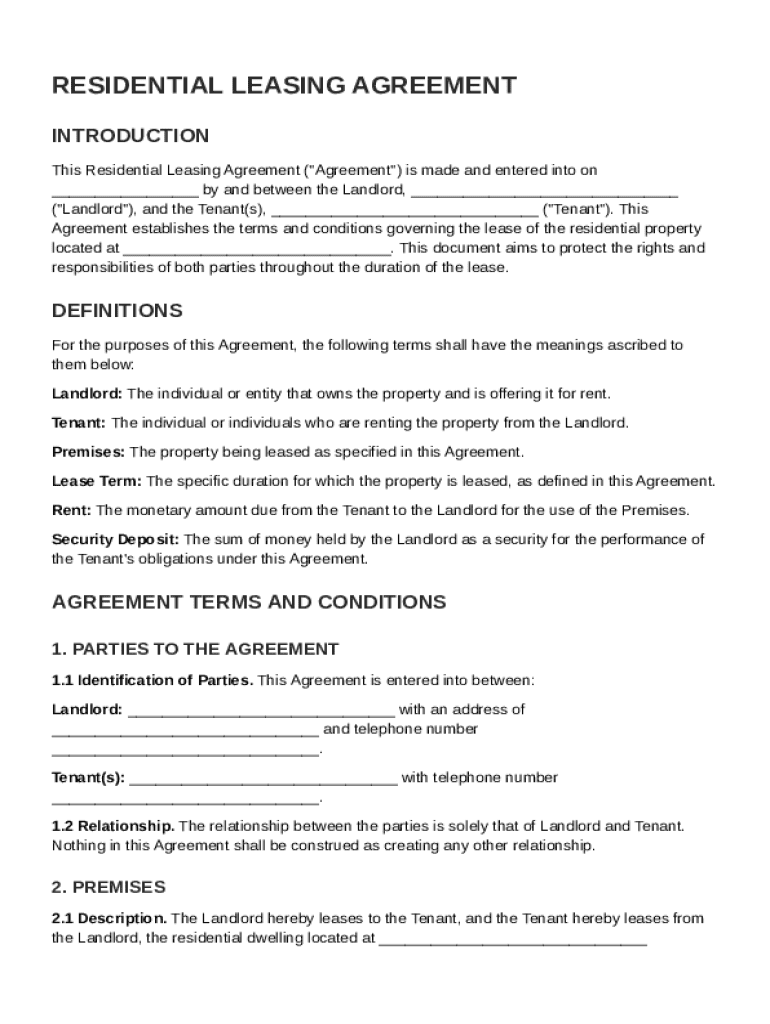







Definition and Meaning
The Residential Leasing Agreement Template is a legal document defining the terms and conditions under which a landlord leases a residential property to a tenant. It serves as a contract that outlines the rights and responsibilities of both parties involved in the lease. Key elements include the lease duration, rent amount, security deposit, maintenance duties, and termination procedures, along with stipulations on the use of the property.
Key Elements of the Template
- Lease Duration: Specifies the start and end dates of the lease period.
- Rent Payment: Details the monthly rent, due date, and acceptable payment methods.
- Security Deposit: Outlines the amount, holding conditions, and refund policies.
- Maintenance Responsibilities: Clarifies who is responsible for property upkeep and repairs.
- Termination Procedures: Describes how either party may end the lease, including notice periods and potential penalties.
- Governing Law: Indicates the jurisdiction that will govern the lease.
How to Use the Residential Leasing Agreement Template
Using the Residential Leasing Agreement Template involves certain steps to ensure it is completed correctly and legally binding.
- Personalize the Template: Start by entering the specific details of both the landlord and tenant, including full names and contact information.
- Fill Out Lease Terms: Clearly specify all lease terms such as rent amount, payment schedule, lease duration, and security deposit.
- Include Property Details: Describe the residential property being leased, including its address and any amenities included.
- Define Responsibilities: Explicitly outline the maintenance duties for both the tenant and landlord.
- Get Signatures: The document must be signed by both parties to be considered legally binding. Use electronic signatures through platforms like DocHub for convenience and legality under the ESIGN Act.
Important Terms Related to Residential Leasing Agreement Template
Certain terms are crucial in a Residential Leasing Agreement to safeguard both parties' interests:
- Tenant: The person renting the property.
- Landlord: The owner or property manager leasing out the property.
- Premises: The physical space that is being rented.
- Default Remedies: Actions available to a landlord in the event of tenant breach, such as eviction.
- Utilities: Refers to the services like water, gas, and electricity which may either be included in rent or separately billed.
Legal Use of the Residential Leasing Agreement Template
This template must comply with local and federal laws to be enforceable.
Legal Considerations
- Rent Control Regulations: Ensure adherence to any local rent control laws which might limit rent increases.
- Discrimination Laws: Must comply with the Fair Housing Act, prohibiting discrimination based on race, color, national origin, religion, sex, familial status, or disability.
- Default and Remedies: Include legally compliant procedures for handling lease violations.
- Security Deposit Laws: Must follow state laws regarding the handling and return of security deposits.
Examples of Using the Residential Leasing Agreement Template
Practical applications of the Residential Leasing Agreement Template can illustrate its utility and coverage.
- Example One: A landlord uses the template to rent out a single-family home, specifying rules on pet ownership and yard maintenance.
- Example Two: A tenant in an apartment complex uses the agreement to understand their responsibility in maintaining appliances provided by the landlord.
- Example Three: A landlord lists a property with the ability for tenants to sublet with prior permission, using the agreement to outline conditions and set limits.
State-Specific Rules for the Residential Leasing Agreement Template
Different states may have specific requirements and modifications needed in a standard leasing agreement:
State Variations
- Security Deposit Limits: Some states cap the amount landlords can require.
- Notice Periods: Vary by state regarding termination of the lease by either party.
- Disclosure Requirements: Certain states mandate disclosures such as lead paint presence in older properties.
Understanding these nuances helps in tailoring the template to comply with state-specific laws.
Step-by-Step Instructions to Complete the Template
Completing the Residential Leasing Agreement Template involves specific steps:
- Preparation: Gather necessary details—tenant's information, property description, and legal requirements.
- Enter Tenant and Landlord Info: Include full legal names and contact addresses.
- Define Lease Terms: Clearly input the duration, rent, and payment information.
- Detail Responsibilities: Use dedicated sections to articulate the maintenance and utilities responsibilities.
- Finalize Agreement: Ensure all terms are thoroughly understood by both parties before signing electronically.
Versions or Alternatives to the Residential Leasing Agreement Template
While the standard template is comprehensive, different scenarios might require variations or specialized forms:
- Month-to-Month Rental Agreements: For shorter lease terms with flexibility.
- Sublease Agreements: Where a tenant wishes to rent a part or all of their leased property to another party.
- Commercial Leasing Templates: Designed for businesses leasing office or retail space.
Understanding different forms helps in choosing the most fitting one for specific leasing needs.