




01. Edit your iters 3 cheat sheet pdf free online
Type text, add images, blackout confidential details, add comments, highlights and more.

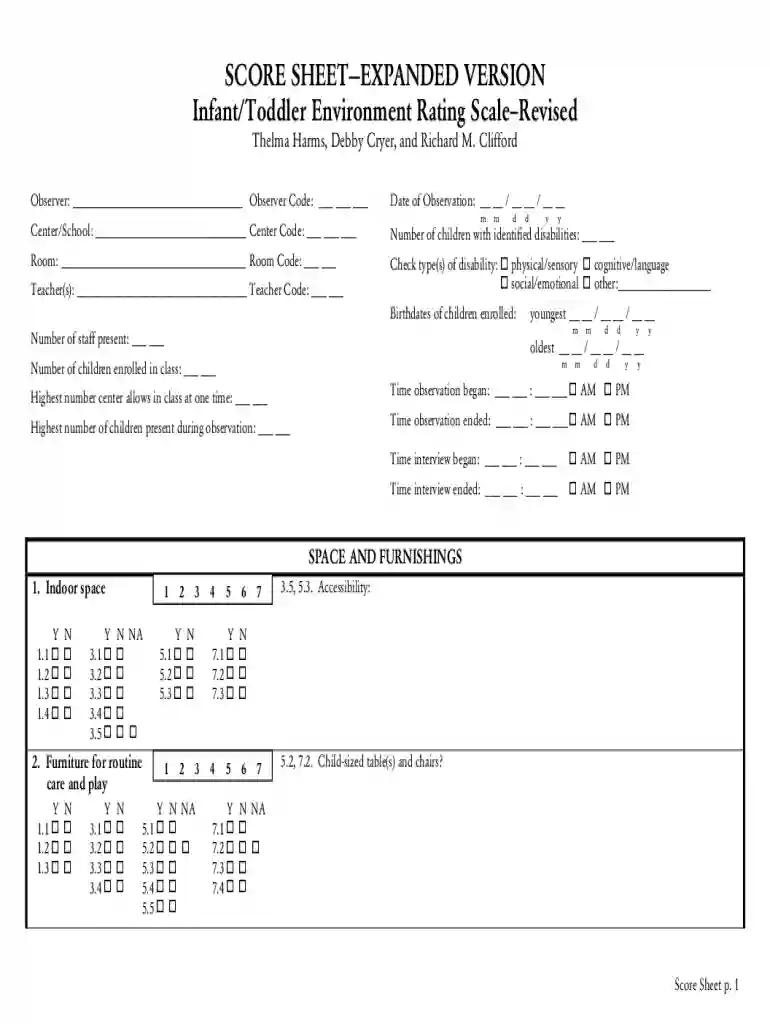
Type text, add images, blackout confidential details, add comments, highlights and more.

Draw your signature, type it, upload its image, or use your mobile device as a signature pad.

Send iters 3 score sheet via email, link, or fax. You can also download it, export it or print it out.
The Iters 3 cheat sheet serves as a guide for users evaluating early childhood environments based on the Infant/Toddler Environment Rating Scale, Third Edition (ITERS-3). This scale is vital for assessing the quality of care environments intended for infants and toddlers, encompassing areas like space, furnishings, personal care routines, and caregiver interactions. The cheat sheet provides concise summaries and clear indicators for the essential factors assessed in the ITERS-3, enabling efficient evaluations.
The cheat sheet condenses crucial information into a user-friendly format, making it easier for educators, evaluators, and administrators to conduct assessments without having to refer to lengthy documents. It’s specifically tailored for those who need to quickly recognize standards and requirements during evaluations, ensuring that all critical content is readily accessible.
Utilizing the Iters 3 cheat sheet involves several steps to ensure accurate assessments are conducted effectively.
Familiarize with the Scale: Understanding the ITERS-3 elements before using the cheat sheet enhances clarity. Different sections focus on distinct areas of the environment, such as personal care and child engagement.
Access the Cheat Sheet: Obtain a PDF version of the ITERS 3 cheat sheet, which can often include practical tips, specific criteria, and examples that illustrate what to look for in each assessment area.
Conduct Assessments: During evaluations, reference the cheat sheet for guidance on specific categories. Highlight or take notes on areas needing improvements or adjustments based on the outlined standards.
Review and Reflect: After assessments, review your notes alongside the cheat sheet to ensure a comprehensive understanding of how observed practices align with ITERS-3 standards.
Several options exist for acquiring the Iters 3 cheat sheet, catering to different user preferences.
Downloadable PDFs: Many educational resources and websites provide free downloadable PDFs of the ITERS 3 cheat sheet. Simply browse your preferred educational platform or search for "iters 3 cheat sheet PDF free download."
Educational Institutes: Institutions focusing on early childhood education often provide copies to students and educational staff. Reach out to local universities or community colleges for availability.
Professional Development Workshops: Attend workshops or trainings on ITERS-3 evaluation, where participants typically receive a copy of the cheat sheet as part of their materials.
Ensure the source from which you obtain the cheat sheet is credible and updated to reflect the most current ITERS-3 standards.
Understanding the critical components included in the Iters 3 cheat sheet can greatly enhance its utility.
Categories of Assessment: The cheat sheet divides content into essential categories such as space and furnishings, personal care routines, interactions, and program structure.
Criteria and Indicators: Each category features specific criteria and performance indicators, which help evaluators determine the quality of care provided in various environments.
Action Items: These are recommendations and practical steps evaluators can take to align current practices with the standards outlined in ITERS-3.
Examples: Concrete examples demonstrate how specific criteria can be met within a usable context, assisting evaluators in evaluating real-world scenarios.
Regularly refer to these key components as you assess environments, ensuring that you cover all necessary aspects thoroughly.
The ITERS 3 cheat sheet is beneficial in various practical evaluation scenarios.
Classroom Assessments: An evaluator can utilize the cheat sheet while observing a classroom setting, checking each criterion against actual practices.
Professional Development: Educators can use the cheat sheet during training sessions to understand expectations and improve practices based on feedback from assessments.
Program Reviews: Administrators may incorporate the cheat sheet as part of program evaluations, delivering insights into areas needing enhancement based on ITERS-3 standards.
Consider using real examples from recently completed assessments, like noting improved caregiver-child interactions or changes made in the physical environment, to share specific outcomes experienced using the cheat sheet.
Familiarity with key terms enhances comprehension of the ITERS-3 evaluation process. Some important terms include:
ITERS-3: The third edition of the Infant/Toddler Environment Rating Scale, a tool for assessing quality in infant and toddler settings.
Quality Indicators: Specific benchmarks within the cheat sheet that indicate performance levels in various categories.
Assessment Categories: Main themes evaluated in the ITERS-3, such as space quality and learning environments.
Evaluator Roles: Different professionals involved in performing evaluations or assessments might include teachers, administrators, or educational consultants.
Grasping these terms allows users to effectively communicate and implement best practices in assessments, ensuring comprehensive evaluations that promote better environments for infants and toddlers.
At DocHub, your data security is our priority. We follow HIPAA, SOC2, GDPR, and other standards, so you can work on your documents with confidence.
This document will give a generalized overview of the kinds of materials needed in the Activities subscales of the ERS scales but will not give specific amountsRead more
Additional Notes for ITERS-3. Infant/Toddler Environment Rating Scale, Third Edition (ITERS-3). Additional Notes. Learn More.Read more
After actuating a switch associated with the potentiometer, the ratio on the potentiometer can be set with reference to the ratio set on a master potentiometerRead more


