
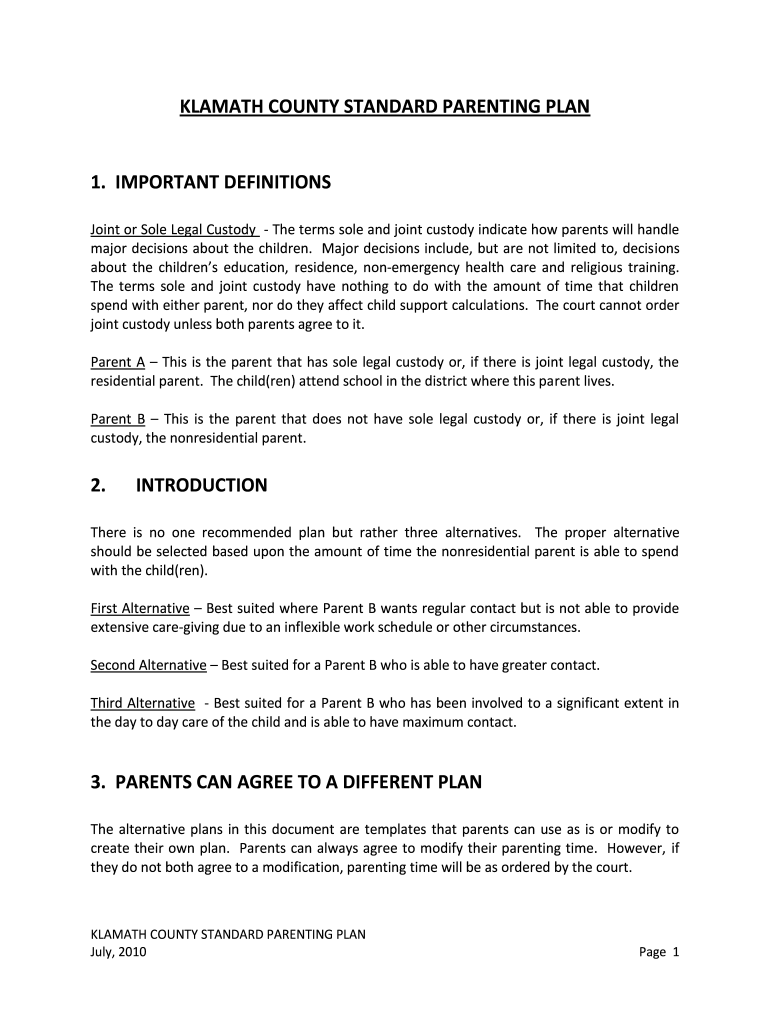







Understanding the Co-Parenting Agreement Template PDF
A co-parenting agreement template PDF is a crucial document used by parents who have separated or divorced but still share parenting responsibilities. This document outlines the expectations, responsibilities, and rights of each parent in relation to their children. It is designed to promote cooperation and ensure that both parents are on the same page regarding child care, decision-making, and visitation schedules.
This template helps to clarify arrangements surrounding custody and parenting time, which can be vital for the well-being of the children involved. A well-constructed co-parenting agreement addresses key aspects such as joint custody, visitation schedules, and provisions for communication between parents. By providing a clear framework, it reduces potential conflicts and misunderstandings.
Steps to Complete the Co-Parenting Agreement Template PDF
Filling out the co-parenting agreement template requires careful consideration and collaboration between both parents. Here’s a step-by-step guide to ensure all relevant aspects are covered:
-
Gather Necessary Information
- Collect personal details such as names, contact information, and any relevant background on the parenting situation.
- Consult with legal advisors or mediators if needed for clarity on legal implications.
-
Outline Custody Arrangements
- Determine the type of custody arrangement: joint or sole custody.
- Specify the division of time spent with each parent, focusing on how many days or weeks children will reside with each parent.
-
Establish Visitation Schedules
- Create specific schedules for regular visitation, including weekdays, weekends, holidays, and vacations.
- Consider children's school schedules and special occasions when planning.
-
Detail Decision-Making Responsibilities
- Define how decisions regarding education, healthcare, and religious upbringing will be made.
- Specify whether both parents will need to agree on significant decisions or if one parent has primary authority.
-
Include Communication Guidelines
- Set expectations for how parents will communicate about their children (e.g., messaging apps, email).
- Establish methods for resolving disputes or disagreements amicably.
-
Review and Revise the Agreement
- Both parents should review the document carefully, making adjustments as needed to reflect their mutual understanding.
- Consider seeking feedback from a legal professional to ensure compliance with state laws.
Legal Use of the Co-Parenting Agreement Template PDF
The co-parenting agreement is not merely a personal document; it can have legal standing in court. Here are important points to consider regarding its legal use:
-
Enforceability: Once signed by both parties, the agreement can be legally binding. If either parent fails to comply with the terms established, the other parent may take legal action to enforce the agreement.
-
Documentation for Court: Courts often require a co-parenting agreement when evaluating custody arrangements during legal proceedings. It serves as a formal record of each parent's commitments and can influence court decisions.
-
Modification Procedures: Life changes (like relocation, job changes, or changes in the children’s needs) may necessitate revising the agreement. Legal guidelines for modifications should be followed to ensure enforceability of the new terms.
-
Jurisdictional Considerations: Different states may have varying laws regarding co-parenting and custody. It's essential to tailor the agreement to comply with the legal requirements of the state where the children reside.
Important Terms Related to Co-Parenting Agreements
Familiarizing oneself with key terminology can aid in understanding and creating a co-parenting agreement. Relevant terms include:
-
Joint Custody: A legal arrangement where both parents share equal responsibility and decision-making power regarding the upbringing of their child.
-
Sole Custody: A situation where one parent has full legal rights concerning decision-making for the child, although the other parent may still have visitation rights.
-
Visitation: A schedule outlining when the non-custodial parent can spend time with the child.
-
Parental Rights: Legal entitlements regarding decision-making and physical custody of children.
-
Mediation: An alternative dispute resolution method used to assist parents in negotiating their co-parenting agreement, often with the help of a neutral third party.
Examples of Using the Co-Parenting Agreement Template PDF
To effectively implement a co-parenting agreement, here are practical scenarios where the template can be utilized:
-
Divorce Proceedings: During divorce filings, a co-parenting agreement can clarify custody arrangements and minimize contention during legal proceedings.
-
Supportive Communication: Establishing communication techniques can be documented in the agreement—such as how to handle urgent situations or updates on the children’s well-being.
-
Updated Living Situations: If one parent moves to a different state, the agreement may need to address travel arrangements and time allocation to continuously support the children’s routine.
-
Conflict Resolution Strategies: The agreement can include methods for handling disagreements, such as setting meetings or contact points that both parents agree to observe in case issues arise.
Using a co-parenting agreement template is vital in fostering a cooperative parenting environment while ensuring that children’s needs are prioritized. Through detailed planning, clear communication, and legal considerations, both parents can create a harmonious co-parenting arrangement.




