






Definition & Meaning
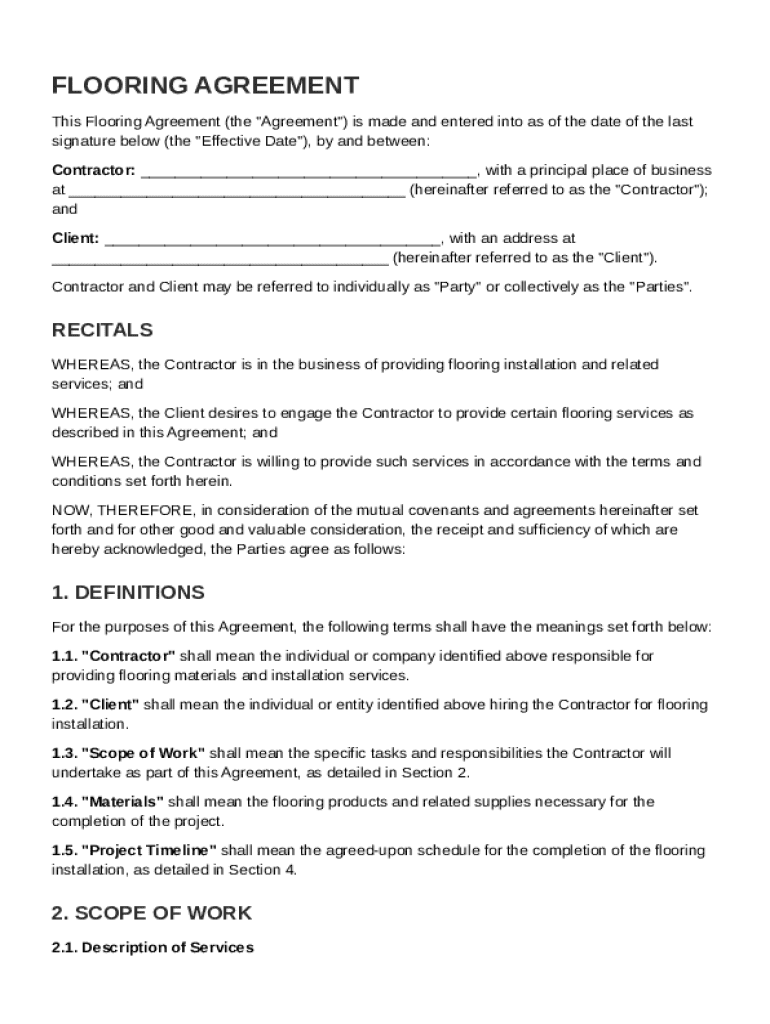
The Flooring Agreement Template is a legally binding document that outlines the terms and conditions between a contractor and a client for flooring installation services. This agreement provides clear guidelines on various aspects of the flooring project, ensuring transparency and reducing misunderstandings. Key elements typically include the scope of work, payment terms, project timeline, and obligations of both parties. The document serves as a formal engagement for specific flooring services at an agreed-upon cost and schedule, offering legal protection and establishing expectations for both parties involved.
Key Components
- Scope of Work: Details the specific flooring services to be provided, such as type, area of installation, and quality standards.
- Payment Terms: Outlines the total cost, payment schedule, and methods of payment.
- Project Timeline: Specifies the start and end date for the project, including key milestones.
- Obligations of Parties: Identifies responsibilities like providing materials, site preparation, and addressing contingencies.
- Dispute Resolution Procedures: Describes the process for resolving disagreements, including arbitration or mediation.
- Warranties and Guarantees: States any assurances regarding the workmanship or materials used.
How to Use the Flooring Agreement Template
Using the Flooring Agreement Template involves several steps to ensure the document is customized to fit the specific needs of the parties involved.
- Review the Template: Begin by reading the entire document to understand its structure and contents.
- Customize Details: Modify sections relevant to the project's unique requirements, such as scope of work, payment terms, and specific contractor and client obligations.
- Add Specific Clauses: Insert additional clauses as needed to cover aspects like change orders, liability insurance, or environmental considerations.
- Consult Legal Expertise: For complex projects or large contracts, it is advisable to have the template reviewed by a legal professional to ensure compliance with applicable laws and industry standards.
- Execute the Agreement: Once both parties have agreed on the terms, signatures should be collected using legally binding electronic signature options available through platforms like DocHub.
Customization Tips
- Use Clear Language: Avoid technical jargon to ensure clarity and mutual understanding.
- Specify Quantities: Clearly state quantities of materials and labor to prevent disputes.
- Include Detailed Descriptions: Provide as much detail as possible to describe the work to be performed, reducing ambiguity.
Steps to Complete the Flooring Agreement Template
Completing the Flooring Agreement Template involves a systematic approach to ensure all necessary sections are appropriately filled out.
- Information Gathering: Collect relevant information such as contact details of both parties, project specifications, and payment details.
- Enter Contractor and Client Details: Fill out the names, addresses, and contact information of both the contractor and the client.
- Define the Project Scope: Clearly outline the work to be completed, including specifications, materials to be used, and any limitations.
- Establish Payment Terms: Detail the payment structure, including deposit amounts, installment schedules, and final payment conditions.
- Specify a Timeline: Record expected start and completion dates, allowing space for amendments if project changes occur.
- Review & Approve: Conduct a thorough review of the filled template, ensuring consistency and completeness.
- Sign the Document: Use a digital signature platform for efficient signing and confirmation, ensuring all parties retain a copy.
Real-World Scenarios
- Residential Projects: For homeowners installing or replacing flooring in homes.
- Commercial Contracts: Businesses engaging flooring services for office or retail spaces.
- Renovation Companies: Firms using templates to standardize agreements with subcontractors.
Key Elements of the Flooring Agreement Template
Understanding the core components of the Flooring Agreement Template ensures all necessary contractual areas are addressed.
Scope of Work
The scope of work is a critical component that outlines the exact tasks to be undertaken. This should include specifics like the type of flooring material (e.g., hardwood, tile), installation techniques, and designated areas.
- Material Selection: Specify brand, quality, and quantity of materials.
- Installation Methods: Detail processes and any special techniques required.
Payment Provisions
Clearly defined payment terms avoid financial disputes, ensuring both parties understand their monetary obligations.
- Advance Deposit: Mention any upfront payment required before commencement.
- Milestone Payments: Set clear benchmarks for partial payments as work progresses.
- Final Payment: Define conditions for releasing the remaining balance post-completion.
Obligations and Responsibilities
Both parties must adhere to their specified responsibilities to prevent breaches in contract.
- Contractor's Duties: Describe obligations such as providing materials, adhering to timelines, and ensuring workmanship quality.
- Client's Duties: Include responsibilities like granting site access and fulfilling payment terms.
Legal Use of the Flooring Agreement Template
Utilizing the Flooring Agreement Template legally binds parties to adhere to the outlined terms, providing enforceability under law.
Compliance and Enforcement
- Adherence to Laws: Ensure the contract complies with local, state, and federal regulations, particularly in the U.S.
- Enforceability: The template is designed to be legally binding, offering recourse in court if necessary.
Dispute Resolution
The agreement should include a section dedicated to resolving potential disputes to avoid litigation.
- Negotiation and Mediation: Encourage parties to resolve disputes amicably through these methods.
- Arbitration Clauses: Offer an impartial resolution mechanism outside of court.
State-Specific Rules for the Flooring Agreement Template
Different U.S. states may have specific requirements for flooring contracts, such as licensure or compliance with state building codes.
State-Specific Considerations
- Licensure Requirements: Verify if the contractor needs to be licensed within the specific state.
- Building Codes and Standards: The agreement should reflect adherence to state building codes and safety standards.
Examples
- California: May require specific disclosures on the use of hazardous materials.
- New York: Restrictions might apply regarding timeframes for service completion.
Important Terms Related to Flooring Agreement Template
Understanding key terminology within the Flooring Agreement Template ensures clarity and aids in comprehension.
Glossary of Terms
- Subcontractor: A secondary party hired by the principal contractor to perform specific tasks.
- Change Order: A formal request to alter the original scope of work, which needs written approval.
- Lien Waiver: A release of the contractor’s right to place a lien on the property for unpaid services.
Application in Context
- Subcontractor Use: The client should approve before subcontractors are engaged.
- Change Orders: Necessary for unplanned alterations in project scope, requiring mutual consent.
Who Typically Uses the Flooring Agreement Template
The Flooring Agreement Template is utilized by various stakeholders in the flooring industry to ensure orderly processes and legal protection.


Typical Users
- Contractors: Ensure clarity and protection in exchange for services provided.
- Clients/Homeowners: To define project expectations and ensure accountability.
- Commercial Entities: Businesses engaging in large-scale flooring projects for their premises.
Practical Applications
- Home Renovations: Used by homeowners for private projects.
- Business Expansions: Commercial enterprises upgrading or expanding their facilities.