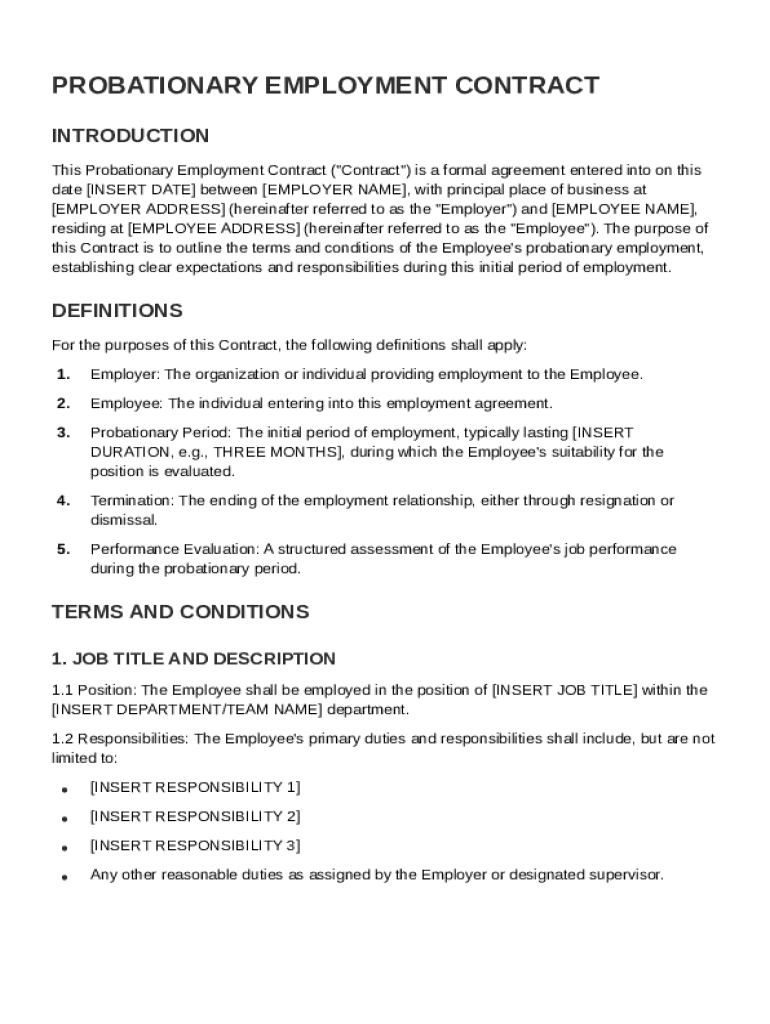







Definition & Meaning
A Probationary Employment Contract is a formal agreement between an employer and an employee that outlines the terms of the employee's probationary period. This contract sets clear expectations and responsibilities for both parties during this trial phase. Typically, it includes essential elements such as the job title, compensation, duration of the probationary period, performance expectations, and termination procedures. The primary goal is to assess the employee's suitability for the role and to determine if a permanent position is warranted. This contract also delineates the employee's rights and obligations, ensuring both parties are aware of the terms under which the probation is conducted.
Key Elements of the Probationary Employment Contract Template
Understanding the core components of the Probationary Employment Contract Template is crucial for both employers and employees. These elements ensure transparency and provide a framework for evaluating performance:
- Job Title and Responsibilities: This section outlines the specific role and duties the employee is expected to perform during the probation.
- Compensation Details: Includes the salary or hourly wage, along with any benefits such as healthcare or retirement contributions.
- Duration of Probation: Specifies the length of the probationary period, often ranging between three to six months.
- Performance Expectations: Lists the criteria and objectives that the employee must meet to successfully complete the probation.
- Termination Procedures: Describes the circumstances under which the employment can be terminated during the probation period.
- Confidentiality Requirements: Ensures that the employee agrees to keep company information confidential, both during and after employment.
- Governing Law: Identifies the jurisdiction's laws that apply to the contract, usually based on the location of employment.
Steps to Complete the Probationary Employment Contract Template
To ensure the Probationary Employment Contract is filled accurately, follow these steps:
- Gather Required Information: Collect details about the job position, pay structure, and probation duration.
- Download the Template: Access a compatible Probationary Employment Contract Template from a trusted source like DocHub.
- Fill in the Basic Details: Complete sections regarding the employer's and employee's names, job title, and start date.
- Enter Compensation and Benefits: Specify the salary, frequency of payment, and any additional benefits.
- Define Performance Criteria: Clearly outline the metrics and goals related to job performance and conduct during probation.
- Set Legal and Confidentiality Terms: Include clauses related to confidentiality and applicable laws governing the agreement.
- Review and Revise: Go through the contract for accuracy and clarity, making revisions as necessary.
- Finalization and Signature: Upon agreement by both parties, finalize the document with signatures from the employer and employee.
Who Typically Uses the Probationary Employment Contract Template
The Probationary Employment Contract Template is used by various stakeholders in the employment process:
- Human Resources Departments: HR professionals utilize the template to standardize the onboarding of new hires during their probationary period.
- Business Managers and Supervisors: They use this document to ensure new employees understand their roles and responsibilities.
- Small Business Owners: Individuals running small enterprises benefit from this template to ensure legal compliance and clear communication with new hires.
- Legal Advisors and Consultants: Often used by legal professionals to create tailored solutions that meet specific business needs while ensuring compliance with employment laws.

Legal Use of the Probationary Employment Contract Template
The legitimate application of the Probationary Employment Contract Template involves several legal considerations:
- Compliance with Employment Laws: The template must adhere to federal and state employment regulations, ensuring fair treatment and non-discrimination.
- Application of Governing Law: Specifies which state or federal laws apply to the contract, relevant for jurisdictions with varying legal requirements.
- Protection of Employer Interests: Legal safeguards for company interests through confidentiality clauses and performance expectations.
- Employee Rights Assurance: Ensures that the employee's rights are upheld, such as due process in termination or performance evaluations.
Examples of Using the Probationary Employment Contract Template
Utilizing a Probationary Employment Contract Template can vary depending on industry and company size:
- Retail Industry: A retail chain hires temporary employees for the holiday season, using the contract to outline temporary conditions that could lead to full-time employment based on performance.
- Technology Startups: A tech startup engages new programmers on a probationary basis to gauge their skills before offering a permanent position.
- Manufacturing Firms: Factories might employ the contract for onboarding entry-level workers to assess their compatibility with company operations and teamwork requirements.
- Healthcare Organizations: Hospitals and clinics often place new staff under probation to ensure they meet stringent patient care standards.
State-by-State Differences
Probationary Employment Contracts may require customization based on state-specific employment laws:
- California: Employers must be particularly cautious with language related to "at-will" employment and termination procedures due to stricter employee protection laws.
- New York: Requires clear specifications of probation period terms, especially regarding compensation and overtime rules.
- Texas: Offers more flexibility in probationary periods, but employers should still ensure compliance with Federal laws such as the Fair Labor Standards Act (FLSA).
- Florida: Probationary contracts should clearly articulate immigration compliance stipulations, pertinent to the state's diverse workforce.
Software Compatibility and Integration
For businesses handling multiple contracts, using a platform like DocHub provides convenience with its integration capabilities:
- DocHub: Offers a cloud-based solution that is compatible with various document formats, including PDF and DOCX, facilitating easy edits and streamlined document management.
- Google Workspace Integration: Connect DocHub with Google Drive to import and export documents seamlessly, maintaining efficient workflows.
- Access on Multiple Devices: Document editing and signing can be conducted from both desktop and mobile browsers, offering flexibility for remote teams or when on-the-go.
- Security Measures: With SSL encryption and OAuth 2.0 protocols, DocHub ensures secure access and transfer of contracts, crucial for protecting sensitive employment information.