






Definition and Purpose of a Non Disclosure Software Agreement Template
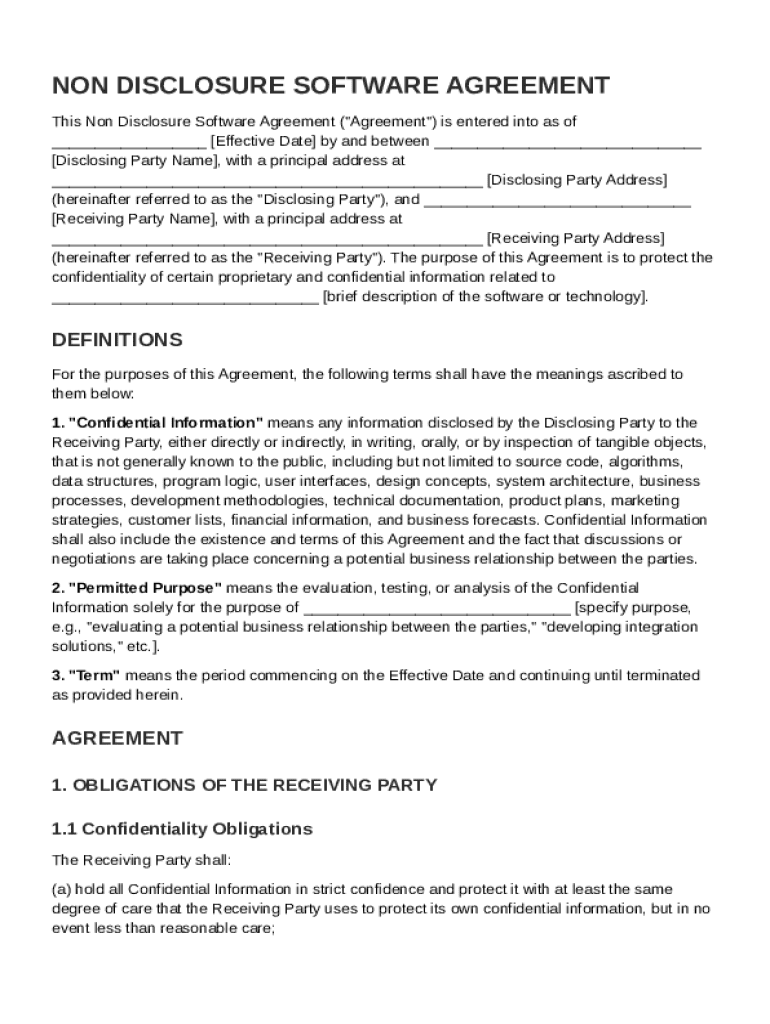
A Non Disclosure Software Agreement Template is a legal document designed to protect the confidentiality of proprietary information shared between parties involved in software development, licensing, or partnership. It serves as a formal agreement between the Disclosing Party, who owns the confidential information, and the Receiving Party, who gains access to this information under the assurance that it will not be disclosed to unauthorized third parties. This template outlines the essential components of confidentiality, including the definitions of 'Confidential Information' and 'Permitted Purpose,' which specify the scope of the information protected and the allowable uses of such information. By defining these terms, both parties can clearly understand their rights and obligations, ensuring that sensitive data and intellectual property are safeguarded during collaborations.
Key Components of the Non Disclosure Software Agreement Template
Identification of Parties
The template clearly identifies the Disclosing Party and the Receiving Party. It is crucial for both entities to be explicitly named, as this establishes the legal bind and accountability for protecting the confidential information shared. Each party's authorized representatives should also be listed to avoid ambiguity regarding who is responsible for implementing the agreement.
Scope of Confidential Information
This section elaborates on what constitutes 'Confidential Information.' It encompasses any data, documents, or materials that the Disclosing Party deems proprietary or sensitive. Examples may include software code, designs, algorithms, business strategies, and customer lists. By specifying what is protected, the agreement minimizes the chance of misunderstandings and potential disputes.
Obligations and Responsibilities
The Non Disclosure Software Agreement Template outlines the obligations of the Receiving Party concerning the handling and use of confidential information. These obligations include maintaining the information's secrecy, using it solely for the permitted purpose, and preventing unauthorized access or disclosure. The Receiving Party must agree to implement reasonable security measures, such as access controls and encryption, to protect the information.
Exceptions to Confidentiality
While confidentiality is the cornerstone of the agreement, certain exceptions allow the Receiving Party to disclose information. These exceptions might include information already in the public domain, data received from a third party without restriction, or information required to be disclosed by law or court order. Specifying these exceptions helps clarify that the Receiving Party is not liable for such disclosures.
Terms and Conditions of Use
Duration and Termination
The agreement specifies the duration for which confidentiality must be maintained. This period can differ based on the parties' negotiations but often extends beyond the active collaboration period to protect the Disclosing Party's interests. Conditions for the termination of the agreement should also be outlined, including any breaches of terms or mutual consent to terminate.
Governing Law
The template includes a section specifying the governing law and jurisdiction applicable to the agreement. Typically, the laws of a particular U.S. state are chosen, providing a legal framework for resolving any disputes or enforcement issues arising from the agreement. This clarity aids in aligning the contract with regional legal standards and business practices.
Legal Considerations for the Non Disclosure Software Agreement Template
Intellectual Property Rights
The agreement addresses ownership rights to ensure that sharing confidential information does not alter the Disclosing Party's intellectual property rights. It clearly states that any proprietary innovations, software, or creations made using the disclosed information remain the property of the Disclosing Party unless otherwise agreed in writing.
Compliance with U.S. Laws
The template is structured to comply with United States laws regarding non-disclosure agreements (NDAs). It adheres to the legal standards set by acts such as the Federal Trade Secrets Act, ensuring that the contract is enforceable in U.S. courts. Understanding these legal considerations is essential for both parties to avoid inadvertently entering an invalid agreement.
Steps to Complete the Non Disclosure Software Agreement Template
- Identify Parties: Enter the legal names and addresses of both the Disclosing and Receiving Parties.
- Define Confidential Information: Clearly describe the information that is considered confidential.
- Set Terms of Use: Specify how the information can be used and any restrictions on its use.
- Outline Obligations: Detail the Receiving Party's responsibilities for protecting the information.
- Include Exceptions: Note scenarios where confidentiality obligations do not apply.
- Determine Duration: Establish the timeline for which confidentiality must be maintained.
- Select Governing Law: Choose the applicable state law to guide legal procedures.
- Review and Sign: Ensure all parties review the terms thoroughly before signing the document.
Examples of Using the Non Disclosure Software Agreement Template
This template has been instrumental in various real-world scenarios, such as:
-
Software Development: When a tech company collaborates with freelance developers, NDAs safeguard the company's proprietary algorithms and project specifics.
-
Business Partnerships: NDAs are used to protect sensitive business strategies and client lists shared between companies exploring mergers or joint ventures.
State-Specific Rules for Non Disclosure Software Agreements
While the core elements of NDAs remain consistent, certain states have unique requirements or interpretations that impact the enforceability of these agreements. For example, California imposes strict limitations on NDAs regarding trade secrets and employment contexts. It is vital for parties using the template to tailor it to align with state laws, ensuring it is legally defensible within the chosen jurisdiction.