01. Edit your form online
Type text, add images, blackout confidential details, add comments, highlights and more.

Type text, add images, blackout confidential details, add comments, highlights and more.

Draw your signature, type it, upload its image, or use your mobile device as a signature pad.

Send it via email, link, or fax. You can also download it, export it or print it out.
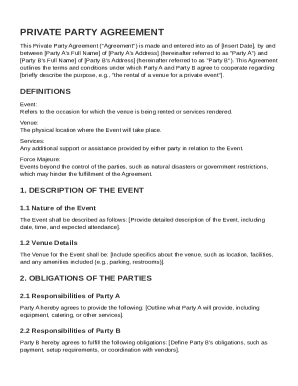
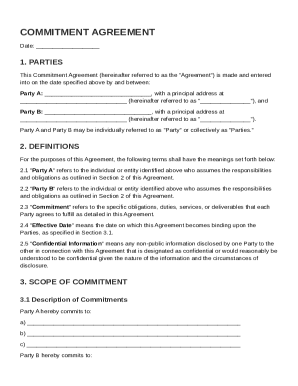
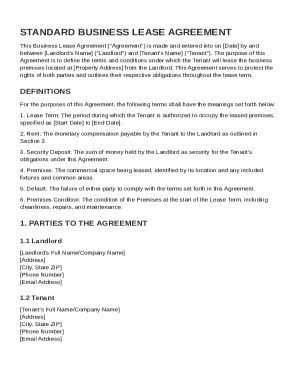
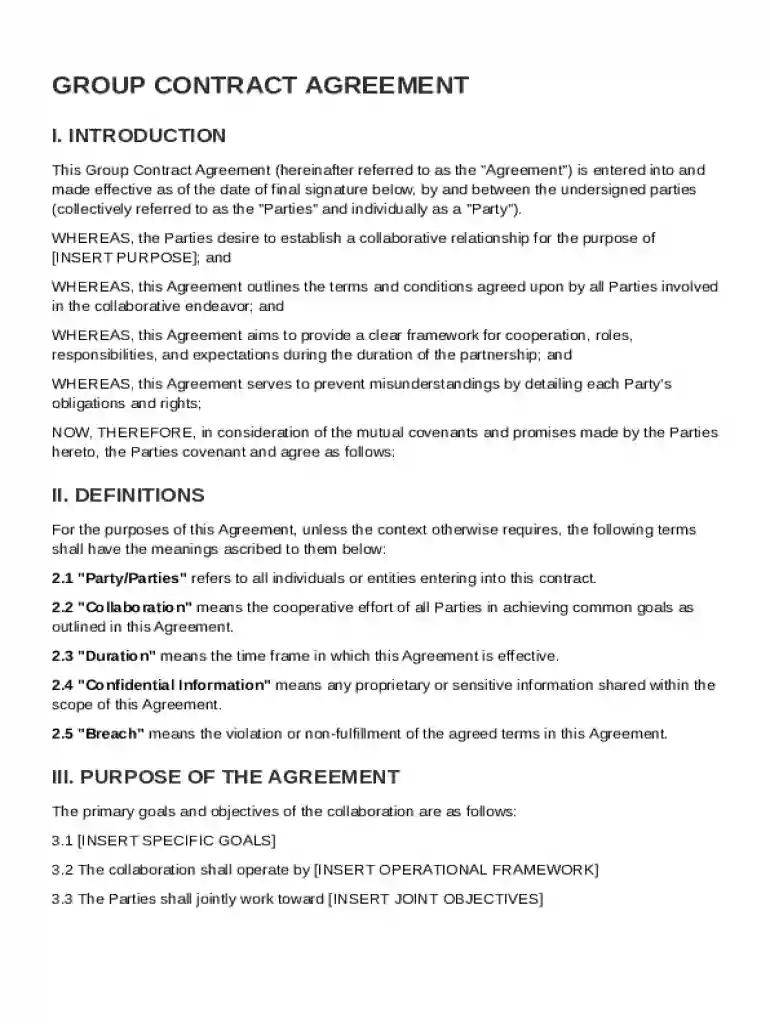
The "Group Contract Template" serves as a foundational document that outlines the collaborative relationship between multiple parties. It is designed to delineate the roles, responsibilities, and expectations each party must uphold. This comprehensive framework includes definitions of vital terms, financial obligations, confidentiality mandates, dispute resolution procedures, and conditions under which the contract can be terminated. The template ensures that all participating entities understand their commitments and helps prevent potential misunderstandings.
Using the Group Contract Template involves customizing it to meet the specific needs of the participating parties. Start by gathering all necessary information about the parties involved and their roles within the agreement. Modify the template to reflect these specifics, particularly the financial obligations and confidentiality clauses.
Consider a consulting company entering into a joint contract with multiple clients. Each client's obligations are specified, including payment terms, project deliverables, and data protection measures, ensuring smooth and clear communication throughout the project lifecycle.
Understanding the language within the Group Contract Template is crucial for effective usage. This section highlights significant terms that frequently appear in such contracts.
In a marketing alliance contract, terms like "breach of contract" are critical for defining actions that constitute violations, while "indemnification" describes how parties are protected from liabilities arising out of the partnership.
The Group Contract Template comprises several pivotal components that collectively form a robust agreement. Each section is tailored to ensure clarity and reduction of future conflicts.
Each element is crucial: the "Responsibilities and Deliverables" section ensures that all parties have a shared understanding of what's expected, reducing the likelihood of disputes over unmet expectations.
Completing a Group Contract Template requires careful attention to detail to ensure all critical elements are accurately represented.
A non-profit organization collaborating with service providers can leverage the contract template to set clear terms over deliverables, ensuring all parties are aligned in their expectations before signing.
The legal standing of a Group Contract Template is critical for ensuring all parties are held accountable according to the established terms.
Legal enforceability ensures that parties are legally compelled to meet their obligations, reducing the risk of breach of contract and potential litigation.
To illustrate the application of the Group Contract Template, consider the following scenarios:
Two or more businesses collaborating on a project can delineate shared responsibilities and mutual goals, outlined explicitly in the template to ensure clarity throughout the venture.
Universities working with tech companies can use the template to define the scope of collaboration, data sharing policies, and mutual objectives for research and development projects.
Different types of businesses can gain significant advantages from using a Group Contract Template.
Non-profits benefiting from sponsorships can minimize misunderstandings by setting explicit terms on funding, reporting, and responsibilities, proving the Group Contract Template's versatility and utility in such collaborations.
At DocHub, your data security is our priority. We follow HIPAA, SOC2, GDPR, and other standards, so you can work on your documents with confidence.