
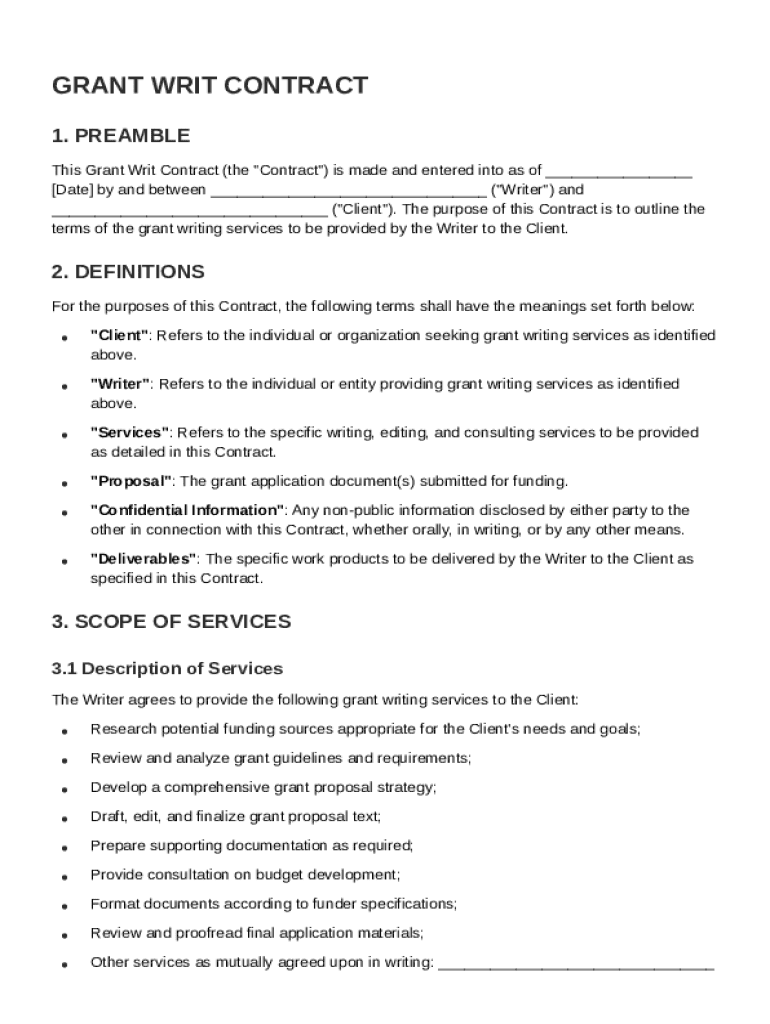







Definition & Meaning
The Grant Writ Contract Template serves as a foundational document detailing the specific terms and agreements between a grant writer and their client. It outlines critical components such as the responsibilities of each party, deliverables, project timeline, and compensation structure. The primary objective of this contract is to establish a mutual understanding and clear expectations around the grant writing process, ensuring that both parties are aligned in their goals and legal obligations.
Key Components
- Responsibilities: Clearly delineates the duties and expectations for both the writer and the client.
- Deliverables: Specifies what the writer is expected to produce, including the scope of work and types of deliverables.
- Timeline: Details the project timeline, deadlines, and any milestones.
- Compensation: Outlines the payment structure, including any deposits, payment schedules, and fees.
Steps to Complete the Grant Writ Contract Template
Completing the Grant Writ Contract Template requires careful attention to detail to ensure all relevant information is accurately captured. The goal is to create a document that is clear, concise, and legally sound, reflecting the agreement between the writer and the client.
- Gather Required Information: Collect all necessary details about the parties involved, including names, contact information, and roles.
- Define Scope of Work: Clearly outline what the grant writer is expected to do, specifying any tasks and project deliverables.
- Set Project Timeline: Establish key dates, including the start date, deadlines for deliverables, and completion date.
- Determine Compensation Structure: Agree on payment terms, including any upfront fees, installment payments, and method of payment.
- Review Key Terms: Ensure all legal and technical terms are defined and agreed upon by both parties.
- Include Confidentiality and Dispute Resolution Clauses: Protect both parties with clauses regarding confidentiality and how disputes will be resolved.
- Finalize and Sign: Both parties should carefully review the completed document before signing, either electronically or in-person.
Who Typically Uses the Grant Writ Contract Template
The Grant Writ Contract Template is utilized by various individuals and organizations involved in the grant-writing process. Its primary users include professional grant writers, nonprofit organizations, educational institutions, and any entities seeking to secure grant funding.

Typical Users
- Grant Writers: Freelancers or professional writing services offering grant proposal services to clients.
- Nonprofit Organizations: Entities seeking grant funding for projects or initiatives.
- Educational Institutions: Universities and colleges applying for research or educational grants.
- Government Agencies: Departments or programs applying for cross-agency funding or partnerships.
Key Elements of the Grant Writ Contract Template
The Grant Writ Contract Template encompasses several vital components necessary to protect both the writer and the client, while clearly defining the project parameters.
Essential Sections
- Scope of Services: Clearly describes what is expected from the grant writer, including the types of services provided.
- Compensation and Payment Terms: Details payment arrangements such as hourly rates or flat fees, including any payment schedules and conditions.
- Project Timeline and Deadlines: Includes the expected timeline for project milestones and final delivery dates.
- Confidentiality Agreements: Ensures that proprietary or sensitive information shared during the project remains confidential.
Legal Use of the Grant Writ Contract Template
Ensuring the legal validity of the Grant Writ Contract Template is crucial to its function as a binding agreement. The contract should comply with applicable laws and regulations to uphold its enforceability.
Key Legal Considerations
- Compliance with Local Laws: Both parties should ensure the contract adheres to the laws of their jurisdiction.
- Legally Binding Signatures: Use legally recognized means of signing, such as handwritten or electronic signatures, to authenticate the document.
- Clear Definitions: Include clear definitions of all terms and responsibilities to prevent misunderstandings or disputes.
Important Terms Related to the Grant Writ Contract Template
Understanding the terminology used within the Grant Writ Contract Template is critical to properly utilizing the document and ensuring clarity between parties.
Common Terms
- Grantor: The entity providing the grant funding.
- Grantee: The party receiving the grant funding.
- Deliverables: The outputs or results that the grant writer is contracted to produce.
- Milestones: Key stages or timelines in the project where specific tasks or deliverables are expected to be completed.
Examples of Using the Grant Writ Contract Template
The Grant Writ Contract Template can be employed in various real-world scenarios to formalize grant writing services and expectations.
Practical Scenarios
- Nonprofit Initiatives: A nonprofit hires a grant writer to secure funding for community outreach programs.
- Academic Research Grants: A university engages a professional grant writer to apply for research funding from government agencies.
- Small Business Grant Applications: A startup partners with a grant writer to apply for small business grants available from local or federal programs.
State-Specific Rules for the Grant Writ Contract Template
Different states may have unique legal requirements governing contracts, which must be taken into account when finalizing the Grant Writ Contract Template.
Key State Considerations
- State Contract Laws: Ensure the contract aligns with specific state laws regarding contracts and business agreements.
- Jurisdiction Clauses: Indicate which state’s laws will govern in case of any disputes arising from the contract.
- Electronic Signature Legality: Confirm that electronic signatures are legally accepted in the state where the contract will be enforced.
By effectively utilizing the Grant Writ Contract Template and adhering to these detailed guidelines, organizations and individuals can ensure a seamless and legally sound agreement process.




