






Key Elements of the Bonus Contract Template
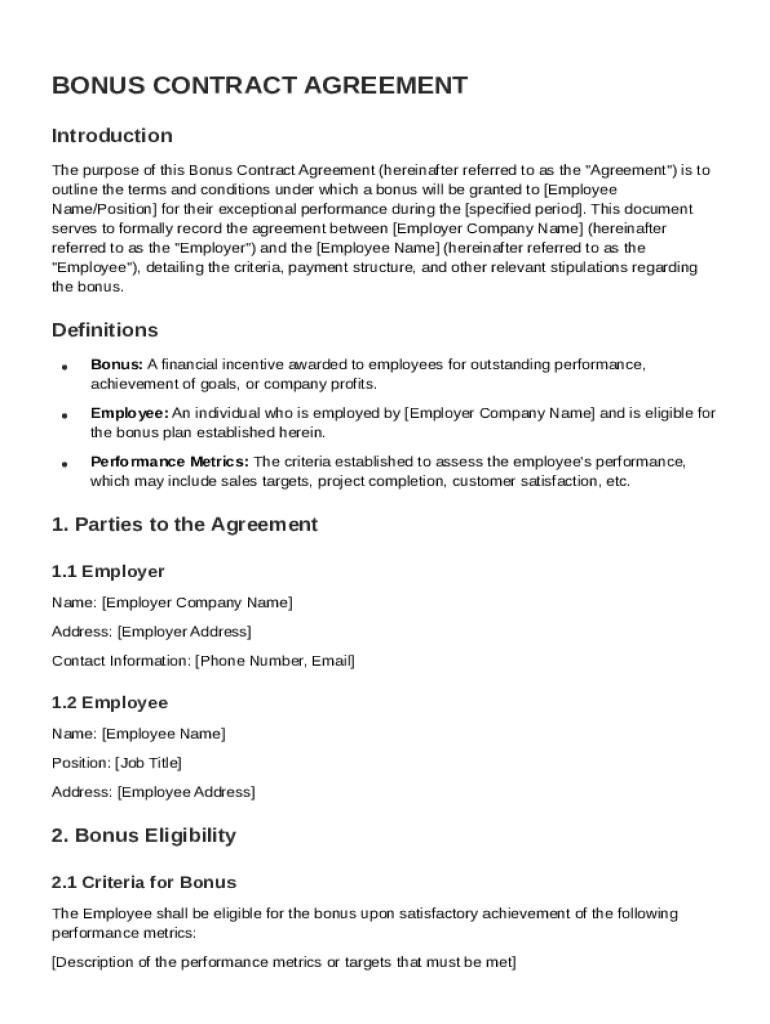
The Bonus Contract Template is a crucial document for outlining the conditions under which a bonus is awarded to employees. Core components include eligibility criteria, the performance metrics used to assess eligibility, calculation methods for determining bonus amounts, payment schedules, and conditions for forfeiture. By clearly specifying each element, the template helps prevent misunderstandings and disputes. For instance, eligibility criteria may include tenure or specific performance goals, while calculation methods detail how exact figures are reached, ensuring both transparency and fairness.
Eligibility Criteria Specifications
- Tenure Requirements: Often, a minimum period of employment is necessary to qualify for bonuses.
- Performance Metrics: Specific objectives, like sales targets or project completions, are commonly used.
- Departmental Goals: Bonuses may be tied to the achievement of broader team or department milestones.
Each of these elements requires detailed definitions within the contract to avoid disputes later on. Real-world examples include sales bonuses linked to new client acquisitions or productivity bonuses based on project completion quality.


Steps to Complete the Bonus Contract Template
Completing the Bonus Contract Template necessitates a methodical approach to ensure all sections are filled accurately and any necessary approvals are obtained. Here's a structured guide:
- Identify Eligible Employees: Use performance reviews and any predefined eligibility requirements.
- Specify Performance Metrics: Clarify what standards or objectives must be met to earn the bonus.
- Determine Bonus Amounts: Utilize predefined formulas or percentage methods relevant to salary or sales metrics.
- Outline Payment Schedules: Clearly indicate when payments will be made (e.g., quarterly, annually).
- Detail Conditions for Forfeiture: Explain circumstances when bonuses may not be paid (e.g., termination, policy breaches).
- Include Sign-off Areas: Ensure there are sections for both employer and employee signatures.
Practical Applications
For example, a company might include a fixed dollar amount for each new client brought in by a salesperson. Alternatively, a yearly bonus might depend on overall profit growth, motivating collective team goals.
How to Obtain the Bonus Contract Template
Accessing this template depends largely on your workplace policies and the tools your organization uses:
- Internal HR Resources: Many large companies provide templates through their HR department's intranet.
- Online Template Platforms: Resources like DocHub allow easy access and customization of templates.
- Legal Software Providers: Employers may offer subscriptions or one-off template purchases.
Considerations for Acquisition
If obtaining the template from an online resource, ensure it is compliant with local employment laws and terms. Customization features are crucial for tailoring to specific business requirements, such as industry-specific metrics.
Legal Use of the Bonus Contract Template
Using the Bonus Contract Template legally ensures both parties are protected according to the applicable employment laws. It's advisable to get the final draft reviewed by a legal professional to verify compliance with both federal and state-specific regulations.
Key Legal Components
- Compliance with Labor Laws: Ensure the bonus structures adhere to minimum wage and overtime regulations.
- Dispute Resolution: Clearly outline measures for resolving disagreements, whether via mediation or legal channels.
- Confidentiality Provisions: Some bonus agreements include clauses to protect sensitive business information.
By following these steps, companies minimize legal risks and foster trust with employees by providing secure and lawful conditions for bonus agreements.
Examples of Using the Bonus Contract Template
Several scenarios illustrate the practical use of this contract:
- Sales Departments: Bonuses tied to quarterly sales figures encourage higher performance.
- Project Completion Bonuses: Rewarding teams post-completion of significant projects improves morale.
- Individual Performance Recognition: High-performing individuals receive recognition, which boosts overall workplace motivation.
These examples highlight how the bonus system can be tailored to fit different contexts, fostering productivity and ensuring clarity on reward structures.
State-specific Rules for the Bonus Contract Template
Different U.S. states may impose specific requirements or limitations on bonus agreements. For instance, some states mandate written agreements for all bonuses, while others may regulate the timing and conditions of bonus payments.
Notable State-specific Considerations
- California: Must comply with stringent rules about payment timelines and earned bonuses.
- New York: Requires clear definitions of discretionary versus nondiscretionary bonuses.
- Texas: Offers more flexibility but still demands adherence to baseline employment standards.
Understanding these nuances is crucial for companies operating across multiple states, ensuring compliance and reducing legal risks.
Important Terms Related to the Bonus Contract Template
Clarifying terminology within the Bonus Contract Template is essential to its effective implementation. Key terms include:
- Discretionary Bonus: Bonuses given at the company’s discretion, typically not guaranteed year-over-year.
- Nondiscretionary Bonus: Promised under specific conditions and usually written into employment contracts.
- Performance Metrics: Standards or benchmarks used to evaluate employee eligibility for bonuses.
By providing clear definitions within the contract, both employees and employers can better understand each party's expectations and obligations.
Form Submission Methods
Completing a Bonus Contract Template effectively involves several submission methods, depending on the organizational structure and available resources.
- Electronic Submissions: Platforms like DocHub facilitate quick online submissions with digital signatures.
- Manual Submissions: Some companies may require printed, signed copies for their records.
- Cloud Integration: Documents can be stored and shared with HR or management using cloud systems like Google Drive.
These methods streamline contract handling, ensuring accessibility and compliance with company policies, particularly when audits or reviews are needed.
Each of these critical blocks offers extensive insights into creating, managing, and implementing bonus structures within an organization. By focusing on these areas, an organization can enhance employee satisfaction and performance while remaining compliant with legal standards.