
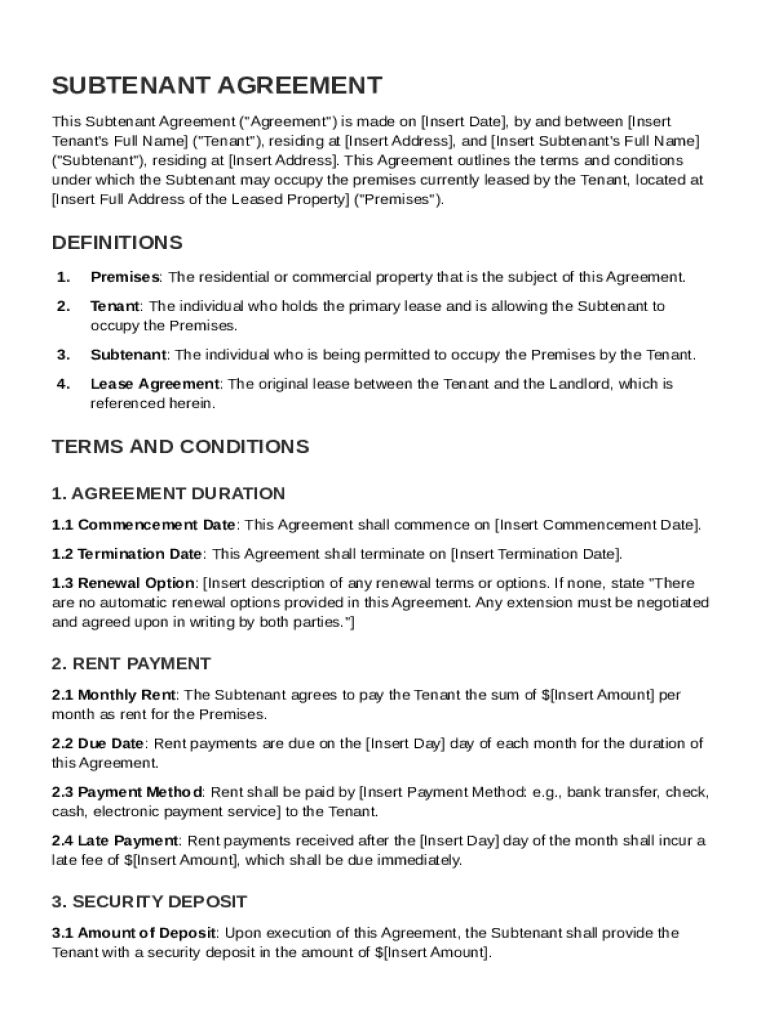







Definition & Purpose of a Subtenant Agreement Template
A Subtenant Agreement Template is a document designed to formalize the leasing arrangement between an original tenant (often referred to as the primary tenant) and a subtenant. It serves as a legal contract outlining the terms under which the subtenant may occupy rental space that the primary tenant has already leased from a landlord. This document protects the rights and responsibilities of both the primary tenant and the subtenant while ensuring adherence to the original lease agreement terms. It typically includes essential details such as the duration of the tenancy, rent payment information, security deposit requirements, and the permitted uses of the premises.
How to Use the Subtenant Agreement Template
To effectively use a Subtenant Agreement Template, follow these steps to customize it according to the specific terms negotiated between the tenant and subtenant:
-
Review the Original Lease Agreement: Before using the template, examine the original lease agreement between the landlord and the tenant to confirm the rights and limitations regarding subleasing.
-
Customize the Template: Fill in the necessary details in the template, such as the names and contact information of all parties involved, the sublease start and end dates, and rent terms.
-
Include Specific Clauses: Add any specific clauses pertaining to maintenance responsibilities, prohibited activities, or sharing of utilities, as agreed upon by both parties.
-
Obtain Signature from All Parties: Ensure that both the tenant and subtenant, as well as the landlord if required, sign the document to make the agreement legally binding.
-
Distribute Copies: Provide a signed copy of the agreement to each party involved for their records.
Steps to Complete the Subtenant Agreement Template
Completing a Subtenant Agreement Template involves several critical steps to ensure the document covers all necessary legal and practical aspects:
-
Input Personal and Property Details: Begin by entering the full legal names of the tenant and subtenant, along with a description of the rental property including its address.
-
Specify Lease Terms: Clearly define the duration of the sublease, including start and end dates. Include any terms concerning lease renewal if applicable.
-
Determine Financial Obligations: Detail the agreed-upon rent amount, payment schedule, and security deposit. Specify the method of payment and any penalties for late payments.
-
Outline Security Deposit Conditions: Set forth conditions for the security deposit, including the amount, use, and criteria for return upon lease termination.
-
State Usage and Maintenance Policies: Define the permitted use of the property and any maintenance or repair responsibilities of the subtenant.
-
Legal Compliance and Finalization: Ensure the completed document is compliant with local and state laws regarding subleasing. Sign and date the agreement, with both parties retaining a copy.
Key Elements of the Subtenant Agreement Template
A comprehensive Subtenant Agreement Template should include several key sections to ensure legal protection and clarity:
-
Identification of Parties: Clearly list the names of the primary tenant, subtenant, and sometimes the landlord, along with their contact information.
-
Property Description: Include an accurate description of the property being subleased to avoid any misunderstandings.
-
Lease Duration and Terms: Specify the sublease period, including the starting and ending dates, and any conditions for renewal.
-
Rent and Deposit Details: State the rent amount, due date, and how it should be paid. Also, include security deposit terms.
-
Rights and Responsibilities: Clarify both the tenant’s and subtenant's obligations regarding property use, maintenance, and repairs.
-
Termination Conditions: Outline conditions under which the sublease may be terminated prematurely, including notice requirements and penalties.
Legal Use and Considerations for the Subtenant Agreement Template
Utilizing a Subtenant Agreement Template correctly involves understanding and abiding by legal regulations to prevent future disputes:
-
Landlord Approval: Obtain written consent from the landlord approving the sublease, if required, before entering into an agreement with a subtenant.
-
Compliance with Original Lease: Ensure all terms in the subtenant agreement align with those in the original lease to avoid conflicts or violations.
-
Adherence to State Laws: Be aware of and comply with state-specific laws governing subleases, which may dictate the permissible duration or conditions of a sublease.
-
Security Deposit Regulations: Follow legal guidelines regarding the handling of security deposits, including how they must be maintained and returned.
Who Typically Uses the Subtenant Agreement Template
The Subtenant Agreement Template is commonly used by various individuals or groups who need to navigate subleasing arrangements:
-
Primary Tenants: Individuals with a lease who wish to let out the property temporarily while maintaining the original lease with the landlord.
-
Subtenants: Those seeking temporary housing solutions who enter into an agreement with a primary tenant rather than a landlord or property manager.
-
Property Managers: Professionals managing rental properties who facilitate subleasing as part of their services to tenants requiring flexibility.
-
Landlords: Property owners who authorize tenants to sublease, potentially including specific terms and guidelines in the master lease agreement.


State-Specific Rules for the Subtenant Agreement Template
Subleasing regulations can vary significantly between states, impacting how a Subtenant Agreement Template is utilized:
-
California: Requires explicit landlord consent and provides tenants with a statutory right to sublease, subject to certain criteria.
-
New York: The tenant must obtain the landlord’s written approval unless the lease explicitly permits subleasing.
-
Texas: Does not require landlord consent for subleasing, but any restrictions must be outlined in the original lease agreement.
Understanding and referencing these rules can help parties create legally binding agreements that adhere to local requirements and avoid potential legal pitfalls.
Examples of Using the Subtenant Agreement Template
The Subtenant Agreement Template can be applied to various real-world scenarios, providing flexibility and clarity in rental arrangements:
-
Short-Term Work Assignments: A tenant temporarily relocates for a job assignment and subleases their apartment for six months.
-
Gap-Year Studies: College students studying abroad rent out their campus apartments to other students during their absence.
-
Seasonal Relocations: Individuals moving to a different state for winter or summer may sublease their residential property for those seasons.
These examples highlight the practical applicability of a Subtenant Agreement Template in catering to diverse living situations and requirements.







