01. Edit your form online
Type text, add images, blackout confidential details, add comments, highlights and more.

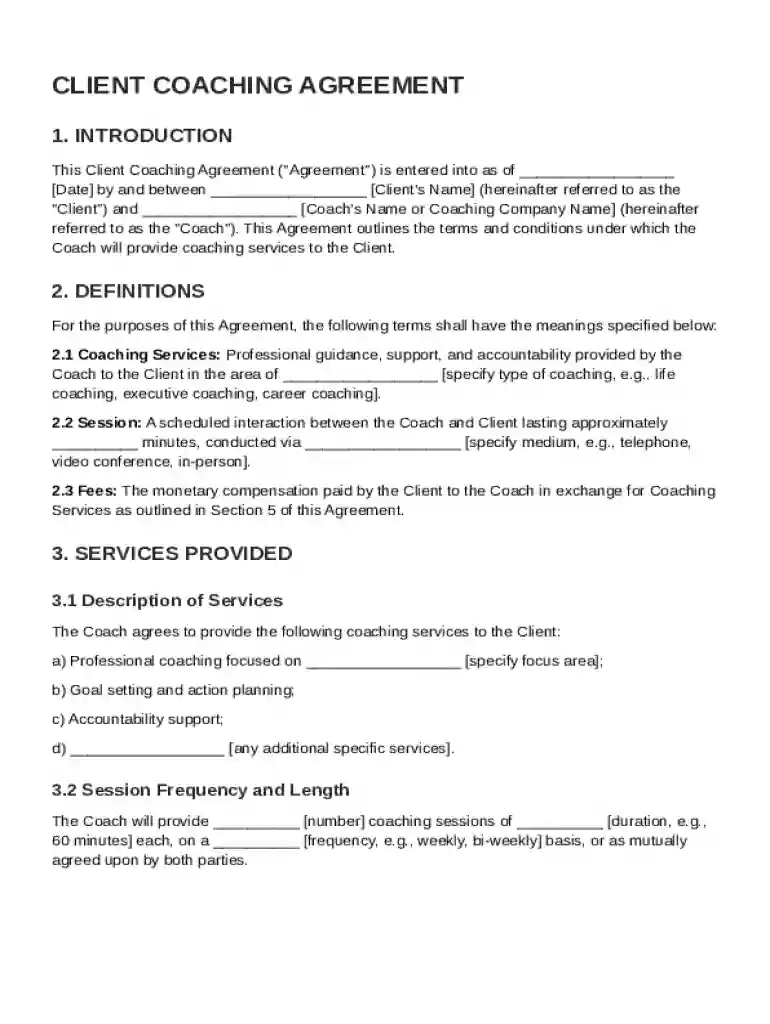
Type text, add images, blackout confidential details, add comments, highlights and more.

Draw your signature, type it, upload its image, or use your mobile device as a signature pad.

Send it via email, link, or fax. You can also download it, export it or print it out.
The Client Coaching Agreement Template serves as a formal document that specifies the details and terms of the coaching relationship between a coach and a client. It covers essential elements such as the responsibilities and expectations of both parties, fee structures, cancellation policies, and conditions for terminating the agreement. It also highlights the importance of confidentiality and the client's active involvement in the coaching process. The agreement often includes legal disclaimers related to liability and the governing law applicable within the jurisdiction. Through articulately defining the relationship and expectations, the template facilitates a clear understanding and trust between both parties.
Understand the Purpose: Before filling out the template, ensure that all involved parties understand the purpose and significance of each section. Clarifying terms at this stage prevents misunderstandings later.
Provide Contact Information: Input the full names, addresses, and contact details of both the coach and the client. This information is crucial for maintaining communication and records.
Define Services Offered: Clearly outline the coaching services to be provided. Specify the frequency, medium, and duration of sessions to avoid ambiguities.
Establish Fees and Payment Terms: Lay down the fee structure, including the method and schedule of payment. It is also important to mention applicable taxes and any refundable or non-refundable deposits.
State Cancellation and Rescheduling Policies: Highlight the terms under which sessions can be canceled or rescheduled, including the notice required from either party.
Security and Confidentiality Clauses: Include stipulations regarding the confidentiality of information shared during coaching sessions, emphasizing any data protection measures in place.
Legal Disclaimers and Dispute Resolution: Provide legal disclaimers, including limitations of liability, and detail the process for resolving disputes, such as mediation or arbitration.
Signing: After reviewing and agreeing to the terms, both parties should sign the template to make it binding.
Identification of Parties: This section identifies the coach and the client, ensuring clarity regarding who is involved in the agreement.
Scope of Services: Clearly defines what the coaching will entail, including goals and objectives.
Fees and Payment Structure: Specifies the amount payable, the payment schedule, and acceptable methods of payment.
Cancellation Policy: Details under what circumstances appointments can be canceled or rescheduled, including any penalties associated.
Confidentiality Agreement: Outlines the confidentiality obligations of the parties to protect sensitive information.
Termination Clause: Provides the conditions under which the agreement can be terminated by either party.
Legal Jurisdiction: States the governing laws that will apply in case of any disputes or issues.
Confidential Information: Refers to any data shared between the coach and the client during their sessions that is meant to remain private.
Liability Limitation: Details the extent to which a party may be held responsible for any losses incurred due to the agreement.
Session Scheduling: Specifies the timing and frequency of coaching sessions.
Active Participation: Highlights the client’s role and obligations in the coaching relationship, emphasizing engagement and efforts to achieve the outlined goals.
Governing Law: Indicates the legal framework under which the terms of the agreement will be interpreted.
Business Coaching: A small business owner enters into a coaching agreement to improve operational efficiency. The template helps outline clear expectations regarding goals and metrics for success.
Personal Development Coaching: An individual seeking personal growth might use the agreement to formalize sessions that focus on self-improvement and goal-setting.
Executive Coaching: A corporate professional utilizes the agreement to detail executive coaching sessions aimed at developing leadership skills within the organization.
Professional Coaches: Experts in various fields, such as business, life, and career coaching, use this template to formalize relationships with clients.
Corporate Clients: Organizations that offer coaching as part of employee development programs often employ these templates to ensure all parties agree on the terms.
Freelancers and Consultants: Individuals who provide coaching services on a freelance basis might use this template to structure their engagements with clients.


The Client Coaching Agreement Template ensures compliance with applicable laws by formalizing the coaching relationship and outlining legal protections for both parties. By clearly defining terms and responsibilities, it minimizes risks and misunderstandings. Coaches should ensure that their agreements align with state-specific regulations and contractual obligations. Including legal disclaimers can further protect both parties from potential liabilities. It may be advisable to seek legal counsel to tailor the agreement to comply with local regulations effectively.
While the template provides a standardized structure, state-specific regulations may affect its content. Different states in the U.S. may have varying requirements concerning contractual obligations, privacy laws, and dispute resolution frameworks. For instance, the use of electronic signatures might be subject to particular state laws governing digital transactions. Coaches should be aware of these variations and adapt the agreement to ensure compliance. Seeking legal advice to address state-specific nuances can safeguard against potential legal challenges.
At DocHub, your data security is our priority. We follow HIPAA, SOC2, GDPR, and other standards, so you can work on your documents with confidence.