







Definition & Meaning
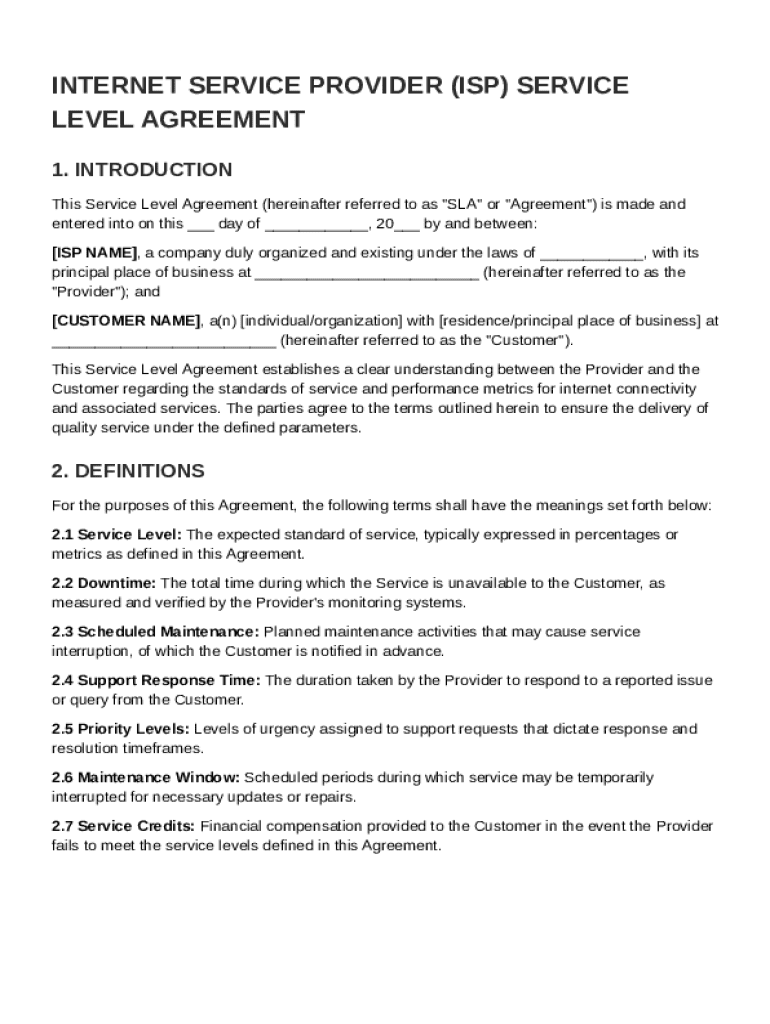
An ISP Service Level Agreement (SLA) Template is a formal document outlining the standards and expectations for the delivery of internet services between a service provider and a customer. This agreement serves as a contractual commitment, detailing the levels of service that the provider promises to uphold, including critical parameters such as uptime, response times, and support availability. The template typically includes specific terms and conditions defining what constitutes acceptable performance and the measures taken when the agreed terms are not met.
- Uptime Guarantees: The document specifies the minimum percentage of time the service should be operational, usually expressed as a monthly average.
- Response Times: Stipulates how quickly the provider should respond to issues or inquiries, highlighting standards for customer support and technical assistance.
- Performance Metrics: Covers bandwidth, latency, and other technical metrics that define the quality of service provided.
Key Elements of the ISP Service Level Agreement Template
The ISP Service Level Agreement Template comprises several vital components designed to encompass all aspects of the service relationship, ensuring clarity and accountability.
- Scope of Services: Outlines the specific services the provider will deliver, including the nature and limits of the internet connectivity options.
- Maintenance Protocols: Describes the scheduled maintenance routines to enhance network reliability, along with notification requirements for planned outages.
- Customer Responsibilities: Lists the obligations of the customer with respect to hardware, software compatibility, and usage policies.
- Liability and Remedies: Details limitations on liability claims and the available remedies for service disruptions, often including service credits or compensatory measures.
Why Use the ISP Service Level Agreement Template
Utilizing an ISP SLA Template is essential for both service providers and customers to manage expectations and maintain a professional working relationship. It serves multiple purposes:
- Clarifies Expectations: Provides both parties with a detailed understanding of service obligations and standards, mitigating potential misunderstandings.
- Enhances Accountability: By clearly outlining performance metrics and consequences for non-compliance, each party is held responsible for their roles.
- Legal Assurance: Offers a layer of legal protection by documenting agreed performance levels and remedies in case of deviations, reducing the likelihood of disputes.
How to Use the ISP Service Level Agreement Template
To effectively use the ISP SLA Template, follow a structured approach that ensures all important elements are customized and agreed upon.
- Review and Adapt: Begin by assessing the template to ensure compatibility with your specific requirements, adapting sections as necessary to reflect unique service conditions.
- Collaborative Discussion: Engage in discussions with the other party to negotiate terms and finalize performance metrics that are feasible and mutually beneficial.
- Signature and Implementation: Once both parties agree to the terms, signatures are obtained, making the SLA legally binding. Implementation involves adhering to the outlined protocols and measures.
Steps to Complete the ISP Service Level Agreement Template
Filling out the ISP Service Level Agreement Template involves several critical steps that ensure comprehensive coverage of all aspects of the service relationship.
- Define Services and Terms: Clearly list all services to be provided, including performance expectations and any relevant technical parameters.
- Outline Support and Maintenance: Specify the levels of technical support, including availability and response time, and describe maintenance schedules.
- Clarify Responsibilities: Enumerate the duties and responsibilities of both the ISP and the customer, ensuring clarity on resource requirements and usage policies.
- Specify Financial Terms: Discuss and record financial responsibilities, including billing terms, payment schedules, and policies on service credits.
- Include Legal Provisions: Incorporate sections that address liability limits, confidentiality, and force majeure, providing a holistic legal framework for the agreement.
Important Terms Related to the ISP Service Level Agreement Template
Understanding the terminology within an ISP SLA Template is essential for ensuring comprehensive knowledge of the agreement's contents.
- Downtime: The period during which the service is unavailable or not functioning as intended.
- Service Credits: Compensation given to the customer when the provider fails to meet the agreed performance levels.
- Latency: A measure of time delay experienced in a network, critical for evaluating the quality of service.
Legal Use of the ISP Service Level Agreement Template
The legal use of the ISP SLA Template focuses on establishing a binding document that outlines the terms and conditions governing the service provider-customer relationship.
- Contractual Obligation: The agreed terms become legally enforceable upon signing, providing a foundation for resolving disputes.
- Compliance with Regulations: The SLA must adhere to relevant industry regulations and standards to ensure its enforceability and validity.
- Modification and Termination: The agreement should include provisions on how changes to the terms can be made and conditions for lawful termination.
Examples of Using the ISP Service Level Agreement Template
Real-world scenarios illustrate how the ISP SLA Template can be employed effectively to manage service relationships.
- Corporate Internet Services: A large organization procuring high-speed internet from an ISP can use the SLA to ensure that their internet connectivity meets critical business needs with defined uptime and support guarantees.
- Small Business Arrangements: A small business engaging an ISP for standard broadband services can leverage the SLA to ensure that any outages or service interruptions are quickly addressed, with compensation mechanisms in place for service failures.




