
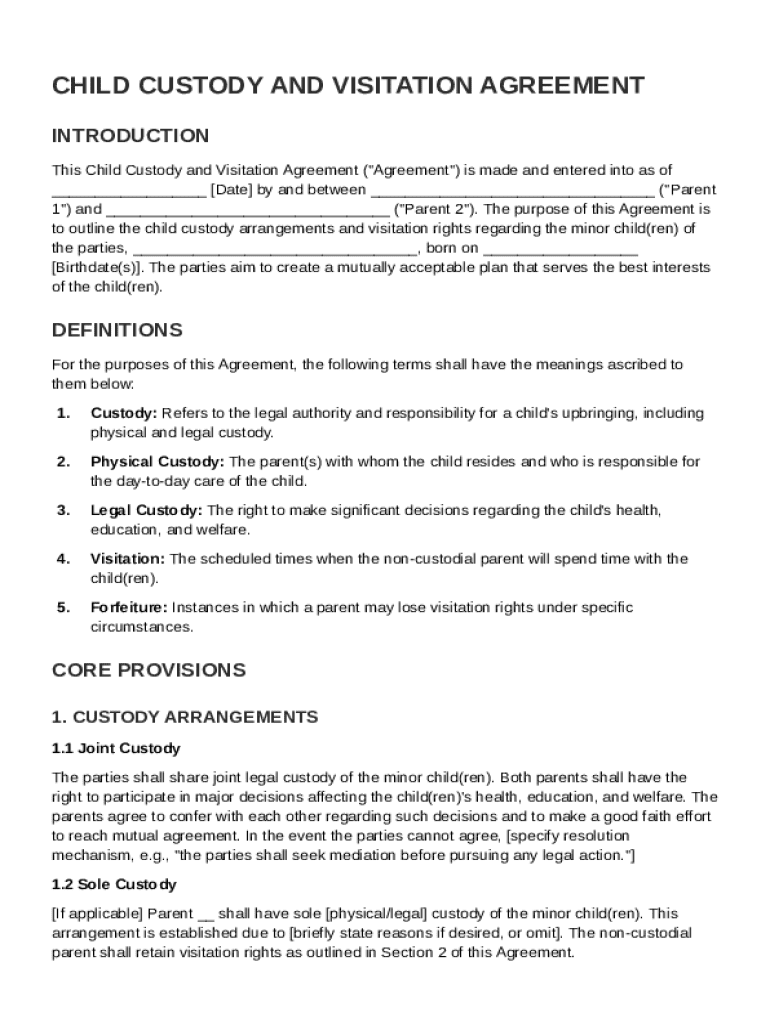







Definition & Meaning
The Child Custody and Visitation Agreement Template is a legal document used by parents to outline the custody arrangements and visitation rights regarding their minor children. This template specifies key terms like custody, which refers to the legal right to make decisions about a child's upbringing, and visitation, which details the structure of time children spend with each parent. There are two types of custody outlined: physical custody, indicating where the child will live, and legal custody, concerning decision-making authority over the child. The agreement can establish joint or sole custody, with joint custody meaning both parents share responsibilities, while sole custody gives one parent exclusive rights.
Key Elements of the Agreement Template
The Child Custody and Visitation Agreement Template typically includes several crucial components that ensure the comprehensive handling of parental rights and responsibilities.
- Custody Arrangements: Specifies whether custody is joint or sole, impacting decision-making and residency.
- Visitation Schedule: Details regular weekly visits, weekend arrangements, holiday sharing, and vacation plans.
- Communication Guidelines: Establishes protocols for how parents will communicate about their child, including preferred modes of communication and frequency.
- Child Support Obligations: Outlines any financial responsibilities of each parent, often informed by state guidelines and individual financial status.
- Modification Procedures: Clarifies how changes to the agreement should be handled, catering to shifts in circumstance or needs of the child.
Legal Use of the Agreement Template
This template serves a legally binding function, ensuring both parents adhere to agreed-upon terms concerning the upbringing of their children. In the United States, such agreements must comply with state-specific family law regulations, which might differ from one jurisdiction to another. The agreement becomes actionable through a court order, and non-compliance can lead to legal repercussions.
Important Terms Related to the Agreement
Understanding specific legal and contextual terms is essential for effectively navigating a Child Custody and Visitation Agreement Template.
- Joint Custody: Both parents share equal rights and responsibilities concerning the child's upbringing.
- Sole Custody: One parent retains exclusive care rights, although the other parent might still have visitation privileges.
- Mediation: A recommended dispute resolution process involving a neutral third party to assist parents in reaching consensus without court intervention.
- Modification Clause: A section that allows for the agreement's terms to be altered due to significant changes in circumstances.
Steps to Complete the Agreement Template
Completing the Child Custody and Visitation Agreement Template might involve multiple steps, necessitating attention to detail and collaboration between parents.
- Identify Custody Arrangements: Decide if custody will be joint or one parent will have sole custody.
- Define Visitation Schedules: Outline a clear schedule balancing work responsibilities and children's school routines.
- Specify Support Obligations: Determine financial responsibilities based on state guidelines and personal financial capacities.
- Establish Communication Norms: Agree on how discussions about the child will be facilitated.
- Finish by Signing: Both parents, sometimes along with legal witnesses or notaries, sign the document to solidify its standing.
State-Specific Rules for the Agreement Template
Different states in the U.S. have varying rules and guidelines governing the structure and enforcement of custody and visitation agreements. For example:
- California: Emphasizes the best interests of the child, sometimes mandating mediation before court involvement.
- Texas: Provides a standard possession order that suggests minimum visitation times.
- New York: Focuses on the maintenance of stability for the child, often preferring joint custody if feasible.
Understanding these variations is crucial for creating a legally compliant and effective document.
Examples of Using the Agreement Template
Real-world applications of the Child Custody and Visitation Agreement Template demonstrate its versatility and importance:
- Scenario 1: Parents living in different states can use the template to allocate custodial time during school vacations.
- Scenario 2: A parent with limited financial resources can outline specific support needs and negotiate equitable financial responsibilities.
- Scenario 3: In cases of professional relocation, the template allows for adjustments in visitation schedules to fit new dynamics.
Modifications and Exceptions
The Child Custody and Visitation Agreement Template often includes a modification clause to cater to the changing needs of families. This clause stipulates the conditions under which modifications can be proposed and typically requires:
- Changed Circumstances: Such as relocation, job changes, or evolving health conditions.
- Consent of Both Parties: Changes are most effective when mutually agreed upon.
- Court Approval: If an amicable agreement cannot be reached, a court may decide based on the best interests of the child.
Anticipating necessary adjustments and addressing them proactively during the initial drafting of the agreement can prevent future conflicts.




