






Definition & Meaning
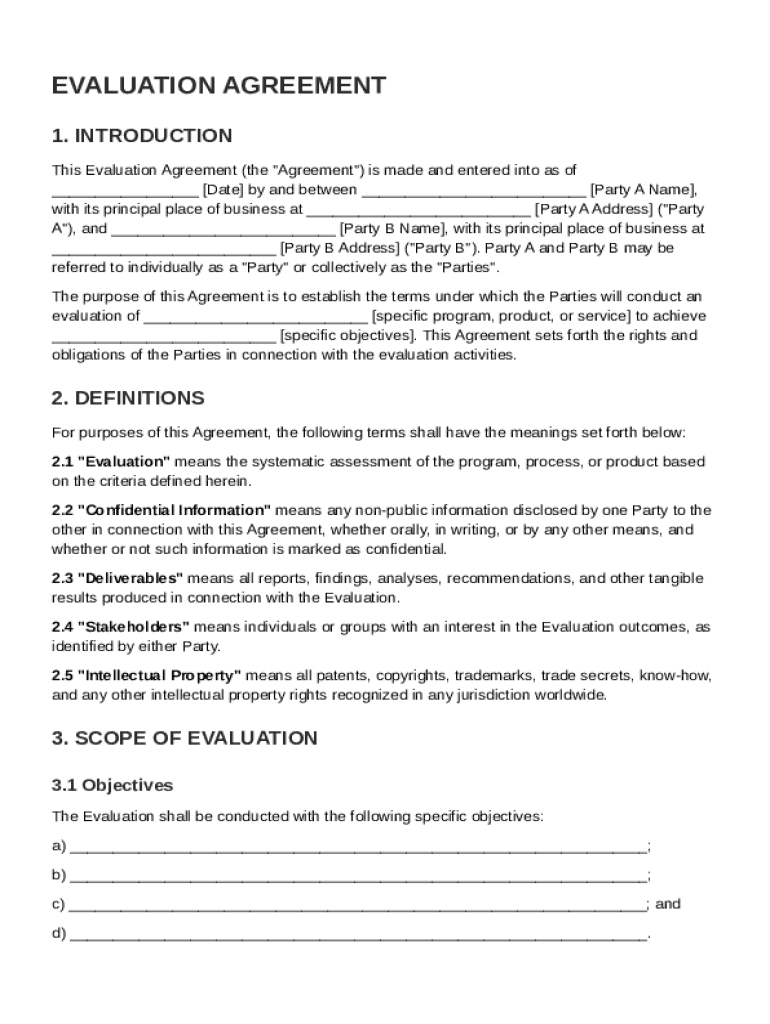
The Evaluation Agreement Template is a formal document used by two parties, often referred to as Party A and Party B, to define the terms and conditions for evaluating a specific program, product, or service. This agreement is instrumental in establishing a structured method for assessment, ensuring clarity regarding each party's responsibilities and expectations. It typically includes definitions of key terms such as 'Evaluation', 'Confidential Information', and 'Deliverables'. By setting these definitions upfront, the agreement mitigates potential misunderstandings and ensures all parties are aligned regarding the scope and purpose of the evaluation.
Key Elements of the Evaluation Agreement Template
An effective Evaluation Agreement Template should comprise several key elements that contribute to a comprehensive and enforceable document:
- Scope of Evaluation: Detailed outline of what is being evaluated, including objectives and criteria.
- Roles and Responsibilities: Clear delineation of duties for each party involved in the evaluation process.
- Timeline: Specific dates for the start, key milestones, and conclusion of the evaluation.
- Confidentiality Obligations: Measures to protect sensitive information disclosed during the evaluation.
- Compensation Structure: Financial terms, including any fees or reimbursement for expenses related to the evaluation.
- Intellectual Property Rights: Clauses addressing ownership and usage rights of any findings or developments arising from the evaluation.
- Amendment and Termination Procedures: Guidelines for modifying or ending the agreement under specified conditions.
With these elements carefully articulated, the template serves as a robust framework guiding the evaluation process.
Steps to Complete the Evaluation Agreement Template
Completing an Evaluation Agreement Template involves several methodical steps to ensure accuracy and comprehensiveness:
- Identify the Parties: Clearly list the names and contact information for both parties involved.
- Define Evaluation Goals: Outline the aims of the evaluation and the metrics for success.
- Specify Deliverables: Detail what outputs are expected from the evaluation process, such as reports or data analyses.
- Set a Timeline: Establish a realistic schedule that includes all critical phases and deadlines.
- Draft Confidentiality Clauses: Include terms that safeguard proprietary information shared during the evaluation.
- Outline Compensation: Define the payment terms agreed upon for the evaluation services.
- Address Intellectual Property: Clarify the distribution of rights concerning any results or findings.
- Include Termination Terms: Provide conditions under which the agreement may be amended or terminated.
By following these steps, the parties can ensure that the agreement is thorough and legally sound.
Who Typically Uses the Evaluation Agreement Template
The Evaluation Agreement Template is commonly utilized by diverse groups that require a formalized process for assessing programs, products, or services:
- Businesses: Companies evaluate new products or services to determine feasibility and market potential.
- Educational Institutions: Schools or universities conduct program evaluations to enhance educational offerings.
- Non-Profit Organizations: These entities assess project impacts to improve community service delivery.
- Research Organizations: Conduct evaluations to validate study results or methodologies.
- Government Agencies: Evaluate policies or initiatives to determine effectiveness and policy implications.
Each of these users benefits from the structured approach the template provides, ensuring all evaluations are conducted consistently and effectively.


Important Terms Related to Evaluation Agreement Template
Several critical terms frequently appear in an Evaluation Agreement Template. Understanding these terms is crucial for effective implementation:
- Evaluation: The systematic process of assessing a program, product, or service according to predefined criteria.
- Confidential Information: Data or proprietary insights shared between parties that must be protected from unauthorized disclosure.
- Deliverables: Tangible outputs or results expected from the evaluation process.
- Timeline: The scheduled time frame within which evaluation activities are to be completed.
- Compensation: Financial agreements related to payment for services or reimbursement of expenses incurred during the evaluation.
- Intellectual Property Rights: Legal ownership and rights regarding any innovative findings or documents generated during the evaluation.
Mastering these terms aids in the thorough comprehension and execution of the agreement.
Software Compatibility
The Evaluation Agreement Template may be utilized with various software platforms to enhance efficiency and functionality:
- DocHub: Facilitates editing, signing, and collaboration on documents directly online.
- Microsoft Word: Offers advanced formatting and editing tools compatible with document templates.
- Google Docs: Provides a cloud-based platform for real-time collaboration and sharing.
- Adobe Acrobat: Supports PDF editing and compatibility, essential for crafting formal documents.
Compatibility with these platforms ensures that users can select the software that best meets their needs, enabling a smooth and flexible workflow.
Legal Use of the Evaluation Agreement Template
The legal enforceability of an Evaluation Agreement Template is founded on adherence to certain regulations and standards:
- Compliance with ESIGN Act: Electronic signatures within the template are legally binding, ensuring authorization and consent from all parties.
- Data Protection: Measures per U.S. privacy laws must be in place to protect any personal or sensitive information disclosed.
- Intellectual Property Law: Clauses ensuring the protection of inventions or developments arising during the evaluation process abide by legal standards.
- Contention Resolution: Includes procedures for arbitration or mediation to address any disputes stemming from the agreement.
These legal elements help ensure both the validity of the agreement and the protection of the parties' interests.
Versions or Alternatives to the Evaluation Agreement Template
While the Evaluation Agreement Template is comprehensive, alternatives or variations might better suit specific contexts:
- Pilot Test Agreement: Focuses on the trial application of a product or service within a controlled environment.
- Research Collaboration Agreement: Designed for joint research initiatives, emphasizing data sharing and co-development.
- Service Level Agreement (SLA): Outlines the expected service standards and performance metrics in an ongoing service relationship.
- Confidentiality Agreement (NDA): Solely addresses the protection of sensitive information without formal evaluation stipulations.
These alternatives provide organizations with tailored options, ensuring that the chosen contract aligns with their specific operational goals.