






Definition and Meaning
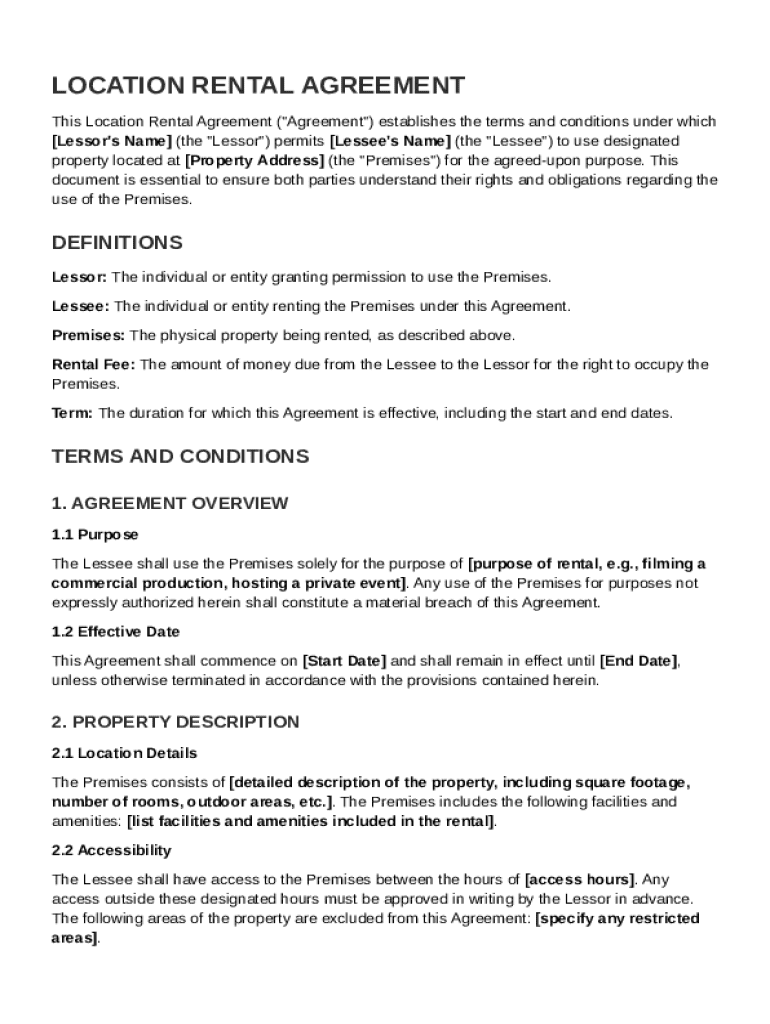
A Location Contract Template is a structured document that outlines the terms and conditions for the temporary use of a specific location by a party, referred to as the lessee. This agreement is primarily used in contexts such as film shoots, events, or business operations where temporary access to a location is required. The document clarifies rights and responsibilities related to the use of the premises, helping to avoid misunderstandings. It typically includes details such as rental fees, the purpose of the rental, duration, and conditions for termination. By providing clear definitions and clauses, this template helps ensure all parties have a shared understanding of the arrangement.
Key Elements of the Location Contract Template
The Location Contract Template contains several essential components aimed at protecting the interests of both the lessor and the lessee. These elements include:
- Description of Premises: An explicit description of the location being rented, including any specific areas or facilities included in the agreement.
- Rent and Payment Terms: Details on the rental fee, deposit requirements, and the schedule for payments.
- Permitted Use: Clarification on what activities are allowed at the location, ensuring alignment with zoning laws and property rules.
- Responsibilities and Obligations: Outline of tasks and duties for each party, including maintenance, insurance responsibilities, and adherence to site regulations.
- Termination Clause: Conditions under which the contract can be terminated by either party, including lead times for notice and ramifications of breach.
- Dispute Resolution: Processes for addressing disagreements between parties, often involving mediation or arbitration.
Who Typically Uses the Location Contract Template
This contract template is commonly utilized by production companies, event organizers, and businesses seeking temporary access to properties for specific projects. In a film production context, it might be used for location shoots requiring access to private or commercial properties. Event organizers use the template to secure venues for functions such as weddings, seminars, or performances. Businesses may leverage this document when they need a short-term workspace, like a pop-up store or temporary office.


Steps to Complete the Location Contract Template
Completing a Location Contract Template requires careful attention to detail to ensure all parties are covered by its provisions:
- Review the Template: Begin by thoroughly reading the document to understand all included clauses.
- Fill in Details: Enter specific information, such as the names of parties involved, location description, and rental dates.
- Specify Financials: Clearly outline agreed-upon rental fees, deposit amounts, and payment schedules.
- Define Use Terms: Detail the intended use of the location to avoid any potential misuse allegations.
- Review and Sign: Both parties should review the final document and address any concerns before signing.
- Distribute Copies: Ensure all signatories have a copy of the final signed agreement.
Important Terms Related to Location Contract Template
Familiarizing oneself with common terms associated with these contracts can enhance understanding and prevent issues:
- Lessor and Lessee: The individuals or entities leasing and using the location, respectively.
- Indemnity: A provision where one party agrees to compensate the other for any loss or damage that might occur.
- Force Majeure: Circumstances beyond control that can affect the ability to fulfill the contract, such as natural disasters.
- Hold Harmless: A clause where one party agrees not to hold the other responsible for certain risks.
- Assignment: Terms regarding the transfer of contractual rights and obligations to another party.
Legal Use of the Location Contract Template
The use of a Location Contract Template must conform to relevant laws and regulations to ensure its enforceability. This involves including appropriate disclaimers and adhering to zoning, licensing, and other regulatory requirements specific to location use. The contract should also comply with state-specific standards, as laws regarding tenant rights, rental agreements, and venue usage can vary widely. Additionally, clauses regarding liability, insurance, and indemnifications should be drafted to protect against legal disputes.
How to Use the Location Contract Template
To effectively use the Location Contract Template, one needs to adapt it to the specific circumstances of their lease arrangement:
- Customizing the Template: Tailor the generic clauses to address the unique aspects of your agreement, such as site-specific rules and financial terms.
- Consult Professionals: Seek legal advice to ensure that the contract’s terms comply with all relevant laws and cover potential liabilities.
- Implementation: Once finalized and signed, ensure all parties adhere to the outlined conditions, referencing the contract as needed.
Examples of Using the Location Contract Template
Practical examples illustrate how the Location Contract Template can be used effectively:
- Film Production: A production company uses the template to rent a downtown warehouse for a thrilling chase scene, negotiating details such as the presence of special effects.
- Event Planning: An event planner secures a historical mansion for a wedding, with stipulations on decor use and catering services.
- Pop-Up Stores: A retail company temporarily occupies a vacant lot to showcase products, defining areas accessible to customers and storage locations.
By documenting these critical details, the Location Contract Template acts as a vital tool in managing expectations and maintaining clear communication.