Definition & Meaning
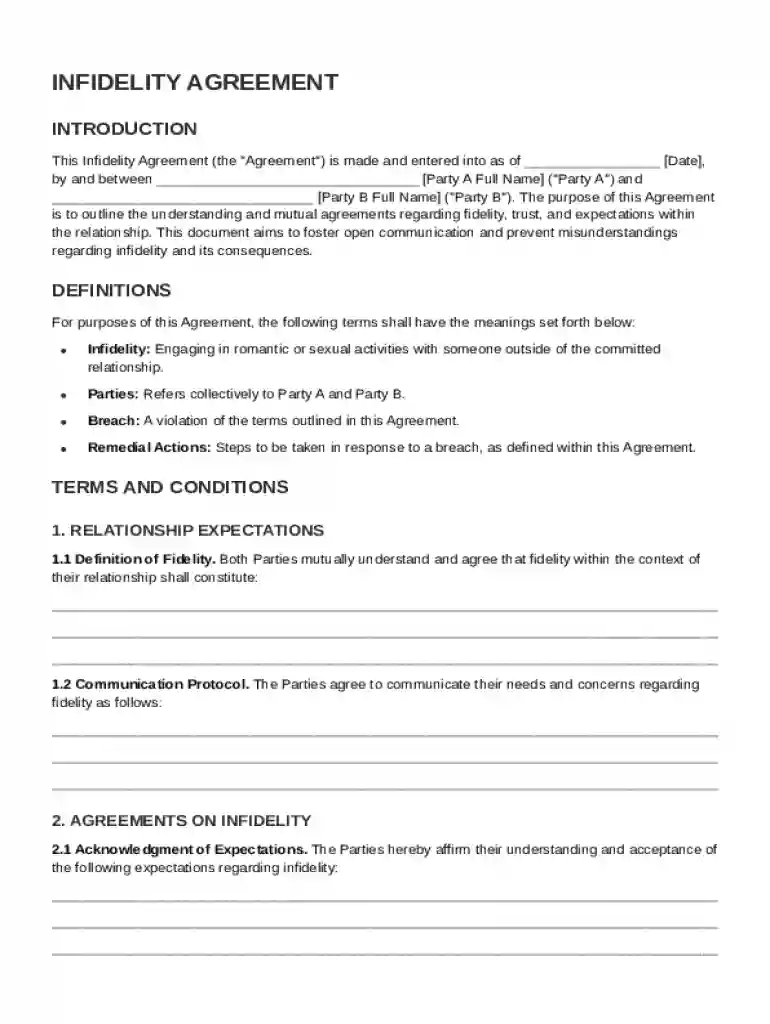
An Infidelity Agreement Template is a formal legal document created between two parties within a relationship to outline their expectations regarding loyalty and fidelity. It serves the purpose of clarifying what constitutes infidelity and the potential consequences for breaches of trust. These agreements can be employed by couples looking to reinforce their commitments, mitigating misunderstandings by defining boundaries. The document is customizable, allowing parties to include specific conditions that suit their unique relationship needs.
Key Elements of the Infidelity Agreement Template
The template encompasses several critical components that ensure clarity and comprehensiveness:
- Definitions: Clearly outlines what behaviors or actions are deemed infidelity.
- Communication Protocols: Establishes how communication on sensitive matters should occur between parties.
- Consequences: Details potential outcomes or remedial actions in the event of infidelity, which may include financial or emotional support adjustments.
- Confidentiality Clauses: Ensures that the terms of the agreement remain private, protecting both parties' personal and relationship details.
- Modification Process: Provides guidelines for making future amendments to the agreement.
- Duration and Termination: States the agreement’s validity period and conditions under which it may be nullified.
- Dispute Resolution: Includes mechanisms for mediating any disagreements related to the agreement's terms, such as mediation or arbitration.
How to Use the Infidelity Agreement Template
The Infidelity Agreement Template should be approached with consideration and adapted to reflect the specific needs of the individuals involved. Here’s how to use it effectively:
- Discussion: Both parties should openly discuss the contents before drafting the agreement to ensure mutual understanding and buy-in.
- Customization: Tailor the template to address unique relationship dynamics, such as specific actions that might constitute a breach.
- Legal Consultation: Engage with a legal professional to ensure that the document complies with applicable state laws and captures all necessary legal nuances.
- Signing Ceremony: After drafting, both parties should sign the agreement in the presence of a neutral witness, enhancing its legal standing.
- Regular Review: Set a timeline for regular reviews and updates to keep the document relevant as the relationship evolves.
Steps to Complete the Infidelity Agreement Template
Completing the template involves several methodical steps:
- Header Information: Input the names of the participating parties and the date of agreement commencement.
- Definitional Section: Agree upon and define critical terms, such as what deeds amount to infidelity.
- Detail Consequences: Clearly articulate the repercussions of a breach to prevent ambiguity later.
- Confidentiality Terms: Add clauses to safeguard the relationship’s private matters.
- Legal Clauses: Incorporate elements such as governing law, amendment processes, and dispute mechanisms.
- Validation: Validate the document with appropriate legal advice to ensure enforceability.
- Execution: Execute by signing the document with witness acknowledgment, preferably under legal guidance.
Important Terms Related to the Infidelity Agreement Template
To fully grasp the scope and application of this document, parties should familiarize themselves with key terms:
- Fidelity: Commitment to faithfulness and transparency in the agreed terms.
- Breach: Any act contravening the agreement's set stipulations.
- Remedial Actions: Actions taken to address and correct a breach scenario, providing a clear pathway for reconciliation or resolution.
- Governing Law: Jurisdictional laws that determine the legal handling of disputes.
- Arbitration: A form of dispute resolution involving a third-party arbitrator’s intervention to conclude disagreements.
Legal Use of the Infidelity Agreement Template
The Infidelity Agreement Template serves several legal functions:
- Preventive Tool: By outlining consequences upfront, it functions as a deterrent against actions that may harm the relationship.
- Documentation: Provides a formal record of agreed-upon terms and conditions, useful in legal proceedings.
- Settlement Basis: Can act as a foundational document during mediation or arbitration if disputes occur.
- Confidential Agreement: Safeguards personal relationship dynamics from public dissemination.
State-Specific Rules for the Infidelity Agreement Template
While the core components of the Infidelity Agreement remain consistent, state-specific rules can alter their enforceability:
- Recognition: Certain states may have different standards for recognizing relationship agreements.
- Variations in Law: Local laws could necessitate modifications to the document to ensure compliance.
- Legal Requirements: Ensuring the agreement adheres to state requirements regarding signatures, notarization, and witness presence may vary.
- Confidentiality Protections: State-specific law can affect how well privacy clauses are upheld legally.