Definition & Meaning
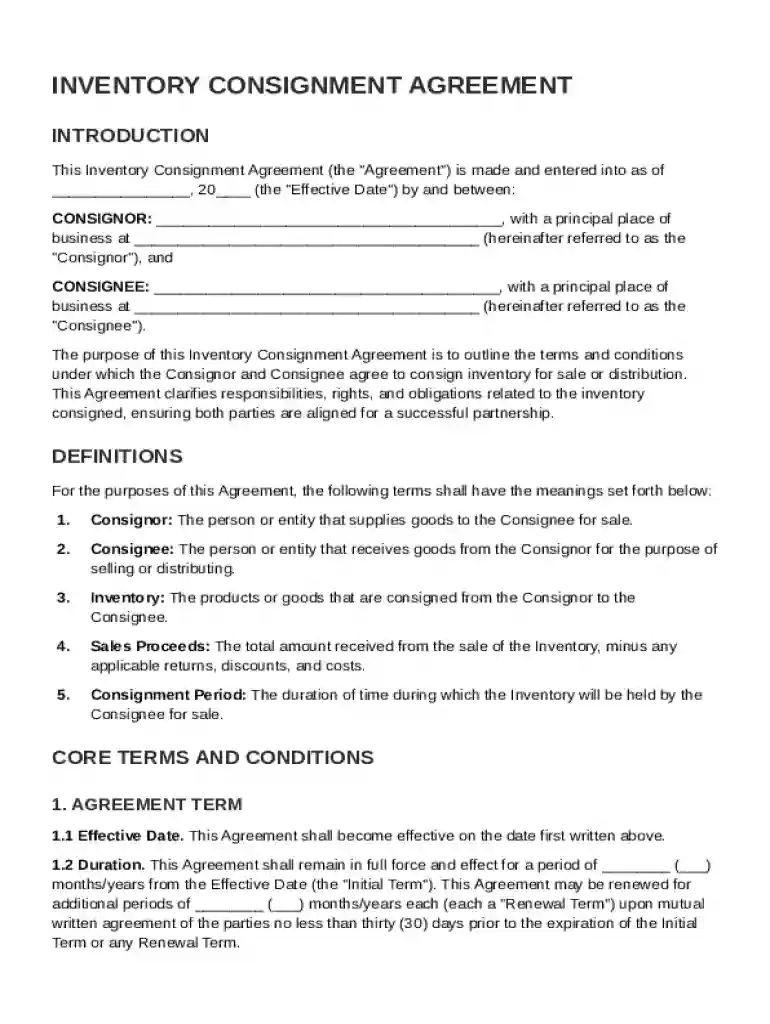
An Inventory Consignment Agreement Template is a legal document that outlines the terms under which one party, the consignor, entrusts its goods to another party, the consignee, to sell or distribute. This agreement specifies roles, responsibilities, and obligations regarding inventory handling, sales, compensation, and potential returns. It ensures clarity between both parties, fostering a successful partnership in managing and selling the consigned goods.
Key Features of Inventory Consignment Agreements
- Roles and Responsibilities: Clearly defines the duties of consignor and consignee.
- Financial Arrangements: Specifies payment terms, commission rates, and any additional fees.
- Inventory Management: Details how inventory is to be managed, including stocking and returning unsold items.
- Dispute Resolution: Outlines procedures for handling any disagreements or breaches of the agreement.
- Confidentiality Clauses: Ensures proprietary information remains secure between both parties.
How to Use the Inventory Consignment Agreement Template
Using an Inventory Consignment Agreement Template involves customizing it to fit the specific interactions and expectations between the consignor and consignee.
Steps to Customize the Template
- Identify Parties: Clearly name the consignor and consignee with respective contact information.
- Define Inventory: List and describe the items being consigned, including quality and quantity.
- Set Financial Terms: Include pricing structure, payment schedule, and commission rates.
- Specify Responsibilities: Detail obligations regarding inventory storage, maintenance, and sale.
- Add Legal Clauses: Insert necessary legal protections such as confidentiality, liability limits, and dispute resolution.
Practical Example
A boutique clothing line (consignor) uses the template to outline an agreement with a retail store (consignee) for selling seasonal fashion items. The document defines how items will be displayed, terms for unsold products, and payment schedules for each item sold.
Key Elements of the Inventory Consignment Agreement Template
Essential components of the Inventory Consignment Agreement Template ensure that all critical facets of the consignment relationship are addressed to avoid future misunderstandings.
Crucial Clauses to Include
- Period of Consignment: Timeframe during which the consignee will hold and sell the inventory.
- Conditions of Sale: Stipulates how and under what conditions the goods will be sold.
- Shipment and Delivery: Instructions about how the consignor will deliver inventory and how the consignee returns unsold items.
- Liability Provisions: Determines which party is responsible for damages or losses during the consignment period.
Steps to Complete the Inventory Consignment Agreement Template
Completing the Inventory Consignment Agreement Template requires careful attention to legal and business details to ensure both parties are protected.
Detailed Process
- Initial Meeting: Organize a meeting between parties to discuss expectations and specifics.
- Drafting: Begin filling out the template using the information gathered during initial discussions.
- Review: Both parties should review the draft separately before meeting to discuss any necessary modifications.
- Legal Counsel: Have a legal expert evaluate the document to ensure compliance with applicable laws.
- Finalization: Agree on a finalized version and obtain signatures from all parties involved.
Considerations
Ensure that both parties are aware of their duties and responsibilities. Confirm all clauses reflect current business practices and legal requirements within the U.S.
Who Typically Uses the Inventory Consignment Agreement Template
The template serves a diverse range of businesses and individuals involved in the sale and distribution of goods under consignment arrangements.

Common Users
- Retailers: To expand product offerings without upfront purchase costs.
- Manufacturers: To reach markets indirectly through retailers or distributors.
- Entrepreneurs: Small business owners looking to enter new markets without significant financial risk.
- Artisans: Artists consignment galleries or shops selling arts and crafts.
Important Terms Related to Inventory Consignment Agreement Template
Understanding specific terms used within the Inventory Consignment Agreement Template is essential to grasp its full implications.
Key Terms Explained
- Consignor: The party that provides goods for consignment.
- Consignee: The party that receives goods and is responsible for their sale.
- Commission: A fee calculated as a percentage of the sale price received by the consignee.
- Net Proceeds: Income the consignor receives after deducting commissions and fees.
- Return Provisions: Conditions under which unsold goods must be returned to the consignor.
Legal Use of the Inventory Consignment Agreement Template
Inventory Consignment Agreements must comply with legal standards to protect both parties from potential legal disputes.
Legal Considerations
- Compliance: Ensure compliance with local, state, and federal laws relevant to consigned goods.
- Binding Nature: Recognize the agreement as legally binding once signed, subject to enforcement in a court of law.
- Intellectual Property: Address ownership of logos, trademarks, and any promotional materials used.
Examples of Using the Inventory Consignment Agreement Template
Real-world scenarios demonstrate how the Inventory Consignment Agreement Template can be effectively used in various industries.
Case Studies
- Small Jewelry Maker: Enters an agreement with a popular boutique to showcase one-of-a-kind pieces, specifying price points and sales techniques.
- Eco-Fashion Brand: Uses consignment to test a new market through local retail partners, detailing eco-friendly storage and display requirements.
- Furniture Craftsman: Partners with an interior design studio to display handcrafted furniture, outlining delivery and in-store assembly processes.
Each section equips users with a thorough understanding of how the Inventory Consignment Agreement Template functions, offers utility, and maintains compliance with industry-specific standards and legalities.