






Definition & Meaning
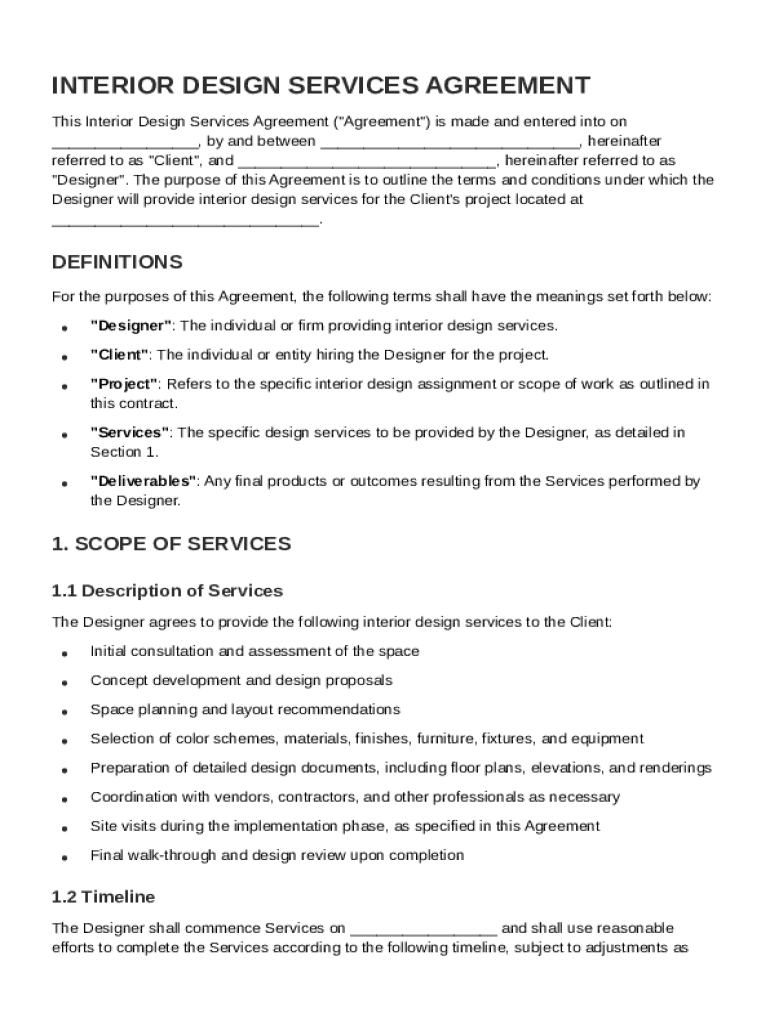
An Interior Design Contract Template is a pre-formatted document that establishes the terms and conditions for interior design services between a Client and a Designer. It delineates the scope of work, responsibilities, compensation, and legal obligations. By using a standard template, both parties can ensure that all essential aspects of a professional relationship are considered, reducing the potential for misunderstandings and legal disputes.
-
Scope of Services: This section typically outlines the specific services the designer will provide. It may include consulting, space planning, design execution, and project management.
-
Compensation and Payment Terms: Details on how the designer will be compensated, including hourly rates, fixed fees, or percentage-based commissions, are often specified.
Key Elements of the Interior Design Contract Template
Comprehensive coverage of the key components ensures all parties are aligned on expectations and responsibilities. These elements provide structure and clarity within the agreement.
-
Client Responsibilities: Clients may be required to provide access to spaces, make timely payments, and communicate decisions within agreed-upon timelines.
-
Change Order Processes: This outlines procedures for making changes to the project once work has begun, specifying how changes will be documented and charged.
-
Confidentiality Obligations: Protects sensitive business information and client privacy by restricting disclosure to third parties.
-
Liability Limitations: Defines the extent of the designer’s liability in case of project issues, damages, or delays, often capping the designer’s financial responsibility.
Legal Use of the Interior Design Contract Template
Understanding the legal framework and enforceability of interior design agreements is crucial for both designers and clients.
-
Compliance with ESIGN Act: Electronic signatures are viable and legally binding, making the template suitable for digital transactions and remote collaborations.
-
Governing Law: Usually specifies which state or country's laws govern the contract, imperative for resolving disputes and ensuring compliance with regional regulations.
-
Termination Conditions: Specifies conditions under which either party may dissolve the agreement, such as breach of contract or failure to meet obligations.
Important Terms Related to Interior Design Contract Template
Understanding specific terminology used within an interior design contract enhances comprehension and execution of agreement terms.
-
Intellectual Property Rights: Addresses ownership of design ideas, plans, and produced materials, ensuring designers maintain ownership, unless stated otherwise.
-
Dispute Resolution Procedures: Options like mediation or arbitration may be presented to resolve disputes without resorting to litigation.
-
Miscellaneous Provisions: Includes clauses covering aspects like contract amendments, assignment rights, and how notices should be communicated between parties.
Who Typically Uses the Interior Design Contract Template
This template is primarily used by professionals in the interior design industry but can be adaptable across varied client scenarios.
-
Interior Designers and Architects: Both use contract templates to formalize relationships with clients, clearly outlining the scope and expectations of their work.
-
Homeowners and Real Estate Developers: Engage designers for personalized or commercial project needs, using contracts to define the relationship and project parameters.
-
Corporate Clients: Involving larger-scale interior design projects, such as offices and retail spaces, these contracts guarantee standardized service levels.


Steps to Complete the Interior Design Contract Template
Having a clear guide aids in completing the contract accurately, ensuring that all elements are duly considered.
- Gather Essential Information: Collect all necessary details, including parties’ names, contact information, and project specifics.
- Define Scope and Objectives: Clearly outline what the project involves and the objectives each party seeks to achieve.
- Establish a Timeline: Set realistic timeframes for different phases of the project, including start and expected completion dates.
- Negotiate Terms and Conditions: Discuss and agree on terms surrounding compensation, liability, and contingencies.
- Review for Accuracy: Ensure all information is accurate and reflects the parties' understanding before signing.
- Execute and Store: Utilize electronic signatures for execution; store vis-a-vis secure online platforms for accessibility and reference.
Examples of Using the Interior Design Contract Template
Providing examples can clarify practical application and common scenarios where this template is beneficial.
-
Residential Projects: A homeowner contracts a designer to renovate their living room, outlining design changes, budget, and schedule.
-
Commercial Spaces: A retail startup hires a designer to create a chic, modern environment aligning with their brand, detailing terms, and deliverables.
-
Hospitality Sector: Hotels often engage designers to enhance aesthetic appeal, utilizing contracts to dictate scope, aesthetic goals, and maintain timelines.
State-Specific Rules for the Interior Design Contract Template
Acknowledging that legal requirements can vary by state ensures the template is customized to meet local laws.
-
Permit Requirements: Some states may require specific permits or certifications for interior design projects, which should be identified and incorporated into contracts.
-
Insurance and Liability Regulations: Varying state laws on insurance may require additional clauses to ensure coverage meets regional mandates.
-
Local Building Codes: Compliance with state and local codes is essential and should be addressed in the project’s scope and planning stages.
State-by-State Differences
Navigating the variations between state requirements and laws ensures compliance and functionality of the contract.
-
Licensing Renewals: Some states mandate ongoing education for licensed designers who must periodically renew certification to stay compliant.
-
Tax Implications: Sales tax applications to services may differ, requiring adjustments in invoicing or billing practices to adhere to state tax laws.
-
Cultural Preferences: Design preferences may vary vastly between states; accommodating these within the contract can align expectations with client cultural sensitivities.
Through examining these different facets of the Interior Design Contract Template, users can gain a comprehensive understanding of its application and execution within various settings.