
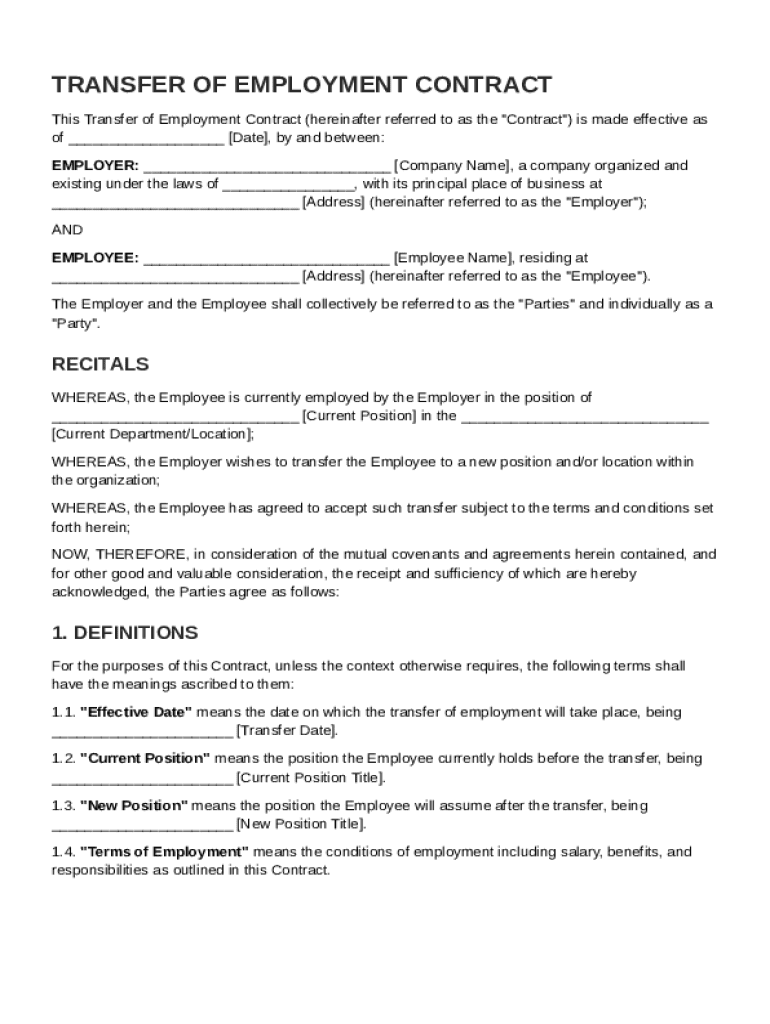







Definition & Meaning
A Transfer of Employment Contract Template is a legal document that outlines the terms and conditions related to an employee's transfer within the same organization. This template serves as a formal agreement between the employer and the employee, ensuring that both parties clearly understand the new role's responsibilities and stipulations. It typically includes critical elements such as the effective date of transfer, the transition from a current position to a new position, and any modifications to compensation or benefits. The document's primary purpose is to establish a contractual understanding and mitigate misunderstandings during the transfer process.
How to Use the Transfer Of Employment Contract Template
To utilize a Transfer of Employment Contract Template efficiently, it is important to follow a structured approach:
-
Preparation:
- Gather all relevant details about the transfer, such as effective date, current and new positions, and changes in compensation or benefits.
- Review any existing contracts to ensure consistency.
-
Customization:
- Modify the template to reflect the specific terms of the transfer, including any company-specific clauses.
- Add any additional elements like confidentiality agreements or notice periods, if required.
-
Review:
- Have the document reviewed by HR professionals or legal advisors to confirm accuracy and compliance with company policies and legal standards.
-
Execution:
- Both the employer and the employee should review and sign the contract.
- Ensure both parties keep a copy of the signed document for their records.
-
Implementation:
- Monitor the transfer process to ensure alignment with the agreed terms and resolve any issues promptly.
Steps to Complete the Transfer Of Employment Contract Template
Completing a Transfer of Employment Contract Template involves several detailed steps that ensure accuracy and legality:
-
Fill in Essential Information:
- Enter the names and contact details of both the employer and the employee.
- Specify the effective date of the transfer.
-
Define Roles and Responsibilities:
- Clearly outline the current and new job titles, describing any changes in duties and responsibilities.
- Include any changes in work hours or location.
-
Compensation and Benefits:
- Detail any adjustments to salary, bonuses, or other benefits.
- Specify which existing benefits will continue post-transfer.
-
Other Clauses:
- Include necessary clauses such as non-compete agreements, confidentiality, and governing law.
- Discuss termination and notice procedures, if applicable.
-
Approval:
- Ensure all parties read and agree to the terms before signing.
- Conduct a final review of the completed document for accuracy.
Key Elements of the Transfer Of Employment Contract Template
The Transfer of Employment Contract Template incorporates several essential components to ensure comprehensive coverage of the employee's transfer:
- Effective Date: The starting date for the new position under the new terms.
- Current and New Positions: Detailed descriptions of both roles, highlighting any differences in responsibilities.
- Compensation: Adjustment details for salary, wage increases, and incentive structures.
- Benefits: Outline benefits continuation or changes, including health insurance, retirement plans, and other perks.
- Confidentiality: Clauses that protect proprietary information and trade secrets.
- Notice Periods: Define the notice period required for terminating the agreement by either party.
- Governing Law: Reference to the legal jurisdiction that will govern the contract.
Legal Use of the Transfer Of Employment Contract Template
Using the Transfer of Employment Contract Template legally involves adhering to employment laws and industry standards. Employers must ensure the template complies with relevant federal and state laws, such as:
- Fair Labor Standards Act (FLSA): Governing minimum wage and overtime requirements.
- Equal Employment Opportunity: Avoiding discriminatory practices during the transfer process.
- State-Specific Employment Laws: Complying with local regulations that may affect the terms of transfer, such as notice periods and non-compete clauses.
The legal aspects also involve ensuring the contract is enforceable, both parties have the capacity to sign, and it fulfills all statutory requirements.
State-Specific Rules for the Transfer Of Employment Contract Template
State-specific regulations can influence various aspects of the Transfer of Employment Contract Template. Consider state labor departments' variations in employment law, which may affect:
- Worker Classification: Differences in recognizing exempt vs. non-exempt employees.
- At-Will Employment: The extent to which this applies in the context of a transfer.
- Non-Compete Clauses: States like California have specific restrictions on these clauses, affecting their enforceability.
By understanding these differences, companies can avoid legal pitfalls and ensure the template aligns with applicable state laws.
Who Typically Uses the Transfer Of Employment Contract Template
This template is generally utilized by organizations undergoing internal changes that necessitate employee transfers. Key users include:
- Human Resource Departments: They draft and manage the transfer process while ensuring compliance with laws and company policies.
- Legal Teams: Review and adjust the template to conform with legal standards.
- Managers and Supervisors: Implement and oversee the actual employee transfer according to the agreed terms.
- Employees: As parties in the agreement, employees must understand and agree to the new terms of employment.

Examples of Using the Transfer Of Employment Contract Template
Real-world application of this template can vary based on specific organizational needs and contexts:
- Company Restructuring: During mergers, acquisitions, or organizational redesigns, employees might be transferred to fit into new company structures.
- Promotions: An employee being promoted to a higher position may have their terms adjusted through this contract.
- Departmental Transfers: Employees moving between departments, especially within large corporations, frequently use such transfers to clarify new roles and responsibilities.
These examples illustrate this contract's adaptability to diverse business scenarios.




