Definition and Meaning
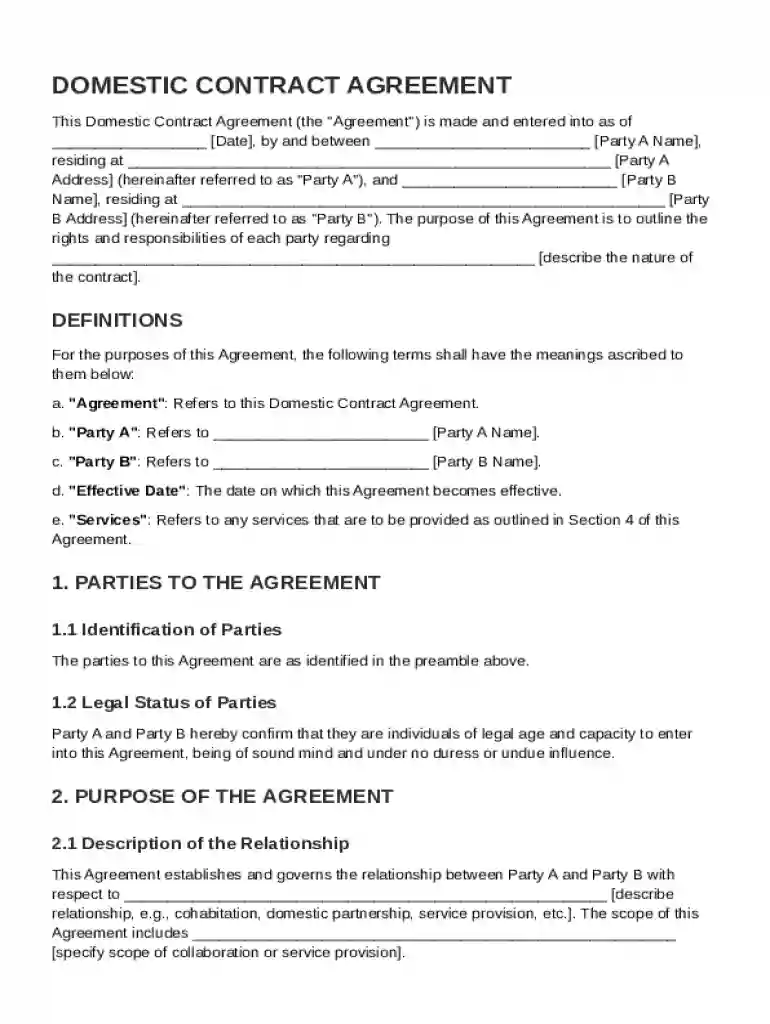
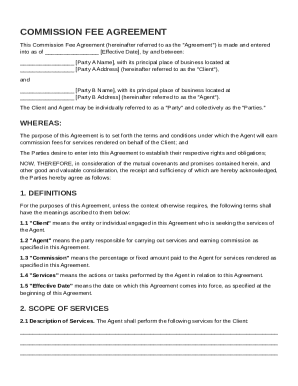
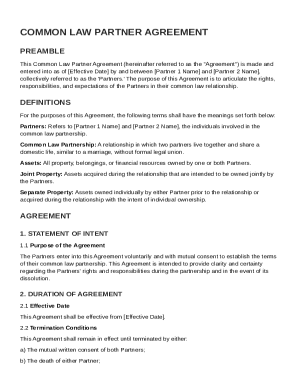
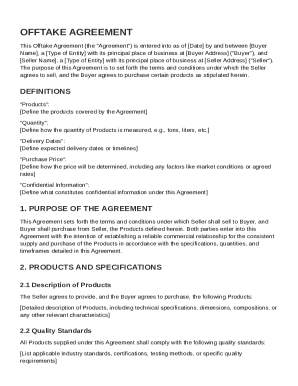
A Domestic Contract Template is a legal document drafted to establish the rights and responsibilities of two parties involved in a specific relationship or service agreement. The document serves as a foundational agreement outlining various terms and conditions crucial for maintaining clarity and understanding between the parties. Its provisions often cover definitions, key obligations, compensation terms, and the duration of the agreement. By detailing these aspects, the contract helps prevent misunderstandings and disputes by setting clear expectations for both parties.
Key Components
- Definitions: Clarifies terms used within the contract to ensure mutual understanding.
- Obligations: Details the duties and responsibilities of each party.
- Compensation: Specifies the payment terms and conditions.
- Duration: Outlines the time frame for which the contract is effective.
- Termination Conditions: Determines how and under what circumstances the agreement can be dissolved.
Steps to Complete the Domestic Contract Template
Completing a Domestic Contract Template involves a series of steps to ensure both parties are accurately represented and that all elements of the agreement are precise and comprehensive.
- Identify Parties Involved: Clearly state the names and roles of all parties included in the contract.
- Define Scope of Agreement: Describe the services or goods exchanged, along with any limitations or exclusions.
- Specify Terms and Conditions: Detail the compensation structure, responsibilities, and expectations for each party.
- Include Confidentiality Clauses: If applicable, outline how sensitive information should be handled and protected.
- Detail Dispute Resolution and Termination: Provide processes for handling disputes and conditions for ending the contract.
- Review and Revise: Both parties should review the contract thoroughly, making necessary revisions.
Common Pitfalls
- Omitting key responsibilities can lead to disputes.
- Ambiguities in the scope of services may cause confusion.
- Failing to include confidentiality provisions when necessary.
Legal Use of the Domestic Contract Template
Using a Domestic Contract Template legally requires adherence to specific guidelines and laws applicable within the jurisdiction where the contract is executed. In the United States, contracts must meet certain requirements to be enforceable.
Compliance Requirements
- Consideration: Each party must provide something of value, whether goods, services, or compensation.
- Capacity: All parties must have the legal ability to enter into a contract.
- Consent: Agreement must be voluntary, without duress or undue influence.
- Legality: The contract's content must not violate any laws or statutory obligations.
Examples of Legal Protections
- Confidentiality: Protects sensitive business or personal information from unauthorized disclosure.
- Non-Compete Clauses: Restrict parties from engaging in competitive activities during and after the agreement.
Key Elements of the Domestic Contract Template
A comprehensive Domestic Contract Template should incorporate several critical elements to ensure a balanced agreement that serves both parties effectively.
- Detailed Scope of Work or Services: Clearly defines what is expected from each party.
- Payment Terms: Outlines the fee structure and payment schedule.
- Cancellation Policies: Explains how either party can terminate the agreement and any associated penalties.
- Amendment Procedures: Describes the process for making changes to the contract after execution.
- Dispute Resolution: Provides methods for resolving conflicts, such as mediation or arbitration.
Practical Scenario
For example, in a service-based contract, the template might specify that payment is due upon completion of each project phase, encouraging timely payment and completion.
Who Typically Uses the Domestic Contract Template
Domestic Contract Templates are utilized by a wide range of individuals and organizations who require formal agreements to outline their rights and obligations.

Common Users
- Small Business Owners: Define terms for services with clients or contractors.
- Individual Contractors: Protect their interests when offering services.
- Partnerships: Clarify contributions and profit-sharing arrangements.
- Tenants and Landlords: Establish rental terms and property use.
Benefits for Different Users
- Businesses: Enhance credibility and professionalism.
- Individuals: Provide legal protection and clarity in personal agreements.
State-Specific Rules for the Domestic Contract Template
Although Domestic Contract Templates provide a general framework, state-specific rules may influence their content and enforceability in the U.S. Due to varying state laws, some contracts require special clauses or considerations depending on the location of the involved parties.
Key State Variations
- Governing Laws: Contracts must identify which state laws apply.
- Notarization Requirements: Some states might require a contract to be notarized to be valid.
- Specific Clauses: Certain states might mandate inclusion or exclusion of particular clauses, especially in terms of non-compete or service agreements.
Impact on Contract Drafting
Understanding these state differences is critical in ensuring that the contract is enforceable and compliant with local laws. For example, a non-compete clause valid in one state might not be enforceable in another due to broader restrictions on employee mobility.