






Definition and Purpose of Parental Custody Agreement Template
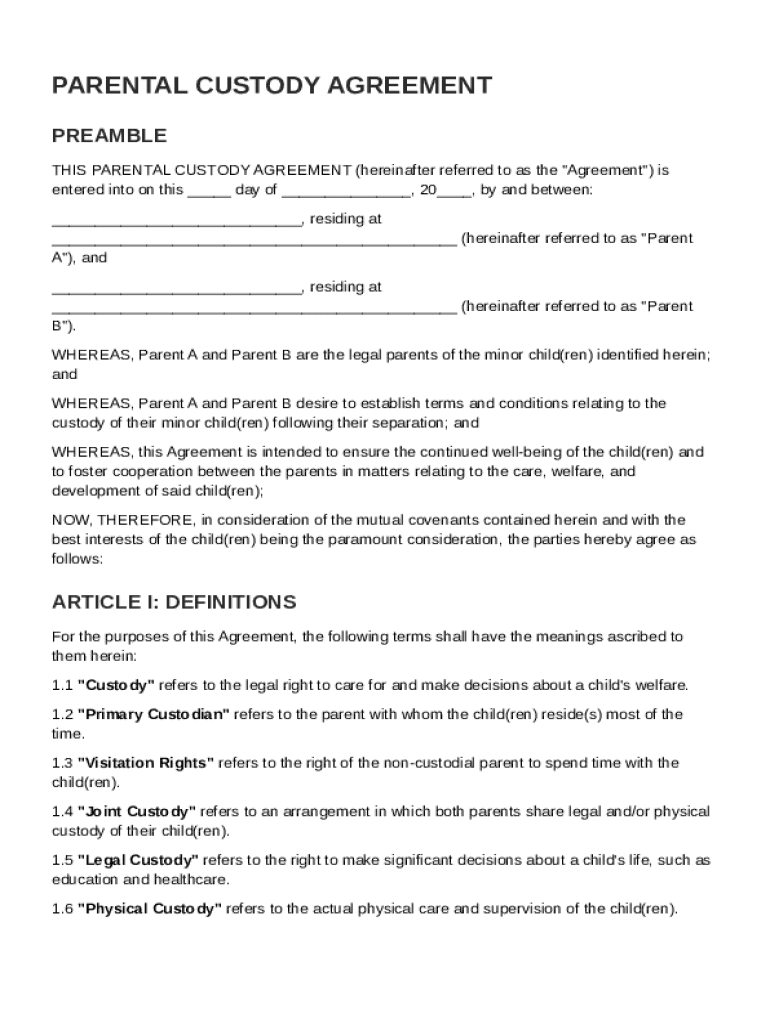
A Parental Custody Agreement Template is a structured document used to outline the terms and conditions regarding the custody of minor children after the separation or divorce of their parents. This template serves as a comprehensive guide to ensure that both parents understand and agree upon their rights and responsibilities regarding the upbringing of their children. The primary focus of the agreement is the child's well-being, ensuring that their needs are met in a manner that supports emotional, educational, and physical growth. This document typically covers key areas such as visitation schedules, decision-making authority, and communication protocols between the parents. Utilizing this template helps mitigate misunderstandings and provides a legal framework that can be referred to if disputes arise.
Key Elements of the Parental Custody Agreement Template
The parental custody agreement template encompasses several critical elements that ensure a comprehensive understanding between both parties involved.
-
Custody Arrangements: Defines whether custody is joint or sole, and clarifies physical and legal custody aspects, which indicate with whom the child will live and who will make important decisions concerning the child's welfare.
-
Visitation Schedules: Provides a detailed timeline outlining when each parent will spend time with the child, including holidays, birthdays, and vacation periods. The schedule should reflect what is in the child's best interest and remain adaptable to changes as the child grows.
-
Decision-Making Authority: Specifies which parent will have the responsibility to make decisions regarding the child's education, healthcare, and religious upbringing. Joint decision-making is encouraged but the agreement outlines a clear process for when consensus cannot be reached.
-
Communication Protocols: Establishes guidelines for how parents will communicate with each other regarding the child, including methods and frequency. The agreement promotes effective communication to minimize conflicts.
-
Dispute Resolution: Includes provisions for resolving conflicts that may arise, often advocating for mediation as a first step before pursuing legal actions.
Steps to Complete the Parental Custody Agreement Template
Completing the parental custody agreement template can be structured into a series of methodical steps to ensure all necessary aspects are covered:
-
Read and Understand: Familiarize yourself with each section of the template to understand what information is being requested and why it is important.
-
Gather Information: Collect relevant information regarding the child's needs, schedules, and both parents' availability.
-
Discuss with Co-Parent: Both parents should sit down to openly discuss and propose terms with the child's best interests at the forefront.
-
Draft the Agreement: Use the template as a guide to fill in the necessary details, clearly articulating terms, schedules, and responsibilities.
-
Review: Each parent should review the draft for clarity and completeness, ensuring all terms agreed upon are accurately documented.
-
Consult Legal Counsel: It is advisable to have a legal professional review the document to ensure compliance with state laws and to provide any necessary modifications.
-
Finalize and Sign: Once all parties agree on the terms, the document should be signed in the presence of a notary or a legal witness to validate the agreement.
Important Terms Related to Parental Custody Agreements
Understanding key legal and parenting terms within the context of parental custody agreements is crucial for effectively drafting and implementing the document:
-
Joint Custody: An arrangement where both parents share decision-making responsibilities and/or physical custody of the child.
-
Sole Custody: A situation where only one parent has the right to make major decisions about the child's upbringing, although the other parent may still have visitation rights.
-
Primary Residential Parent: The parent with whom the child resides most often; responsible for daily care and decision-making.
-
Visitation Rights: The scheduled time allocated for the non-custodial parent to spend with the child.
-
Child Support: Financial payments made by the non-custodial parent to assist in covering the child's living and healthcare needs.
State-Specific Rules for Parental Custody Agreements
Parental custody agreements are governed by family law, which varies from state to state within the United States. Each state has specific guidelines and requirements that dictate how custody agreements can be structured:
-
Custody Laws: Regulations may differ in how custody is awarded, focusing on what is in the best interest of the child, which can include considerations like the child’s age, parental responsibilities, and household stability.
-
Required Forms and Procedures: Some states require specific forms or additional steps, such as parenting classes or mediation, to be completed before a custody agreement is finalized.
-
Court Approval: In many states, the proposed custody agreement must be submitted to a family court for approval, ensuring compliance with state standards and safeguarding the child's welfare.
-
Modification Guidelines: States have set procedures for modifying custody agreements if circumstances change significantly. Understanding these procedures ensures parents can adapt agreements to evolving needs.
Legal Use of the Parental Custody Agreement Template
The legal use of a parental custody agreement template involves ensuring that the document is in accordance with local laws and is enforceable in a court of law. A legally sound agreement protects the interests of the child and the parents:
-
Comprehensive and Clear: The document should clearly define all relevant aspects of custody, visitation, and decision-making authority.
-
Notarization and Signing: To add legal weight, the document should be signed by both parties in the presence of a notary or family court representative.
-
Court Filing: Submitting the agreement to a family court for review and official sanctioning is often required; this step ensures the agreement is binding and enforceable.
-
Consideration of Legal Advice: Consulting with an attorney knowledgeable in family law can ensure that the nuances of the law are adhered to and that the agreement genuinely reflects mutual consent and serves the child's best interests.
Who Typically Uses the Parental Custody Agreement Template
Parental custody agreement templates are typically utilized by parents who are undergoing separation or divorce and wish to establish a clear parenting plan. The users include:
-
Divorcing Couples: Parents who are legally dissolving their marriage and need to formalize custody arrangements for the child's welfare.
-
Unmarried Parents: Couples who are separating but were never legally married yet share custodial responsibilities for their child.
-
Legal Guardians or Stepparents: In certain situations, legal guardians or stepparents may need to be a part of the custody agreement if they assume caregiving responsibilities or decision-making authority.
Utilizing a parental custody agreement template is critical in ensuring that all parties are aware of their roles and responsibilities, thus reducing potential conflicts and contributing to a stable and healthy environment for the child.