Definition and Importance of a Music Equipment Rental Agreement Template
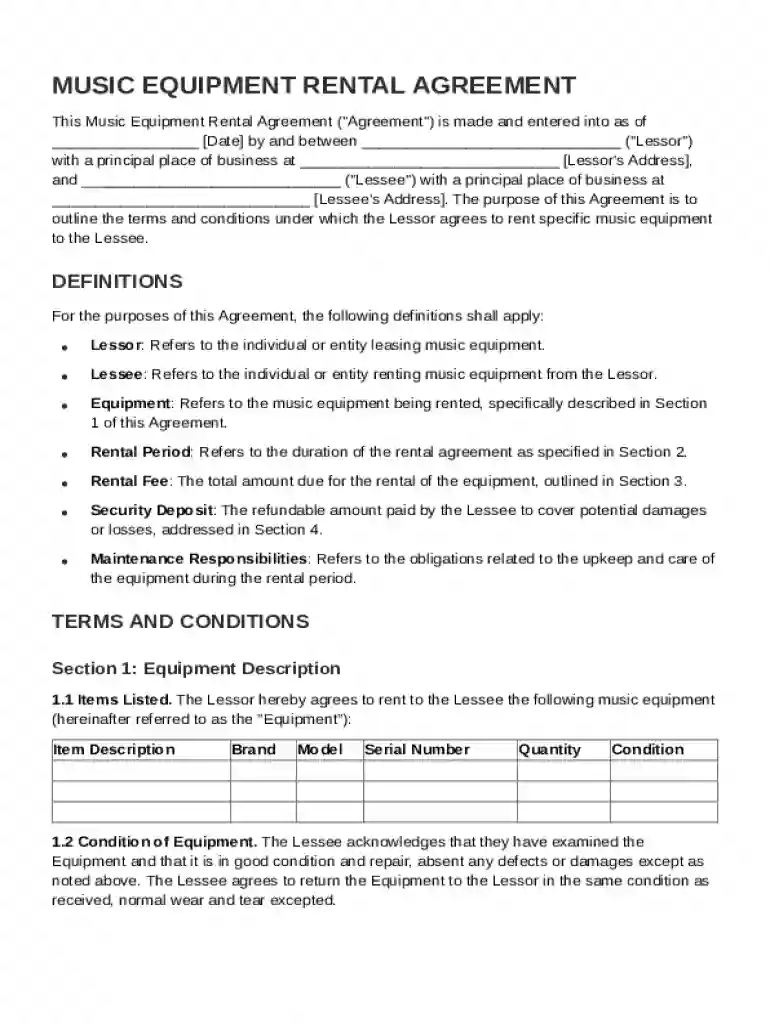
A Music Equipment Rental Agreement Template serves as a formal contract outlining the terms and conditions of renting music equipment between a Lessor (the owner of the equipment) and a Lessee (the renter). This template provides a structured approach to ensure that both parties clearly understand their rights, responsibilities, and the specifics of the rental transaction. The agreement typically includes crucial details such as rental fees, duration, maintenance responsibilities, and liability coverage.
Key Components of the Template
- Definitions of Parties and Equipment: Clarifies the roles of the Lessor and Lessee, and provides detailed descriptions of the rented equipment.
- Rental Period: Specifies the precise start and end dates of the rental term.
- Fees and Payment Terms: Outlines rental costs, deposit requirements, and payment schedule.
- Equipment Maintenance: Details maintenance responsibilities and procedures for handling repairs or damages.
- Liability and Insurance: Covers liability for loss, theft, or damage, and any insurance requirements each party must meet.
The importance of this template cannot be overstated, as it helps prevent misunderstandings and disputes, protecting the interests of both parties.
How to Use the Music Equipment Rental Agreement Template
To effectively use the Music Equipment Rental Agreement Template, follow these steps:
- Review and Customize: Carefully review the template to ensure it suits your specific situation. Customize sections such as rental fees, equipment description, and terms that meet your needs.
- Discuss with the Other Party: Communicate with the other party to address any concerns or modifications needed.
- Fill in Required Information: Complete all fields, ensuring accurate information is provided.
- Review with Legal Counsel: If needed, have a legal professional review the agreement to ensure compliance with relevant laws.
- Obtain Signatures: Both parties must sign the agreement to make it legally binding. Consider using electronic signature options for convenience.
Steps to Complete the Music Equipment Rental Agreement Template
Completing the template involves the following steps:
- Identify Parties: List the full names and contact information for both Lessor and Lessee.
- Detail the Equipment: Provide a comprehensive list of the equipment being rented, including serial numbers and conditions.
- Set Rental Terms: Define the rental period, fees, and payment methods. Include any late payment penalties or incentives for early returns.
- Determine Responsibilities: Clearly outline the maintenance responsibilities of the Lessee and conditions under which the Lessor retains liability.
- Include Governing Law: Specify the state laws that govern the agreement and how disputes will be resolved.
- Finalize and Sign: After reviewing, ensure both parties sign the document to formalize the agreement.
Legal Use of the Music Equipment Rental Agreement Template
To ensure the legal validity of a Music Equipment Rental Agreement, consideration of several factors is crucial:
- Compliance with State Laws: The agreement must comply with the laws of the state where it is executed or enforced. State-specific rules might affect terms such as default conditions and liability.
- Legally Binding Signatures: Both parties must sign the document, either physically or electronically, to make it legally binding.
- Terms and Conditions: Must be clearly stated without ambiguity, covering all aspects of the rental arrangement.
- Modifications: Any changes to the agreement should be documented and signed by both parties to maintain legal integrity.
Key Elements of the Music Equipment Rental Agreement Template
The template should include the following essential elements:
- Identification: Names and contact details of both parties.
- Detailed Equipment List: Descriptions, conditions, and value of the equipment.
- Fee and Payment Schedule: Breakdown of costs and payment methods.
- Duration of Rental: Precise rental start and end dates.
- Liability and Insurance: Terms concerning coverage for damages or theft.
- Return Conditions: Procedures for equipment return, including condition expectations.
These elements ensure clarity and minimize potential disagreements.
State-Specific Rules for the Music Equipment Rental Agreement Template
Each state in the U.S. may have different requirements and regulations surrounding rental agreements. Here are a few considerations:
- Governing Law: Specify the state law that applies to the agreement.
- Default Provisions: Terms for late payments or breaches might vary by state.
- Consumer Protection Laws: States may have laws that protect consumers from unfair rental practices.
Reviewing state-specific rules helps in drafting an agreement that is enforceable and compliant with local regulations.
Examples of Using the Music Equipment Rental Agreement Template
Consider the following scenarios:
- A Musician on Tour: A band rents a set of drums and other instruments for a multi-city tour. The template outlines the rental period and responsibilities, ensuring equipment is maintained and returned in good condition.
- An Event Organizer: A company organizing a festival rents sound equipment and instruments. The template specifies usage terms, liability, and return conditions, ensuring all equipment is covered against potential damages.
- A School Music Program: A school rents various instruments for a semester. The agreement includes maintenance duties and duration, aligning with the academic schedule.
These examples illustrate how the template can be adapted to different needs.