01. Edit your form online
Type text, add images, blackout confidential details, add comments, highlights and more.

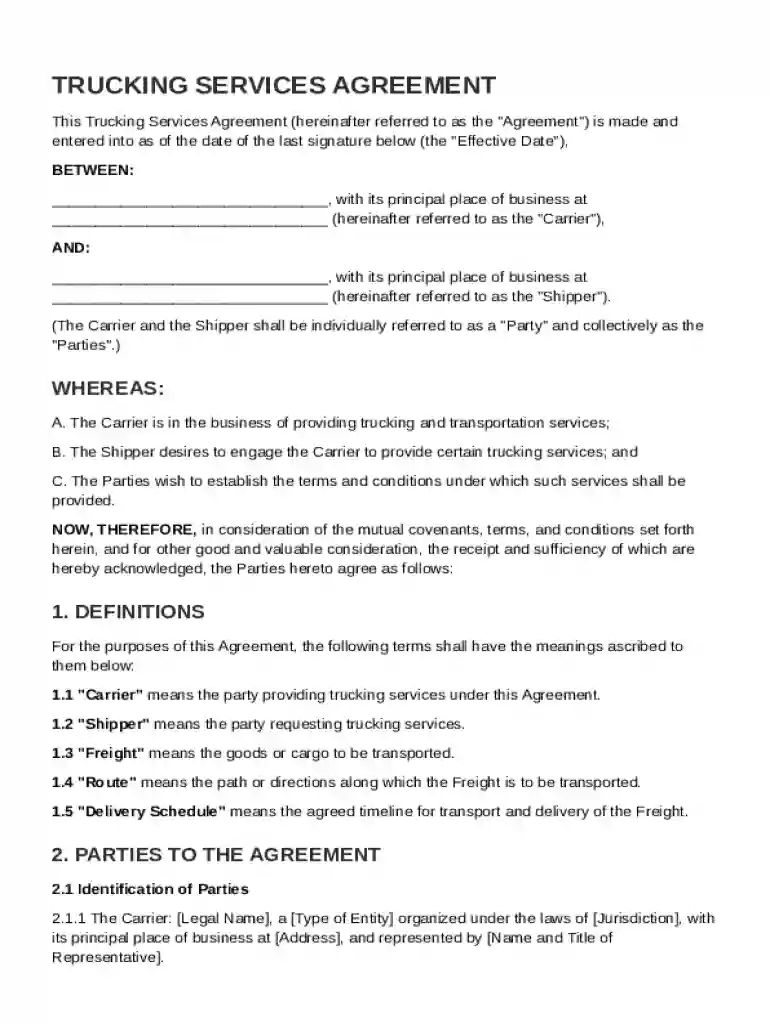
Type text, add images, blackout confidential details, add comments, highlights and more.

Draw your signature, type it, upload its image, or use your mobile device as a signature pad.

Send it via email, link, or fax. You can also download it, export it or print it out.
The Trucking Agreement Template is a standardized document outlining the terms and conditions between two principal parties: the Carrier, who provides the trucking and transportation services, and the Shipper, who requires these services. This agreement aims to establish a clear framework for the transportation of goods by defining responsibilities, addressing liabilities, and ensuring compliance with applicable U.S. laws and regulations. The template includes sections for service scope, pricing, payment terms, liability limitations, dispute resolution procedures, and provisions for termination. It is designed to provide clarity and structure to the Carrier-Shipper relationship, reducing the risk of misunderstandings and disputes.
Completing the Trucking Agreement Template involves several organized steps to ensure all necessary information is accurately captured. First, both the Carrier and Shipper should carefully review and fill in their details within the contact information section. Next, clearly define the scope of services including the delivery routes, nature of goods transported, and special handling instructions. Following this, both parties should agree on the pricing model and payment terms, specifying rates, payment schedules, and acceptable payment methods. The next step involves outlining responsibilities and liabilities, particularly in the case of loss or damage of goods. Once completed, both parties must review the entire document carefully before signing. Including signatures and dates safeguards the agreement and signifies mutual consent.
The Trucking Agreement Template encompasses several crucial elements to ensure comprehensive coverage of the logistics, legal, and operational aspects of the agreement. These elements include:
The Trucking Agreement Template is mainly utilized by businesses and individuals in the logistics and transportation sectors within the United States. The typical users include:
In scenarios involving complex shipping requirements or high-value goods, legal professionals may also be consulted to customize terms to better fit specific needs or legal considerations.


The legal use of the Trucking Agreement Template involves ensuring compliance with U.S. federal and state transportation regulations, like those overseen by the Federal Motor Carrier Safety Administration (FMCSA). Adherence to these standards helps mitigate legal risks and ensures lawful operations. The agreement must clearly state compliance with safety standards, vehicle maintenance protocols, and driver qualification requirements. Moreover, any interstate transport must consider state-specific licensing and weight regulations. Both parties should ensure that the contract terms do not conflict with statutory rights or obligations, necessitating careful legal review and adjustments where needed.
For ease of completion and digital management, the Trucking Agreement Template is compatible with various document editing software and platforms. Users can easily use platforms like DocHub, which offers tools for editing, signing, and sharing documents in multiple formats like DOC and PDF. This compatibility ensures flexibility, allowing users to edit or sign agreements from any location via desktop or mobile devices, streamlining the document workflow. Integration with cloud storage services further enhances accessibility and document management, enabling remote collaboration and real-time updates.
Understanding specific terms within the Trucking Agreement Template is essential for both the Carrier and the Shipper. Key terms include:
These terms, among others, are foundational to drafting and comprehending the detailed roles and responsibilities within the agreement.
State-specific rules can significantly impact the content and enforcement of the Trucking Agreement Template. While the basic structure of trucking agreements might be consistent nationwide, certain states have additional regulations governing transportation, such as variations in highway safety standards, state fuel taxes, and permissible truck sizes and weights. It's crucial for both parties to acquaint themselves with these state laws and integrate necessary provisions into the agreement. Collaborating with legal counsel to review these variations may provide additional protection and ensure the agreement's enforceability across state lines.
At DocHub, your data security is our priority. We follow HIPAA, SOC2, GDPR, and other standards, so you can work on your documents with confidence.