



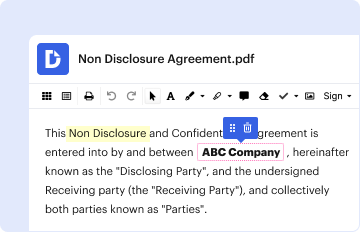
01. Edit your dangerous goods declaration online
Type text, add images, blackout confidential details, add comments, highlights and more.

Type text, add images, blackout confidential details, add comments, highlights and more.
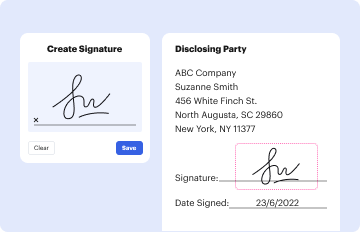
Draw your signature, type it, upload its image, or use your mobile device as a signature pad.

Send dangerous goods declaration via email, link, or fax. You can also download it, export it or print it out.
A Dangerous Goods Declaration Form, often referred to as a Shipper's Declaration for Dangerous Goods, is a legally required document that accompanies hazardous materials during transportation. It ensures compliance with international and national regulations by documenting critical information about the goods being shipped. The form includes details such as the proper shipping name, classification, and quantity of dangerous goods, as well as the consignee and consignor information. This declaration is crucial for the safe and legal transport of hazardous materials, as it communicates vital safety instructions and regulatory compliance to all parties involved.
Using the dangerous goods declaration form template begins with ensuring you have all necessary information about the hazardous materials you are shipping. This includes the identification number, proper shipping name, hazard class, and packing group. Once you have gathered this information, the form can be filled out as follows:
Shipper and Consignee Information: Enter the full names and contact details of both the sender and receiver.
Description of Goods: Provide detailed information about the dangerous goods, including their nature, quantity, and the associated risks.
Transport Information: Specify mode of transportation and any special handling requirements.
Ensure all entries are clear and legible, as this document is critical for compliance and safety throughout the shipping process.
The dangerous goods declaration form template comprises several key sections that must be accurately completed:
Proper Shipping Name: The official name of the hazardous material as recognized by regulatory bodies.
UN Number: A unique number identifying the specific substance or group of substances.
Packaging Group: Indicates the level of risk with the material, categorized into I (high risk), II (medium risk), or III (low risk).
Quantity and Type: Details the amount of goods and their packaging.
Emergency Contact Information: Includes contacts who can be reached in case of an incident during transport.
Each section must be thoroughly completed, ensuring no vital information is omitted.
The process of completing the dangerous goods declaration form template requires attentiveness to detail. Follow these steps to ensure accuracy:
Gather Information: Collect all details about the hazardous materials, including classifications and emergency information.
Complete Shipper and Consignee Sections: Enter the required information about the individuals or organizations involved.
Detail the Goods: Fill in the appropriate details about the goods, using correct classifications and codes.
Review and Sign: Once filled, review each section for accuracy before signing the declaration.
Mistakes at any step may hinder compliance and legal transportation of the goods.
The legal use of the dangerous goods declaration form template is grounded in regulatory compliance. By accurately completing the form, shippers abide by laws that govern the transportation of hazardous materials. These regulations, such as those established by the International Air Transport Association (IATA), outline mandatory practices for safely handling and transporting these materials. The declaration ensures that each shipment is assessed for potential risks, with proper precautions in place, thereby minimizing legal liabilities and enhancing safety.
Failure to properly complete or submit a dangerous goods declaration can incur significant legal penalties. These penalties can include hefty fines, shipping suspensions, and even imprisonment for severe violations. Legal action arises primarily from breaches in safety protocols, endangering public health and safety. Organizations are strongly advised to adhere strictly to the guidelines outlined in dangerous goods regulations to avoid such repercussions, thus safeguarding legal and operational integrity.
Understanding key terms related to the dangerous goods declaration form is vital for proper completion and compliance:
Hazardous Materials: Substances that pose risks to health, safety, and property during transportation.
Consignor: The sender of the shipment.
Consignee: The receiver of the shipment.
ERG Code: A code indicating the Emergency Response Guide for first responders.
Familiarity with these terms ensures a clear understanding of the documentation and adherence to regulatory standards.
Consider a chemical manufacturer shipping a batch of flammable liquids:
Scenario: The manufacturer is shipping to an international laboratory.
Form Completion: The manufacturer lists the proper shipping name, UN number, and associated risks on the form.
Outcome: The form facilitates safe and compliant shipping, ensuring the laboratory receives the materials without incident.
Such examples illustrate the diverse scenarios in which the form ensures compliance and safety.
We've got more versions of the dangerous goods declaration form. Select the right dangerous goods declaration version from the list and start editing it straight away!
| Versions | Form popularity | Fillable & printable |
|---|---|---|
| 2006 | 4 Satisfied (50 Votes) |
At DocHub, your data security is our priority. We follow HIPAA, SOC2, GDPR, and other standards, so you can work on your documents with confidence.




General Information: The shippers declaration of dangerous goods is a formal, legal document. The hash lines on the side must be in red.Read more
Sep 9, 2020 Guidance for Completing the Shippers Declaration for Dangerous Goods [PDF 177 KB] Telephone: 404-718-2000 770-488-7100 (after hours) 301-851


