Definition and Meaning
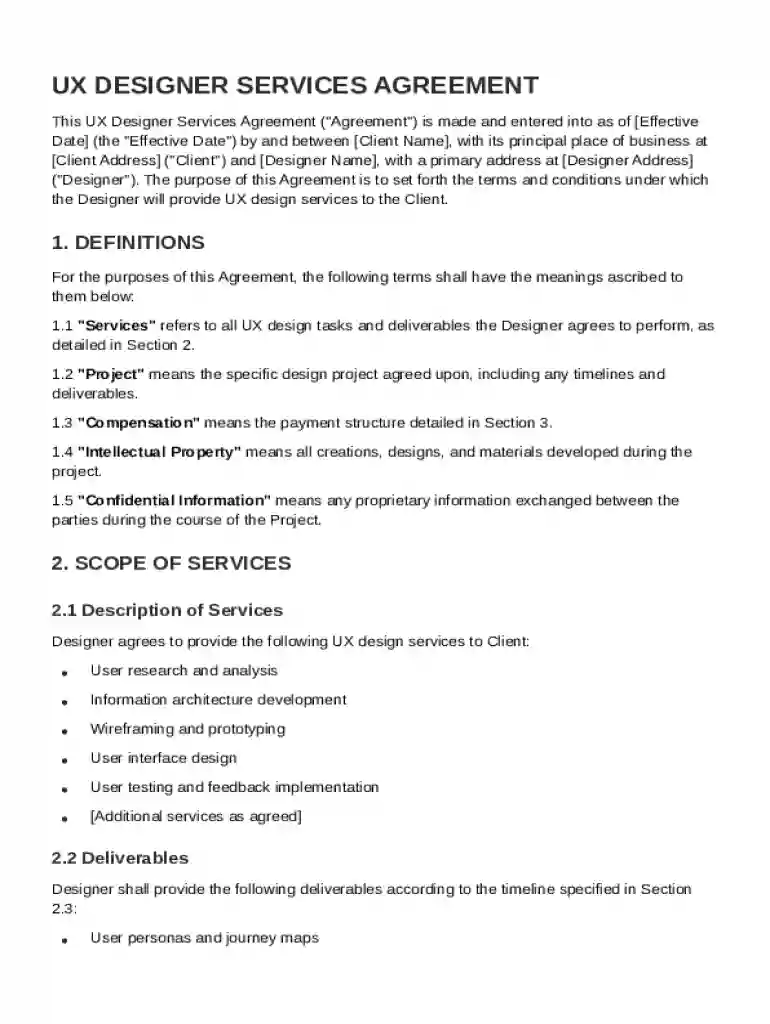
The UX Designer Contract Template is a comprehensive legal document that outlines the terms and conditions under which a user experience designer will provide services to a client. This contract serves as a guiding framework to facilitate clear communication and understanding between the designer and the client, ensuring mutual agreement on essential components such as project scope, timelines, compensation, and intellectual property rights. It aims to protect the interests of both parties while establishing a professional relationship that is legally compliant.
How to Use the UX Designer Contract Template
To use the UX Designer Contract Template effectively, follow these steps:
- Review the Template: Ensure that the template aligns with your specific project needs. Pay close attention to sections regarding service scope and project timeline.
- Customize Personal and Project Information: Replace placeholders with the accurate names, addresses, and contact details of both the designer and the client.
- Define Project Scope and Deliverables: Specify the services to be provided, including timelines, milestones, and expected deliverables.
- Negotiate and Agree on Terms: Discuss compensation, payment schedules, and any potential additional charges with the client to reach a mutual agreement.
- Finalize and Sign the Agreement: Both parties should thoroughly review the terms and conditions before signing. Electronic signatures can be used for convenience and legal validity.
Key Elements of the UX Designer Contract Template
The UX Designer Contract Template includes several critical elements:
- Scope of Services: A detailed description of the services the designer will deliver, including specific tasks, timelines, and milestones.
- Compensation Structure: The agreed-upon payment terms, including one-time fees, retainer structures, or hourly rates.
- Intellectual Property Rights: Clear definition of who retains ownership of the created materials, and the usage rights granted to the client.
- Confidentiality Obligations: Terms for the protection of proprietary and sensitive information shared during the project.
- Termination Conditions: Provisions outlining how and under what conditions the agreement can be terminated by either party.
Steps to Complete the UX Designer Contract Template
Completing the UX Designer Contract Template involves several steps to ensure accuracy and compliance:
- Collect Required Information: Gather all necessary details about the project, the parties involved, and financial agreements.
- Draft the Contract: Use the template to input the information collected, customizing each section to reflect the unique aspects of the agreement.
- Review Legal Terms: Consult with legal counsel to verify that all legal terms are appropriate and compliant with relevant laws.
- Discuss with Client: Present the draft to the client for feedback and potential amendments.
- Finalize and Execute: Make any necessary changes before both parties agree and sign the document.
Legal Use of the UX Designer Contract Template
The UX Designer Contract Template is a legal document that should be used in accordance with relevant local, state, and federal laws. It is vital to ensure that the template complies with laws governing contracts within the applicable jurisdiction. Consulting with legal professionals can help in adapting the contract's terms to meet all legal standards, thereby reducing risks for both the designer and the client.
Important Terms Related to UX Designer Contract Template
Understanding key terms in the template can aid in clarity:
- Client: The entity hiring the designer to perform specific services.
- Deliverables: The tangible or intangible outputs resulting from the design work.
- Non-disclosure Agreement (NDA): A legal contract ensuring confidentiality of shared information.
- Force Majeure: A clause that frees both parties from obligations in the event of extraordinary circumstances beyond their control.
Examples of Using the UX Designer Contract Template
To illustrate practical use cases, consider these scenarios:
- New Product Design: A start-up engaging a UX designer for a new application, with the contract outlining specific goals and design phases.
- Website Redesign: An established company hiring a design agency to refresh their online presence, using the contract to specify updated features and content.
- Consultation Services: A consultant providing UX strategy advice, detailing consultation hours and deliverables within the contract.